
Hybrid crushing gains traction as African market looks to cut costs and carbon

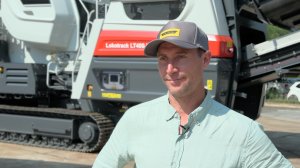
Pilot Crushtec sales and marketing director Francois Marais talks to Engineering News & Mining Weekly at Investing in African Mining Indaba in Cape Town.


The arrival of the first Metso LT400J mobile jaw crusher in Africa signals a meaningful shift in how mining and quarrying operators are approaching energy use, cost control and sustainability, says leading quarrying and mining equipment supplier Pilot Crushtec.
In an interview with Engineering News & Mining Weekly at Mining Indaba, Pilot Crushtec sales and marketing director Francois Marais notes that growing operational pressures, including higher fuel prices, tighter margins and environmental targets, are accelerating interest in hybrid and diesel-electric crushing technology across the region.
He explains that energy has become a strategic cost component rather than simply an operating expense. “Customers are under pressure from multiple sides: fuel price volatility, rising electricity tariffs and stricter sustainability requirements. Hybrid machines give them flexibility and efficiency, which directly addresses these pressures,” he says.
Diesel-electric systems such as those used in the Metso LT400J help reduce overall fuel burn while improving power management on site. Instead of running fully hydraulic systems, diesel-electric configurations optimise engine loads and allow integration with external electrical power where available. According to Marais, this materially changes total cost of ownership calculations.
“Customers are no longer looking only at capital cost, they are analysing lifecycle cost. Lower fuel consumption, improved uptime and reduced wear all contribute to a more attractive long-term cost profile,” he says.
Sustainability considerations are also increasingly influencing procurement decisions. Marais points out that larger mining groups and established quarry operators are setting carbon-reduction targets that now filter down to fleet selection. Hybrid crushers support these goals by lowering emissions per tonne processed and enabling partial electrification of mobile fleets.
“Greener production is no longer theoretical — it is becoming a measurable requirement in tenders and project approvals,” he adds.
The LT400J also features advanced automation, connectivity and remote monitoring capabilities, reflecting what Marais describes as the rise of “smart crushing”. These systems provide real-time performance data, predictive maintenance insights and production optimisation tools.
“Data visibility allows operators to make faster, better decisions, from adjusting settings to planning maintenance. That translates into higher throughput and less unplanned downtime,” he says.
Looking ahead, Pilot Crushtec expects hybrid and electric crushing solutions to gain steady momentum in Africa as infrastructure improves and energy strategies evolve. Marais believes early adopters will gain a competitive edge through lower operating costs and stronger environmental performance.
“This is not a passing trend. Hybrid and electric technologies will increasingly shape equipment strategies in the region, and those who adapt early will be best positioned to compete,” he concludes.