Access to smart ID cards boosted through digital applications at bank branches

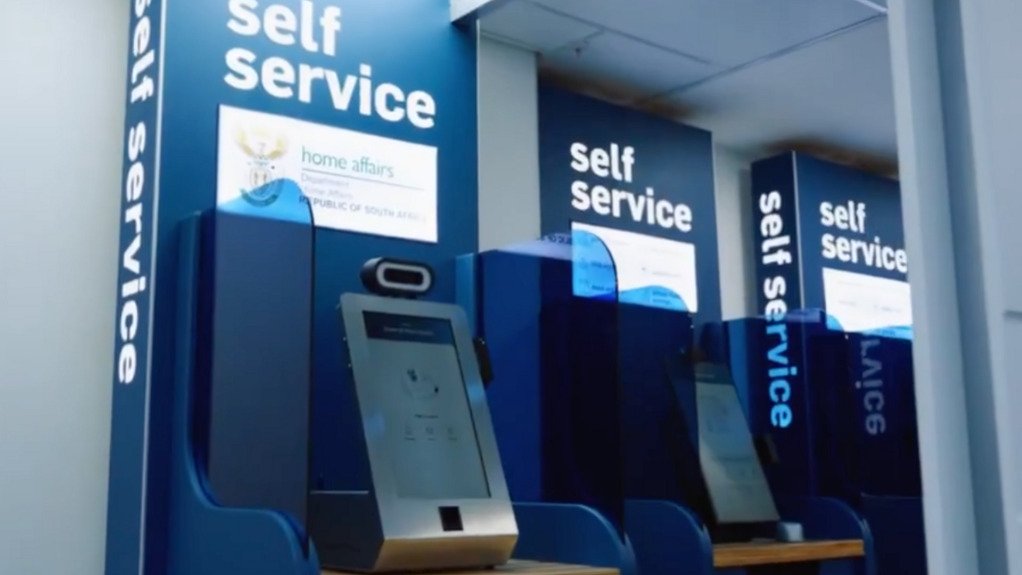


The Department of Home Affairs' (DHA's) Digital Partnership Model with South Africa’s banking sector has officially been launched and citizens can apply for smart identity document cards at nine branches of financial services firms Capitec Bank and Standard Bank.
The number of live branches will grow to 17 by March 13, the DHA says.
First National Bank is currently in the final phase of testing and other banks that joined the Digital Partnership are at varying stages of development.
The application process is fully digital and takes five to ten minutes to complete a secure Smart ID application using technology that is integrated with the bank branch.
The rollout will be done in phases to ensure system stability and operational readiness.
This first phase focuses on enabling South African citizens, qualifying naturalised citizens and permanent residents who still hold the green ID book to convert to the Smart ID Card, or to have existing Smart ID Cards re-issued.
This is a significant step in the DHA's ongoing reform programme to use digital technologies to change how South Africans access identity and civic services, says Home Affairs Minister Dr Leon Schreiber.
“By modernising and extending the existing technological integration between Home Affairs and the banking sector, known as the Online Verification Service, the department is decentralising and dramatically expanding the number of secure and dignified service points available to citizens across the country.
“This initiative signals our commitment to move Home Affairs services closer to the people through digital and automated channels that eliminate the scope for manipulation, while delivering efficiency,” he says.
The launch of this initiative also represents a significant evolution of the collaboration between Home Affairs and South Africa’s banking sector.
Under the previous model, banks hosted miniature Home Affairs offices inside their branches, where clients were required to complete applications on the e-Home Affairs platform, make bookings online and visit the branch primarily to capture their biometric details, the DHA says.
Under the new, fully digital model, participating banks connect directly to Home Affairs systems through a secure application programming interface-based Digital Gateway, which allows applications to be completed within minutes through the bank’s own service environment, and without the need to fill in any paper-based documents.
South Africa's smart identity cards were first introduced in 2013 and were to have been phased in over eight years, starting in 2014.
“About 16-million South Africans still rely on the green ID book, which is widely recognised as one of the most defrauded documents on the African continent.
“Accelerating the transition to the Smart ID is, therefore, critical to strengthening the country’s identity system and protecting citizens from identity fraud,” the department says.
Meanwhile, as the system stabilises throughout this year, the DHA will expand the range of services available through the Digital Partnership to more bank branches, and will also enable first-time Smart ID applications, passport services, courier delivery and applications through banks' apps.
To ensure a responsible rollout, the DHA and banks will start small, test thoroughly and stabilise the system before rapidly expanding the rollout across the country throughout this calendar year, the DHA says.
This forms part of the DHA's medium-term plan to scale the new Digital Partnership Model to 1 000 participating bank branches across South Africa by 2029, which will significantly increase access to services and end of long queues at Home Affairs offices.
There are 349 Home Affairs offices around the country.
“This is the biggest milestone to date on our reform drive. By embracing digital transformation, we are redefining what public service delivery looks like in the modern age.
“We are using technological security and efficiency to bring Home Affairs to the people, delivering access, inclusion and dignity for all,” says Schreiber.
South Africans who wish to replace their green ID book with a Smart ID, or to obtain a re-issue of their existing Smart ID can do so at the nine branches currently and the 17 branches bank branches from March 13.
Meanwhile, Standard Bank says the new bank-assisted model brings secure identity document services closer to South Africans through selected bank branches.
During the launch phase of the programme, Standard Bank will not charge customers for accessing the service through its participating branches, the bank says.
The initiative seeks to expand access to identity document services while strengthening the integrity of South Africa’s national identity system, it adds.
The transition from the green, bar-coded ID book to the Smart ID Card is a key priority for the DHA to reduce identity fraud and improve the security of the country’s identity framework.
“By securely connecting trusted institutions, such as banks, directly to Home Affairs systems, we are expanding access to Smart ID services while strengthening the integrity of South Africa’s national identity system. Through this, we are building a modern, digital Home Affairs that delivers services with greater security, convenience and dignity closer to where people live,” Schreiber says.
“Access to secure identity document services is fundamental to economic participation. By working with the DHA, we are bringing these services closer to where people live and work by using infrastructure that communities already trust,” says Standard Bank personal and private banking CEO Funeka Montjane.
Further, clients can complete applications with the assistance trained staff, and with capturing of biometric details conducted on site, Standard Bank says.
Article Enquiry
Email Article
Save Article
Feedback
To advertise email advertising@creamermedia.co.za or click here
Research Reports


Projects


Latest Multimedia


Latest News


Showroom

Established on 1 March, 2000, by Barries Barnard, Advanced Fire Suppression Technologies (AFST) and the Advanced Group stands as Sub-Saharan...
VISIT SHOWROOM




Press Office
Announcements
What's On
Subscribe to improve your user experience...
Option 1 (equivalent of R125 a month):
Receive a weekly copy of Creamer Media's Engineering News & Mining Weekly magazine
(print copy for those in South Africa and e-magazine for those outside of South Africa)
Receive daily email newsletters
Access to full search results
Access archive of magazine back copies
Access to Projects in Progress
Access to ONE Research Report of your choice in PDF format
Option 2 (equivalent of R375 a month):
All benefits from Option 1
PLUS
Access to Creamer Media's Research Channel Africa for ALL Research Reports, in PDF format, on various industrial and mining sectors
including Electricity; Water; Energy Transition; Hydrogen; Roads, Rail and Ports; Coal; Gold; Platinum; Battery Metals; etc.
Already a subscriber?
Forgotten your password?
Receive weekly copy of Creamer Media's Engineering News & Mining Weekly magazine (print copy for those in South Africa and e-magazine for those outside of South Africa)
➕
Recieve daily email newsletters
➕
Access to full search results
➕
Access archive of magazine back copies
➕
Access to Projects in Progress
➕
Access to ONE Research Report of your choice in PDF format
RESEARCH CHANNEL AFRICA
R4500 (equivalent of R375 a month)
SUBSCRIBEAll benefits from Option 1
➕
Access to Creamer Media's Research Channel Africa for ALL Research Reports on various industrial and mining sectors, in PDF format, including on:
Electricity
➕
Water
➕
Energy Transition
➕
Hydrogen
➕
Roads, Rail and Ports
➕
Coal
➕
Gold
➕
Platinum
➕
Battery Metals
➕
etc.
Receive all benefits from Option 1 or Option 2 delivered to numerous people at your company
➕
Multiple User names and Passwords for simultaneous log-ins
➕
Intranet integration access to all in your organisation