ACSA to spend R11.3bn on new runway, upgrading terminals at Cape Town Airport

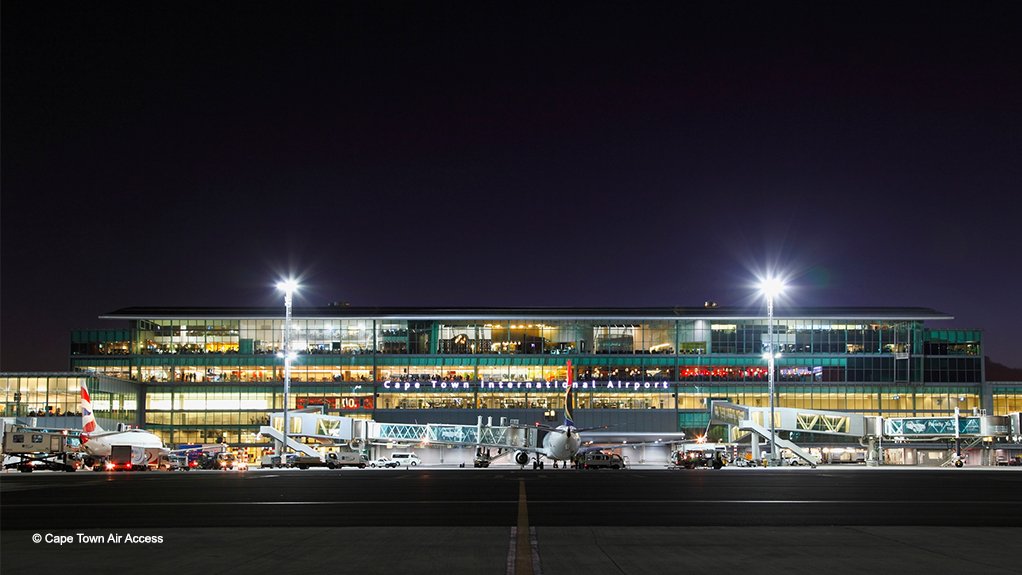


Airports Company South Africa (ACSA) will spent an estimated R11.3-billion to upgrade and expand the Cape Town International Airport (CTIA).
The infrastructure programme forms part of the State-owned entity’s long-term capital investment strategy aimed at strengthening capacity, modernising ageing infrastructure and supporting projected passenger growth, says ACSA spokesperson Ofentse Dijoe.
The programme at CTIA includes developments across landside facilities, terminal infrastructure and airfield operations.
The landside infrastructure programme will see the expansion of the car rental precinct at a cost of R205-million to accommodate additional operators and increased vehicle capacity, in a project that will take 30 months to complete once the contractors have been appointed.
The terminal infrastructure programme will include the construction of a new Domestic Arrivals Terminal; the extension of the existing Domestic Departures Terminal, including three additional passenger loading bridges with contact stands and expanded lounge facilities; and upgrades within the International Terminal aimed at improving the passenger experience, with a particular focus on addressing capacity pressure points.
The airfield infrastructure rollout will see the construction of a new Code F compliant runway with associated airfield services; two new Code F aircraft contact stands; the reconfiguration of an existing Code E aircraft stand to accommodate Code F aircraft; and three new narrow-body Code C aircraft stands.
Code F refers to the giants of the sky with a wingspan of between 69 m and 79 m, such as the Airbus A-380-800 or Boeing 747-8, which means that the airports operator is readying CTIA to receive some rather large visitors from abroad.
The ACSA capital expenditure (capex) programme will also see the construction of a new perimeter fence to strengthen airfield security.
“These developments are all intended to enhance operational resilience, increase passenger processing capacity and support the long-term growth trajectory of CTIA,” says Dijoe.
“Current projections indicate continued growth in both domestic and international travel at CTIA. The planned infrastructure interventions are intended to ensure the airport can accommodate these forecasted volumes efficiently.”
CTIA recorded a record-breaking 11.1-million two-way passengers (domestic and international) in 2025.
Domestic Terminal
Dijoe says the Domestic Arrivals facility was not fully replaced during ACSA’s T2010 airport remodelling programme that started in 2006, and has since reached capacity.
The new terminal will provide additional baggage reclaim belts, expanded ablution facilities, improved passenger circulation and reduced walking distances, as well as expanded meet-and-greet areas.
Other key enhancements will include three additional passenger loading bridges to reduce bussing during adverse weather conditions; increased lounge capacity; modernised ablution facilities; and expanded retail and food offerings.
Domestic Terminal interventions are estimated to carry a R 2.7-billion price tag and take 85 months to complete once contractors have been appointed.
International Terminal
The planned upgrades to the International Terminal will focus on addressing the most pressing operational pinch points, such as the current capacity constraints within the arrivals and departures areas.
The interventions aim to improve passenger processing flow, circulation and passenger amenities.
International Terminal capex is estimated at R853-million, and should take 60 months to complete once contractors have been appointed.
New Runway and Airfield Developments
The construction of a new runway is a key strategic intervention within the programme, says Dijoe.
It is also the most costly item on ACSA’s shopping list.
“ACSA has taken the strategic decision to construct a new runway rather than continue ongoing rehabilitation of the existing runway as it approaches the latter stages of its operational lifespan,” says Dijoe.
“The current runway alignment limits the airport’s ability to expand terminal infrastructure eastwards.
“The new planned runway will be positioned approximately 210 m east of the current alignment and reoriented by approximately 11 degrees.”
The new runway will be constructed largely on greenfield land located to the east of the current runway alignment.
A new perimeter will be established once the runway infrastructure has been completed and incorporated into the operational airfield.
Dijoe says the realignment allows ACSA to ensure long-term runway availability and to unlock space for future terminal expansion and additional aircraft parking stands.
The three new narrow-body Code C stands will support projected growth in domestic air travel, while the addition and reconfiguration of wide-body stands should improve apron capacity and aircraft parking flexibility.
The new realigned runway will cost around R6.2-billion and should take 24 months to complete once contractors have been appointed.
Construction of the new wide- and narrow-body aprons will cost roughly R850-million and take 19 months to complete.
Perimeter Fence
The construction of a new perimeter fence forms part of the broader programme to strengthen airfield security, regulatory compliance and controlled access to operational areas, says Dijoe.
The fence will be erected at a cost of around R513-million and take 24 months to wrap up once contractors have been appointed.
First Tender
“In total, the estimated capital spend is R11.3-billion,” says Dijoe. “All of these figures represent current planning estimates and remain subject to final procurement outcomes.”
All works will be carefully sequenced to minimise disruption to passengers, airline partners and ensure operational continuity, he adds.
The first construction tender is planned to be issued by June, with award anticipated by December – subject to procurement processes.
Consultancy tenders for the domestic terminal additions have already been awarded, with the remaining consultant appointments to follow from June onwards.
Subject to final regulatory approvals and procurement processes, construction of the Domestic Terminal expansion is currently anticipated to start in April next year.
But, What About the Winelands Airport?
Cape Town is set to host two major airports soon, with a private consortium continuing its plans to build the new Cape Winelands Airport.
Situated just north of Durbanville, the airport precinct is scheduled to open in 2028, with construction anticipated to begin at the end of the year.
Is the CTIA upgrade an effort to counter competition from this development?
“ACSA’s focus remains on ensuring that CTIA continues to invest in infrastructure that supports passenger growth, connectivity and regional economic activity within the broader Western Cape aviation and tourism ecosystem,” says Dijoe.
“Gauteng is an example of how two airports [OR Tambo International Airport and Lanseria International Airport] can coexist and complement each other.
“There are benefits for the Western Cape having two airports that can offer an option when flights need to be diverted due to inclement weather.”
Article Enquiry
Email Article
Save Article
Feedback
To advertise email advertising@creamermedia.co.za or click here


Projects

Latest Multimedia
Latest News


Showroom
For over 60 years, VEGA has provided industry-leading products for the measurement of level, density, weight and pressure. As the inventor of the...
VISIT SHOWROOM
Rio Carb is an OEM (Original Equipment Manufacturer) of R-C700 Chromium Carbide (CrC) alloy clad wear plates and pipes used for heavy materials...
VISIT SHOWROOM


Press Office
Announcements
What's On
Subscribe to improve your user experience...
Option 1 (equivalent of R125 a month):
Receive a weekly copy of Creamer Media's Engineering News & Mining Weekly magazine
(print copy for those in South Africa and e-magazine for those outside of South Africa)
Receive daily email newsletters
Access to full search results
Access archive of magazine back copies
Access to Projects in Progress
Access to ONE Research Report of your choice in PDF format
Option 2 (equivalent of R375 a month):
All benefits from Option 1
PLUS
Access to Creamer Media's Research Channel Africa for ALL Research Reports, in PDF format, on various industrial and mining sectors
including Electricity; Water; Energy Transition; Hydrogen; Roads, Rail and Ports; Coal; Gold; Platinum; Battery Metals; etc.
Already a subscriber?
Forgotten your password?
Receive weekly copy of Creamer Media's Engineering News & Mining Weekly magazine (print copy for those in South Africa and e-magazine for those outside of South Africa)
➕
Recieve daily email newsletters
➕
Access to full search results
➕
Access archive of magazine back copies
➕
Access to Projects in Progress
➕
Access to ONE Research Report of your choice in PDF format
RESEARCH CHANNEL AFRICA
R4500 (equivalent of R375 a month)
SUBSCRIBEAll benefits from Option 1
➕
Access to Creamer Media's Research Channel Africa for ALL Research Reports on various industrial and mining sectors, in PDF format, including on:
Electricity
➕
Water
➕
Energy Transition
➕
Hydrogen
➕
Roads, Rail and Ports
➕
Coal
➕
Gold
➕
Platinum
➕
Battery Metals
➕
etc.
Receive all benefits from Option 1 or Option 2 delivered to numerous people at your company
➕
Multiple User names and Passwords for simultaneous log-ins
➕
Intranet integration access to all in your organisation