Agri SA warns some incoming policy, law changes are impracticable

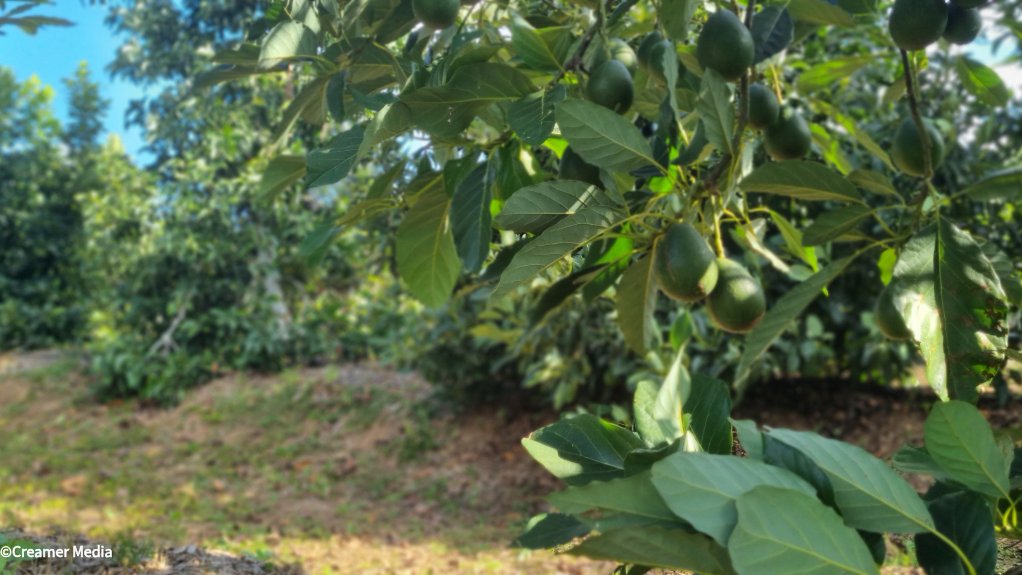



As government advances various pieces of legislation and policy on land, labour, natural resources, rural safety and trade, industry body Agri SA calls in its ‘2026 Policy Outlook’ for a renewed social compact grounded in economic realism, institutional functionality and shared responsibility.
South Africa’s agriculture sector has entered the year in a position of cautious recovery but with elevated structural risk, which can worsen if the various policy developments planned are disruptive to certainty, stability and the regulatory architecture of the South African food system, the organisation explains.
While the sector has historically demonstrated resilience despite climate volatility, animal disease outbreaks, infrastructure failure and policy uncertainty, recovery remains uneven across subsectors and regions.
Agri SA points out that livestock and emerging producers are facing acute pressure, which is exacerbated by insufficient service delivery and, in some cases, ineptness on government’s part.
The organisation emphasises that policy and regulatory processes must be evidence-based, transparent, lawful and consistent with constitutional principles of equality, fairness and accountability.
“Upholding these values is not only vital to ensuring legal certainty and investor confidence, but also to safeguarding the livelihoods of farmers and rural communities who depend on a stable and just framework for sustainable development.
“Agriculture is uniquely positioned to contribute to growth, employment and food security, if policy enables rather than constrains productive investment,” Agri SA motivates.
As an industry, agriculture stakeholders have aligned themselves with a practice of defining all-encompassing policies. This has taken effect in costly programmes on a national and provincial level that have largely continued to result in timid, fragmented, slow and uncoordinated successes and failure.
Agri SA questions how the country can reform the State apparatus and actually bring about the shared vision that is often evident in agricultural policy discussions.
For example, land reform remains one of the most politically sensitive and economically consequential policy areas. Agri SA explains that despite extensive legislation and funding commitments, outcomes continue to fall short owing to fragmented governance, weak post-settlement support and misalignment between land acquisition and productive use.
“The fact that about 2.2-million hectares that have been acquired by the State have not been transferred to new farmers further demonstrates the ongoing underperformance of State departments in the implementation of land reform and agricultural development,” Agri SA states.
On the other hand, in 2023/24, statutory industry organisations spent R216-million on development in the sector, which demonstrates the ongoing effort by the private sector to bring about an inclusive agricultural industry.
In recent years, the blended finance policy has been advocated by a range of stakeholders including agriculture. The objective of accessing discounted finance was a critical policy milestone.
However, according to the Land Bank’s ‘Integrated Report for 2025’, blended finance debt disbursements amounted to R585-million, compared to the commercial agriculture loan book that amounted to R257-billion in 2025.
Agri SA says finance remains a critical component of post-settlement.
In respect of the Expropriation Act of 2024, which is controversial because it authorises government to expropriate land without compensation, Agri SA says the implementation date is yet to be announced and will depend on accompanying regulations and administrative practice. The Act also faces legal scrutiny, with cases set to continue on the constitutionality of the Act during the year.
Questions also remain about the practicality of the Equitable Access to Land Bill which seeks to broaden opportunities for historically disadvantaged South Africans to gain access to land, despite the Bill currently being before Parliament undergoing committee deliberations and public participation.
In turn, the proposed Constitution Twenty-Second Amendment Bill, which proposes State custodianship of land and natural resources and enables expropriation without compensation, has entered the legislative process; however, Agri SA says high voting thresholds for amending Chapter 2 of the Constitution and lack of consensus make its advancement improbable.
LABOUR
As government works to advance the Draft Revised White Paper on Citizenship, Immigration and Refugee Protection, which aims to modernise immigration and align visa categories with national development priorities, Agri SA says that requiring individual farms or agribusinesses to apply separately for foreign labour visas is administratively burdensome and ill-suited to the realities of seasonal labour demand, dispersed operations and fluctuating production cycles.
Rather, Agri SA recommends the establishment of a sectoral visa system allocating visas to registered sectors such as agriculture, mining and construction based on national labour market needs, which could enable employers to access foreign workers under a streamlined, equitable and better regulated process.
Moreover, Agri SA says the sector target regulations in respect of the Employment Equity Amendment Act remain legally in effect despite being challenged in court over misalignment with sector-specific realities.
The targets require employers with more than 50 employees to align workforce demographics with national equity objectives; however, many organisations believe these targets are not realistic and are procedurally flawed, which undermines transformation goals.
While a court decision on the sector target regulations is pending, Agri SA recommends that employers meticulously document any justifiable grounds for non-compliance with the targets and maintain an organised compliance file that is accessible upon inspection.
Further, as the National Minimum Wage increase of consumer price inflation plus 1.5% takes effect from March 1, Agri SA says it will expand its national minimum wage survey to ensure that the national minimum wage is based on sector realities.
South Africa’s agriculture sector is already plagued by high costs, climatic and market risk and structural constraints – therefore, any wage adjustments for 2026 should be accompanied by meaningful enabling reforms that reduce structural costs and strengthen the sector.
Labour costs are also expected to increase once the Basic Conditions of Employment Act is amended to expand the scope of labour regulation. Agri SA explains the introduction of mandatory written terms for on-call work, compensation for cancelled shifts and increased severance obligations will raise compliance costs and administrative complexity for labour-intensive subsectors such as horticulture, livestock and primary processing.
While Agri SA supports measures that promote decent work and fair labour practices, overly rigid application of labour law without sector-specific differentiation risks undermining employment sustainability and competitiveness.
The proposed amendments to the Labour Relations Act that introduce wide-ranging changes to collective bargaining, strike regulation, dispute resolution and institutional arrangements also risk increased exposure to disputes and legal costs in a sector where employment relationships are often seasonal, task-based and geographically dispersed.
AgriSA acknowledges efforts to streamline dismissal procedures and prevent duplicative claims, but cautions that the immediate application of most amendments, combined with institutional expansion, risks placing additional compliance and dispute-resolution burdens on employers already operating under tight margins and complex regulatory conditions.
WATER
The revised National Water Amendment Bill, which was tabled again in Parliament in January this year, continues to raise significant concerns within the agriculture sector. The Bill’s proposed prohibition on private water trading will remove a long-standing mechanism that farmers have relied on to manage water use flexibly.
The Bill has been referred to the Portfolio Committee on Water and Sanitation, with public submissions due to be invited in the next phase before Parliamentary debate and final adoption.
Additionally, government released draft regulations on groundwater for comment at the end of last year, which has created uncertainty over the department not completing its verification of existing lawful water uses and, without that clarity, adding new rules risks creating even more confusion.
Farmers are also worried about the heavy administrative and financial burden associated with the demands in the draft groundwater regulations.
“Short deadlines, blanket restrictions on borehole drilling, costly borehole standards and expensive water testing are simply not realistic for all farmers,” Agri SA states.
Article Enquiry
Email Article
Save Article
Feedback
To advertise email advertising@creamermedia.co.za or click here
Research Reports


Projects

Latest Multimedia
Latest News


Showroom

ZF Aftermarket is the after-sales division of the world-renowned German ZF group, a global leader in mobility technology.
VISIT SHOWROOM
For over 30 years, Werner South Africa Pumps & Equipment (PTY) LTD has been designing, manufacturing, supplying and maintaining specialist...
VISIT SHOWROOM



Announcements
What's On
Subscribe to improve your user experience...
Option 1 (equivalent of R125 a month):
Receive a weekly copy of Creamer Media's Engineering News & Mining Weekly magazine
(print copy for those in South Africa and e-magazine for those outside of South Africa)
Receive daily email newsletters
Access to full search results
Access archive of magazine back copies
Access to Projects in Progress
Access to ONE Research Report of your choice in PDF format
Option 2 (equivalent of R375 a month):
All benefits from Option 1
PLUS
Access to Creamer Media's Research Channel Africa for ALL Research Reports, in PDF format, on various industrial and mining sectors
including Electricity; Water; Energy Transition; Hydrogen; Roads, Rail and Ports; Coal; Gold; Platinum; Battery Metals; etc.
Already a subscriber?
Forgotten your password?
Receive weekly copy of Creamer Media's Engineering News & Mining Weekly magazine (print copy for those in South Africa and e-magazine for those outside of South Africa)
➕
Recieve daily email newsletters
➕
Access to full search results
➕
Access archive of magazine back copies
➕
Access to Projects in Progress
➕
Access to ONE Research Report of your choice in PDF format
RESEARCH CHANNEL AFRICA
R4500 (equivalent of R375 a month)
SUBSCRIBEAll benefits from Option 1
➕
Access to Creamer Media's Research Channel Africa for ALL Research Reports on various industrial and mining sectors, in PDF format, including on:
Electricity
➕
Water
➕
Energy Transition
➕
Hydrogen
➕
Roads, Rail and Ports
➕
Coal
➕
Gold
➕
Platinum
➕
Battery Metals
➕
etc.
Receive all benefits from Option 1 or Option 2 delivered to numerous people at your company
➕
Multiple User names and Passwords for simultaneous log-ins
➕
Intranet integration access to all in your organisation