As energy grids evolve, real-time modelling is the key to a resilient, bi-directional energy future





This article has been supplied.
By: Nishandra Baijnath - Systems Architect, Digital Automation at Schneider Electric
Utilities and municipalities are facing a pivotal challenge as the country’s legacy power grid – engineered for one-way energy delivery from centralised suppliers to end-users – must rapidly evolve to meet a new paradigm.
South Africa’s electrical grid is a classic example of a traditional power system, designed for one-way energy flow. Historically, generation was located close to the fuel source, which saw coal-fired power stations concentrated in Mpumalanga. These stations fed power into high-voltage (HV) yards, which then connected to the national transmission network. This network transported electricity across the country, eventually stepping down the voltage through distribution infrastructure to serve consumers and large power users.
This linear model, from generation to consumption, worked well for decades. Today, however, it is being fundamentally disrupted, as South Africa’s ongoing energy crisis has sparked large-scale investment in distributed energy resources (DERs), including rooftop solar, wind farms, and microgrids.
As a result, households and businesses are no longer just consumers; they are becoming energy generators, often producing more electricity than they consume and the ability to feed the excess back into the grid. This evolution challenges the original design of our grid, which was not built to handle bi-directional flows, and without adaptation, we risk instability and inefficiency.
Vulnerability in modern grids
However, while DERs are essential for decarbonisation, they introduce volatility, which underscores a key vulnerability in modern grids. Sudden changes, like load drops or solar PV disconnections, cause power swings that disrupt voltage and frequency balance.
In South Africa, Eskom Transmission monitors system frequency closely. When demand exceeds supply, load shedding is triggered to prevent a total blackout. Frequency is directly affected by voltage fluctuations, and DERs can amplify these effects if not properly managed.
That is where real-time grid modelling becomes critical. It allows utilities to track, predict and manage these dynamic energy flows, ensuring grid reliability even as Eskom’s supply fluctuates. By integrating DERs intelligently, we can offset generation shortfalls and maintain a stable, resilient energy system.
Real-time modelling gives utilities and municipalities early visibility into potential power system anomalies, such as voltage dips, frequency swings and load imbalances, before they escalate. This faster detection enables quicker response and targeted intervention, helping prevent outages and protect critical infrastructure.
Voltage and frequency fluctuations can severely damage equipment like transformers and motors. By using real-time modelling, grid operators can simulate these conditions and anticipate these swings, act proactively and maintain system stability, even as DERs add complexity to the network.
Adding digital twin technology, DERMS and GIS
At the same time, grid reliability can also be improved by deploying digital twin technology, which creates a real-time virtual replica of the physical grid and its assets, such as transformers, cables and overhead lines, complete with electrical characteristics. This enables operators to simulate, monitor, and compute power flows dynamically, not just theoretically.
When integrated with Geographic Information Systems (GIS), the model gains spatial intelligence, such as asset location, load concentration and environmental factors like cloud cover. This allows for more informed decision-making and predictive grid behaviour.
Add Distributed Energy Resource Management Systems (DERMS), and you unlock orchestration of rooftop solar, microgrids, and other DERs. DERMS balances supply and demand, supports grid stability during outages and enables bi-directional energy flow by accurately calculating the capacity of DERs the network can host based on dynamic operating envelopes
Together, digital twin technology, DERMS and GIS form the backbone of a more resilient, intelligent grid that adapts to complexity, decentralisation and real-time conditions. By using GIS system extensions like Schneider Electric’s ArcFM, utilities can build detailed, accurate models of the electrical distribution network.
This modelling is essential for DERMS to understand how DERs interact with the grid and to perform control and optimization functions effectively. This allows DERMS to receive up-to-date network states, which is crucial for managing DER dispatch, voltage regulation, and islanding scenarios
When dynamic power flows and grid capacity are not properly accounted for, every new addition, whether a DER or a corrective measure, can unintentionally destabilise the system. Balancing these variables requires deep expertise, because even well-intentioned interventions can worsen instability.
As power grids continue to evolve with the integration of DERs, without real-time modelling and visibility, the risk also escalates as voltage and frequency fluctuations accumulate, protection systems may misfire, and the grid edges closer to outage conditions. Ultimately, overlooking these dynamics can compromise reliability and trigger cascading failures.
Article Enquiry
Email Article
Save Article
Feedback
To advertise email advertising@creamermedia.co.za or click here
Research Reports

Projects
Latest Multimedia
Latest News
Showroom
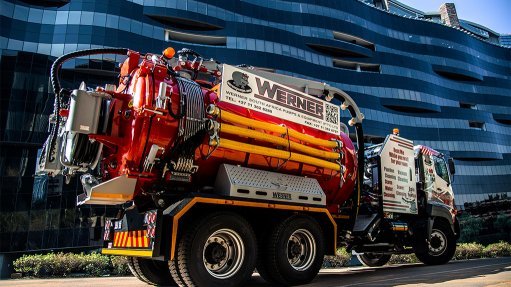
For over 30 years, Werner South Africa Pumps & Equipment (PTY) LTD has been designing, manufacturing, supplying and maintaining specialist...
VISIT SHOWROOM
Iritron delivers advanced automation, control, and optimisation solutions to the Mining, Minerals & Metals, Consumer Package Goods and...
VISIT SHOWROOM

Press Office
Announcements
What's On
Subscribe to improve your user experience...
Option 1 (equivalent of R125 a month):
Receive a weekly copy of Creamer Media's Engineering News & Mining Weekly magazine
(print copy for those in South Africa and e-magazine for those outside of South Africa)
Receive daily email newsletters
Access to full search results
Access archive of magazine back copies
Access to Projects in Progress
Access to ONE Research Report of your choice in PDF format
Option 2 (equivalent of R375 a month):
All benefits from Option 1
PLUS
Access to Creamer Media's Research Channel Africa for ALL Research Reports, in PDF format, on various industrial and mining sectors
including Electricity; Water; Energy Transition; Hydrogen; Roads, Rail and Ports; Coal; Gold; Platinum; Battery Metals; etc.
Already a subscriber?
Forgotten your password?
Receive weekly copy of Creamer Media's Engineering News & Mining Weekly magazine (print copy for those in South Africa and e-magazine for those outside of South Africa)
➕
Recieve daily email newsletters
➕
Access to full search results
➕
Access archive of magazine back copies
➕
Access to Projects in Progress
➕
Access to ONE Research Report of your choice in PDF format
RESEARCH CHANNEL AFRICA
R4500 (equivalent of R375 a month)
SUBSCRIBEAll benefits from Option 1
➕
Access to Creamer Media's Research Channel Africa for ALL Research Reports on various industrial and mining sectors, in PDF format, including on:
Electricity
➕
Water
➕
Energy Transition
➕
Hydrogen
➕
Roads, Rail and Ports
➕
Coal
➕
Gold
➕
Platinum
➕
Battery Metals
➕
etc.
Receive all benefits from Option 1 or Option 2 delivered to numerous people at your company
➕
Multiple User names and Passwords for simultaneous log-ins
➕
Intranet integration access to all in your organisation