https://newsletter.en.creamermedia.com

Beyond AI: Why utility-scale solar needs computational precision

19th February 2026


Font size: - +

This article has been supplied and will be available for a limited time only on this website.

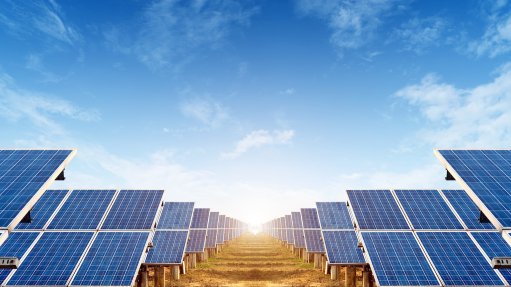
Global renewable energy is forecasted to grow by 4 600 gigawatts (GW) by 2030 – roughly the equivalent of adding China, the European Union and Japan’s current power generation capacity combined. Solar capacity is expected to claim 80% of this total renewable energy growth1. As developers prepare for this trajectory, the industry confronts an important question: can artificial intelligence (AI) deliver the precision that multi-billion-dollar solar farms demand, or should the sector be looking at a different approach?

While AI is capturing headlines across the energy landscape, utility-scale solar design requires something fundamentally different. For engineers designing large, complex utility-scale projects, the 90 - 95% accuracy that AI models produce is simply not good enough. They need highly accurate, build-ready outputs.

"Energy engineers tend to have a challenging relationship with AI when precision is non-negotiable," says Paul Nel, CEO of 7SecondSolar, the solar engineering studio that developed AutoPV. "In utility-scale solar, a single percentage point error in cable routing or inverter placement could translate to thousands in revenue loss over a project's lifetime. That's where computational design software, based on tested engineering algorithms, delivers what AI cannot: predictable and accurate construction-ready design outputs."

Where AI fits and where it falls short

AI has become a catch-all term for a plethora of data analytics tools. A key distinction should be made between Machine Learning and Generative AI. 

Machine Learning has been around for a very long time, and is pretty good at pattern recognition and forecasting when considering large data sets. Generative AI, however, is what is driving a lot of the hype in industry today and is based largely on large language models (LLMs) to generate new data. While Machine Learning is intuitively more aligned with engineering processes, since it is really just an extension of an engineer’s data analysis toolbox, Generative AI is better placed to contribute in other areas of solar project development. It serves feasibility studies, site screening, and preliminary analysis, where approximate answers can help identify feasible sites. AI is transforming the early stages of energy project development, with reports suggesting that AI-accelerated simulations and report generation can cut proposal and initial feasibility times by up to 40%2. But when projects advance beyond feasibility into a design phase, AI's limitations become risks that energy engineers should steer away from. 

The core problem with Generative  AI in a design environment is that  it relies on a corpus of data and information that is not easily verifiable and can include inaccuracies. While this produces plausible outputs, they are most likely not accurate ones, and very difficult, if not impossible, to verify. “Engineers must always be able to verify that their designs are safe, and fit for purpose. This means the calculations and design process must be independently reproducible,” adds Nel. When designing large complex solar farms with thousands of components and often thousands of  kilometres of cabling, ‘plausible’ is just too risky.

Why computational design software meets the precision imperative

Computational software operates on fundamentally different principles than AI. AutoPV is unique in how it was built ,by engineers who understand electrical engineering constraints, terrain analysis, and construction requirements, using deterministic algorithms that produce design outputs that can go into the construction phase.

“The true acceleration in utility-scale solar deployment is increasingly powered by computational software. Platforms like AutoPV are revolutionising the design process, enabling engineers to rapidly model, simulate, compare configurations, and optimise complex solar power plants,” says Nel. "AutoPV enables engineers to generate multiple design configurations and compare them objectively. Each iteration includes exact cable routings, inverter placements, and complete power loss calculations. Engineers can evaluate cost versus energy yield with confidence because the numbers are exact, not estimated."

A recent 214MW project designed with AutoPV illustrates  that computational software is more than a guestimation tool, but an engineering tool that delivers accurate and construction-ready designs. Engineers generated eight design iterations in a single morning, comparing configurations that would traditionally require months of manual design. The analysis revealed dramatic variations across iterations. One configuration saved $1M in cable costs alone. Another optimised for maximum lifetime energy production, generating an additional $50,000 in annual revenue. A third balanced construction cost against operational performance. Each design included constructible AutoCAD drawings, a complete bill of quantities, and validated electrical calculations.

Adding another critical layer of accuracy, AutoPV has integrated terrain adaptation into its design automation software. This allows engineers to upload site topography in CSV or XYZ formats directly into the design engine. As we move into more complex landscapes, integrating terrain awareness ensures that the designs remain an engineering reality rather than a flat-site assumption.

The path forward

AI will continue to play a role in early-stage feasibility studies and in Operations and Maintenance (O&M), where it can be used for predictive maintenance and performance monitoring. Computational design software will, however, likely be the primary driver for solar design, which requires accuracy and enables energy engineers to focus on value engineering rather than repetitive design tasks.

“To meet global solar energy targets, it will cost engineering firms $12 billion to develop pre-construction designs for these solar projects. That equates to roughly 12,000 work years. Design automation without compromising safety and accuracy is really important if we want solar energy to dominate the renewable energy mix by 2030,” says Nel. 

Edited by Creamer Media Reporter

Article Enquiry

Email Article

Save Article

Feedback

To advertise email advertising@creamermedia.co.za or click here

Showroom

Sika South Africa
Sika South Africa

Sika South Africa is a trusted partner for the nation’s infrastructure, commercial, residential, and industrial sectors.

VISIT SHOWROOM 
AirNox Pty Ltd
AirNox Pty Ltd

AirNox (Pty) Ltd is a level 1 BBBEE manufacturer of complete AdBlue® solutions for operators of SCR diesel engines and AUS40 across South Africa...

VISIT SHOWROOM 

Latest Multimedia

sponsored by

Photo of Martin Creamer
On-The-Air (13/02/2026)
13th February 2026 By: Martin Creamer
Magazine round up | 13 February 2026
13th February 2026

Option 1 (equivalent of R125 a month):

Receive a weekly copy of Creamer Media's Engineering News & Mining Weekly magazine
(print copy for those in South Africa and e-magazine for those outside of South Africa)
Receive daily email newsletters
Access to full search results
Access archive of magazine back copies
Access to Projects in Progress
Access to ONE Research Report of your choice in PDF format

Option 2 (equivalent of R375 a month):

All benefits from Option 1
PLUS
Access to Creamer Media's Research Channel Africa for ALL Research Reports, in PDF format, on various industrial and mining sectors including Electricity; Water; Energy Transition; Hydrogen; Roads, Rail and Ports; Coal; Gold; Platinum; Battery Metals; etc.

Already a subscriber?

Forgotten your password?

MAGAZINE & ONLINE

SUBSCRIBE

RESEARCH CHANNEL AFRICA

SUBSCRIBE

CORPORATE PACKAGES

CLICK FOR A QUOTATION


301

sq:0.095 0.197s - 186pq - 2rq
Subscribe Now