Market liberalisation, grid access needed to sustain energy reform momentum

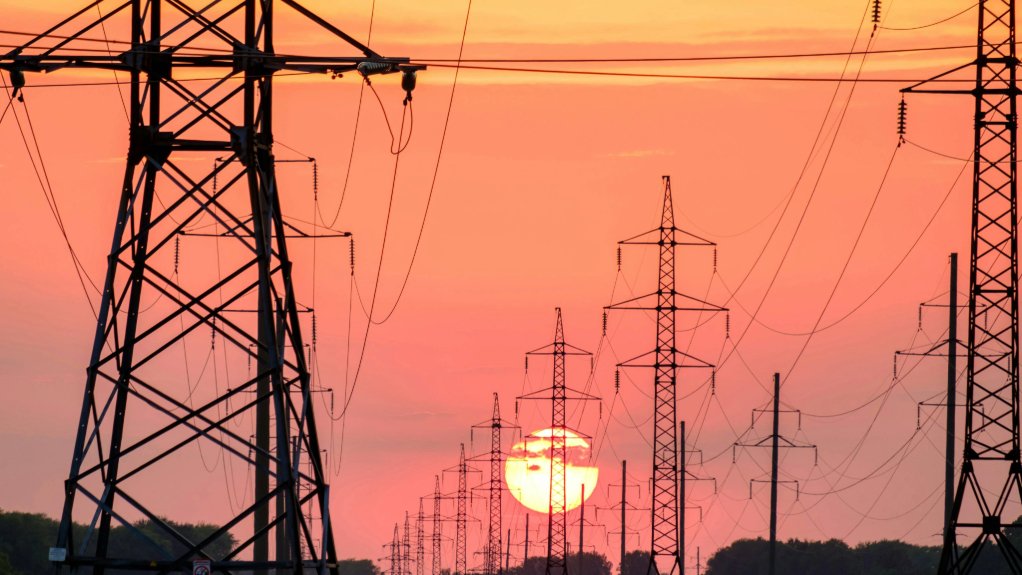
Progress in the national electricity reform process will help to sustain market reform momentum, but grid acces remains critical in 2026.


Even if only incremental steps are taken, South Africa must continue to progress its electricity market liberalisation and reform agenda, such as launching the South Africa Wholesale Electricity Market (SAWEM), even if only involving a few organisations.
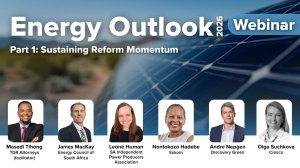
Further, while there were many competing challenges to be addressed to ensure progress, grid access was highlighted as a key element in the coming year by the experts who participated in the 'South Africa's Energy Outlook 2026 – Sustaining Reform Momentum' webinar hosted by Creamer Media on January 28.
The webinar was facilitated by law firm TGR Attorneys director Masedi Tlhong, with State-owned Eskom Group strategy and sustainability executive Nontokozo Hadebe, industry organisation South African Independent Power Producer Association chairperson Leoné Human, financial advisory firm Cresco associate director Olga Suchkova, renewable-energy trader Discovery Green head André Nepgen and industry organisation Energy Council of South Africa CEO James Mackay providing insights.
Collaboration between all private and public parties and stakeholders must continue, as it helped to provide the certainty required for projects to remain bankable, said Suchkova.
However, unlocking the grid was a critical element, with capacity urgently needed, she added.
A report Cresco undertook alongside financial services firm Standard Bank in 2025 looked at the impact on the grid that the ageing coal-powered fleet will have, and it highlighted the urgent need to add new generation capacity.
“Among the many challenges that have to be addressed at the same time, we need to ensure that new capacity is added to the grid,” she said.
Mackay highlighted that financial close decisions for renewable-energy projects had peaked in 2024 and, although the country was in a robust construction phase, investment decision-making for renewable energy projects was declining.
Electricity demand has been declining for the past 12 years, including from 2025 to this year, and the reprieve from loadshedding could partly be attributed to this declining demand.
However, electricity demand, and use, must increase to support and enable more rapid GDP growth of between 3% and 5%, which is needed to stimulate growth and investment and create jobs.
“We need to get back up and running with the financial close process. Otherwise, by 2029, if demand bounces back by 16 TWh/y to 20 TWh/y, then we would be back in a loadshedding scenario.
“We are not seeing investment that is sustaining a robust renewables industry, and are not building enough new generation to deal with this shift [in electricity demand].”
Therefore, South Africa must urgently find short-term solutions to unlock grid capacity to add more generation sources, he said.
When asked what the most critical element needed for the emerging energy market to scale was, Nepgen concurred that grid access remained a challenge and that maintaining the momentum of transformation was currently more about execution than policy.
However, he highlighted a different consideration, namely that the majority of the country still did not have access to the wheeled electricity market.
There were many reasons for this, including that many municipalities have not developed processes for the wheeling of electricity.
He highlighted that, if access to wheeled electricity could be broadened to include municipalities, and large- and small-scale energy users, then demand for energy could flow from this, which would underpin supply and hence support investment in generation.
“The reforms must address accessibility while addressing fairness and sustainability at the same time,” he said.
Human, meanwhile, noted that collaboration between public and private organisations could help to overcome the scale of the challenges, such as grid expansion to bolster access.
She emphasised that, given the distances and magnitude of the grid development needed, cooperation between public and private organisations was necessary to provide the technical skills needed for this specialised work.
“Rather than trying to reach the required grid expansion independently, South Africa could use the skills available in the private sector to fast-track the process of grid expansion. Otherwise, we will not get the scale in the time that we require,” she said.
Hadebe pointed out that a significant amount of work had already been done in preparation for a liberalised electricity market, although she acknowledged that the structural reform had taken a long time, particularly in the context of the energy supply challenges facing the country.
However, transmission system operator (TSO) the National Transmission Company South Africa (NTCSA) had been set up separately from Eskom in 2024, and Eskom and the newly separated companies were anticipating the launch of the wholesale electricity market.
“The focus now is on bedding down the work done and developing the new business models for the new companies, which Eskom is currently busy with,” she said.
Hadebe acknowledged that, as the panellists highlighted, grid capacity was the biggest challenge and was the first thing Eskom was focusing on through the NTCSA.
“We understand the need for speed and the limits of Eskom's capacity to execute this. Therefore, we need to collaborate to achieve this. The Independent Transmission Infrastructure Procurement Programme is an example of how this can be done through collaboration between the NTCSA, the private sector and government.
“Our teams are looking at different models of how to roll out grid infrastructure to accelerate implementation. This, in addition to Eskom's investment plans and the significant amount of capital investment that will be undertaken by the NTCSA, will help to accelerate grid expansion,” she said.
Further, the National Energy Crisis Committee (Necom) met on January 27, which included briefings by President Cyril Ramaphosa and Electricity and Energy Minister Kgosientsho Ramokgopa, to discuss Phase 3 of South Africa's response to its energy challenges, reported Mackay.
“Phase 3 is about implementation under the theme of inclusive growth, jobs and confidence. We are moving out of crisis and away from centralised control under the Presidency into the implementation phase. Both the President and Minister emphasised that they remain committed to the reforms and that the process is irreversible,” he said.
Further, an important point the President raised was that the TSO was a complex process and that, while the private sector was needed to expand investment in the grid, the country also needed a sustainable and financially-sound Eskom.
“If we lose either [private sector participation or the utility], then we lose an important element underpinning the reform programme. The messaging by the President and Minister focused on the need to build confidence and build on the transformation.
“The context is settling and, while there has been a lot of political shifting, there is more confidence and commitment to engage on these issues,” he said.
“In 2026, the agreement between the Minister and business organisation Business for South Africa is that we must focus on sustaining the reform and embedding cost-competitive electricity while avoiding future loadshedding.”
The reforms were unfolding, with a lot achieved, and a lot of work had been done on rules for the market, said Suchkova.
“However, the launch of the SAWEM is an important milestone that we want to see this year; even if it is launched with a limited handful of companies. This will send the right message and we will start to see some data that we as industry participants and stakeholders can then start to use in analyses and projections.
“This data is critical for all parties, and especially investors, to draft their strategies and prepare for changes. While international examples of wholesale electricity markets can help us solve many of the challenges, this type of data will help everyone to take their businesses forward,” she said.
Article Enquiry
Email Article
Save Article
Feedback
To advertise email advertising@creamermedia.co.za or click here
Research Reports

Projects
Latest Multimedia

Latest News
Showroom
Sweet-Orr, established in 1871, is a global leader in superior protective workwear, known for quality, innovation, and performance.
VISIT SHOWROOM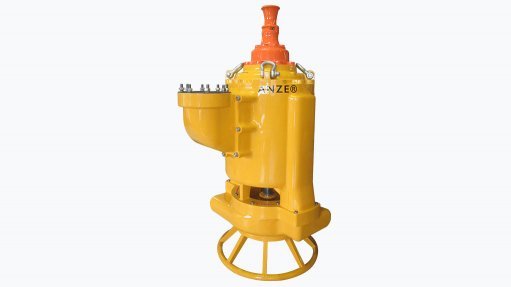
Goodwin Submersible Pumps Africa is sole distributors for Goodwin electrically driven, submersible, abrasion resistance slurry pumps.
VISIT SHOWROOM
Announcements
What's On
Subscribe to improve your user experience...
Option 1 (equivalent of R125 a month):
Receive a weekly copy of Creamer Media's Engineering News & Mining Weekly magazine
(print copy for those in South Africa and e-magazine for those outside of South Africa)
Receive daily email newsletters
Access to full search results
Access archive of magazine back copies
Access to Projects in Progress
Access to ONE Research Report of your choice in PDF format
Option 2 (equivalent of R375 a month):
All benefits from Option 1
PLUS
Access to Creamer Media's Research Channel Africa for ALL Research Reports, in PDF format, on various industrial and mining sectors
including Electricity; Water; Energy Transition; Hydrogen; Roads, Rail and Ports; Coal; Gold; Platinum; Battery Metals; etc.
Already a subscriber?
Forgotten your password?
Receive weekly copy of Creamer Media's Engineering News & Mining Weekly magazine (print copy for those in South Africa and e-magazine for those outside of South Africa)
➕
Recieve daily email newsletters
➕
Access to full search results
➕
Access archive of magazine back copies
➕
Access to Projects in Progress
➕
Access to ONE Research Report of your choice in PDF format
RESEARCH CHANNEL AFRICA
R4500 (equivalent of R375 a month)
SUBSCRIBEAll benefits from Option 1
➕
Access to Creamer Media's Research Channel Africa for ALL Research Reports on various industrial and mining sectors, in PDF format, including on:
Electricity
➕
Water
➕
Energy Transition
➕
Hydrogen
➕
Roads, Rail and Ports
➕
Coal
➕
Gold
➕
Platinum
➕
Battery Metals
➕
etc.
Receive all benefits from Option 1 or Option 2 delivered to numerous people at your company
➕
Multiple User names and Passwords for simultaneous log-ins
➕
Intranet integration access to all in your organisation