Off Grid Electric Vehicle Infrastructure: Industrial Policy that builds shared value


This article has been supplied.
By: Ciska Kruger
South Africa stands at a rare moment where infrastructure development, climate leadership, and inclusive growth can converge into a single practical national project. A national network of off-grid, renewable-powered electric vehicle charging stations is not merely a transport solution — it is a platform for shared value that can advance economic development, social upliftment, and environmental stewardship at scale.
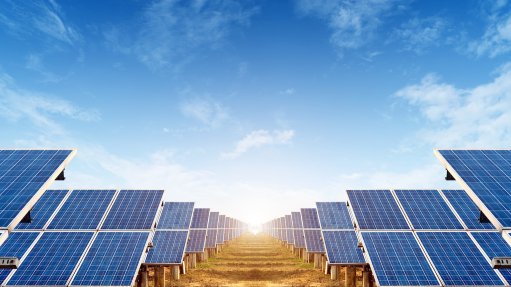
Each station functions as a small, independent power plant. Built on solar generation and battery storage, it adds new capacity without burdening the national grid, strengthening energy resilience while accelerating the transition to clean power. In a country constrained by energy shortages, infrastructure that expands supply without increasing grid strain is not a luxury — it is strategic.
Placing these stations along highways and in rural nodes extends modern energy infrastructure into communities historically left at the margins of investment. This is rural development driven by technology: commercial activity around each site, opportunities for small enterprises, improved mobility, and greater participation in the formal economy. Charging hubs become micro-centres of economic life, attracting services, tourism, and logistics activity while improving regional connectivity.
The employment impact is both immediate and long-term. Construction, electrical installation, operations, maintenance, logistics, and security create skilled and semi-skilled jobs. These are future-facing roles aligned with the global clean energy economy, positioning South African workers inside industries that are expanding worldwide. Infrastructure investment becomes not only a stimulus, but a skills strategy for the next generation of work.
The environmental benefits are equally strategic. Electrifying transport with renewable energy reduces emissions, improves air quality, and supports South Africa’s climate commitments. Every vehicle charged with clean power displaces fossil fuel consumption. At scale, a visible national charging network signals that economic growth and climate responsibility are not competing priorities — they reinforce one another.
This infrastructure also strengthens competitiveness. It signals to investors that South Africa is serious about green innovation and long-term sustainability. It supports tourism, freight, and commerce by enabling a modern transport backbone. It invites manufacturing partnerships, technology transfer, and skills development in sectors that will define the next industrial era. Countries that build early capacity in clean transport infrastructure position themselves as participants in the global energy transition rather than observers of it.
Most importantly, this model delivers shared value. Communities gain infrastructure and opportunity. The economy gains jobs and investment. The environment gains protection. The country gains energy security and international credibility. Future generations gain a development pathway that is both prosperous and sustainable.
But infrastructure alone is not enough. The transition to electric mobility will not occur at the necessary scale without clear, stable government policy. Sustainable development requires alignment between public goals and market incentives. Without that alignment, electric vehicles remain more expensive than internal combustion alternatives, consumer uptake slows, and infrastructure investments cannot reach their full potential.
International experience shows a consistent pattern: policy clarity drives adoption. Where governments provide sustained fiscal incentives, supportive regulation, and industrial coordination, EV markets expand rapidly. Where policy signals are fragmented or uncertain, progress slows. The lesson is practical rather than ideological. Markets respond to certainty, and investors respond to policy frameworks they can rely on over time.
South Africa therefore needs a comprehensive electric and hybrid vehicle framework that addresses the entire ecosystem. This includes tax relief to narrow the upfront price gap between EVs and conventional vehicles, purchase incentives or rebates, reduced registration fees, and usage benefits that make adoption economically rational for consumers and fleets. It also requires support for local manufacturing and assembly to capture industrial value, and regulatory reform that accelerates the rollout of renewable energy infrastructure and a national charging network.
Clear policy lowers risk, attracts capital, and enables private investment to scale infrastructure faster and more efficiently. Without it, the country risks lagging behind global peers, forfeiting industrial opportunities, and missing critical climate and public health gains that electrified transport can deliver.
A coordinated EV strategy would do more than stimulate a new sector. It would anchor sustainable development in tangible projects that deliver measurable social and environmental returns. Clean, off-grid charging stations translate climate commitments into visible infrastructure. They reduce greenhouse gas emissions, improve public health through cleaner air, and extend economic opportunity into underserved regions. They demonstrate that environmental responsibility and economic expansion can advance together.
At its core, this is about building an economy that creates shared value. Infrastructure designed for sustainability strengthens communities while protecting the natural systems on which prosperity depends. It aligns with South Africa’s constitutional commitment to an environment that supports human health and wellbeing and to development that serves both present and future generations. These principles need not remain abstract legal ideals; they can be expressed in concrete infrastructure that citizens can see, use, and benefit from daily.
This is more than a business opportunity. It is a blueprint for how South Africa can grow — inclusively, responsibly, and confidently — in a world that is rapidly transitioning to clean energy. With clear policy leadership and coordinated infrastructure investment, electric mobility can become a national project that delivers jobs, resilience, and climate progress at the same time.
It is a chance to build infrastructure that powers vehicles, yes — but also powers hope, dignity, and opportunity.
Article Enquiry
Email Article
Save Article
Feedback
To advertise email advertising@creamermedia.co.za or click here

Projects
Latest Multimedia

Latest News

Showroom

ZF Aftermarket is the after-sales division of the world-renowned German ZF group, a global leader in mobility technology.
VISIT SHOWROOM
Established in 1933, EKATO is the world leader in agitation technology, supplying agitators for processes and applications such as chemicals and...
VISIT SHOWROOM


Press Office
Announcements
What's On
Subscribe to improve your user experience...
Option 1 (equivalent of R125 a month):
Receive a weekly copy of Creamer Media's Engineering News & Mining Weekly magazine
(print copy for those in South Africa and e-magazine for those outside of South Africa)
Receive daily email newsletters
Access to full search results
Access archive of magazine back copies
Access to Projects in Progress
Access to ONE Research Report of your choice in PDF format
Option 2 (equivalent of R375 a month):
All benefits from Option 1
PLUS
Access to Creamer Media's Research Channel Africa for ALL Research Reports, in PDF format, on various industrial and mining sectors
including Electricity; Water; Energy Transition; Hydrogen; Roads, Rail and Ports; Coal; Gold; Platinum; Battery Metals; etc.
Already a subscriber?
Forgotten your password?
Receive weekly copy of Creamer Media's Engineering News & Mining Weekly magazine (print copy for those in South Africa and e-magazine for those outside of South Africa)
➕
Recieve daily email newsletters
➕
Access to full search results
➕
Access archive of magazine back copies
➕
Access to Projects in Progress
➕
Access to ONE Research Report of your choice in PDF format
RESEARCH CHANNEL AFRICA
R4500 (equivalent of R375 a month)
SUBSCRIBEAll benefits from Option 1
➕
Access to Creamer Media's Research Channel Africa for ALL Research Reports on various industrial and mining sectors, in PDF format, including on:
Electricity
➕
Water
➕
Energy Transition
➕
Hydrogen
➕
Roads, Rail and Ports
➕
Coal
➕
Gold
➕
Platinum
➕
Battery Metals
➕
etc.
Receive all benefits from Option 1 or Option 2 delivered to numerous people at your company
➕
Multiple User names and Passwords for simultaneous log-ins
➕
Intranet integration access to all in your organisation