Opinion: The African grid of the future – smart, connected, resilient

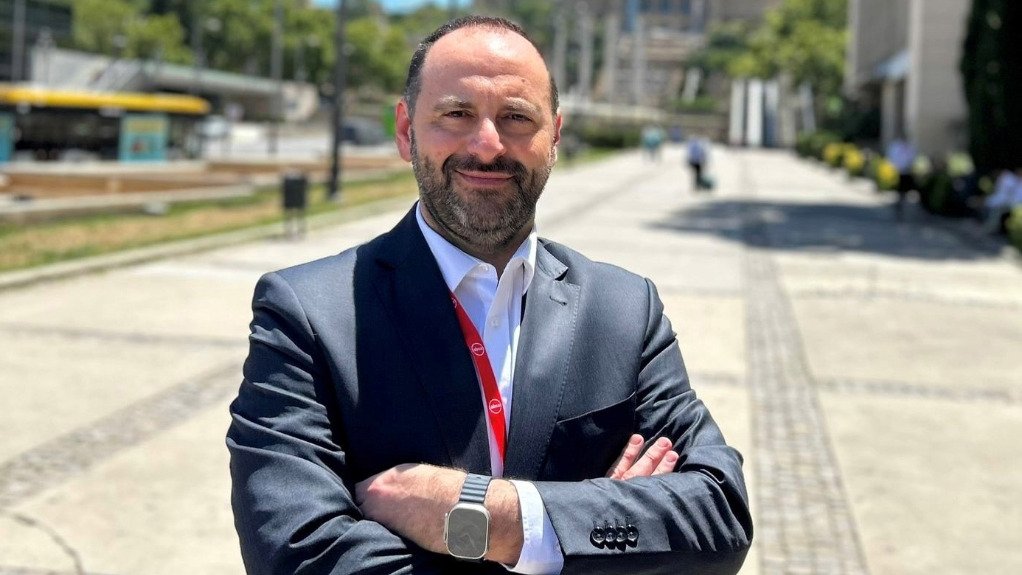



In this article, GE Vernova grid solutions chief strategy and growth officer for the Middle East and Africa Bernard Dagher writes that meeting Africa’s rising electricity demand will require a significant expansion of generation and transmission infrastructure and that digitisation could play a role in delivering cost savings and efficiency improvements.
The continent is projected to increase electricity generation from 939 TWh in 2024 to 1 446 TWh in 2035 – an increase of 54% in less than a decade (IEA World Energy Outlook 2025). Delivering this capacity to consumers requires a substantial commitment to grid infrastructure development. This development goes beyond traditional transmission and distribution lines; it involves creating a grid prepared for a world that is decarbonising and electrifying.
This future grid will be fed by dispatchable natural gas and other baseload sources, as well as increased renewables, which can be intermittent, along with distributed energy resources such as battery storage, rooftop solar and electric vehicles. In a world where increasing electrification heightens the importance of grid resilience, digitisation can help unlock significant savings and efficiency improvements across operations, asset management and reliability.
THE FUTURE GRID
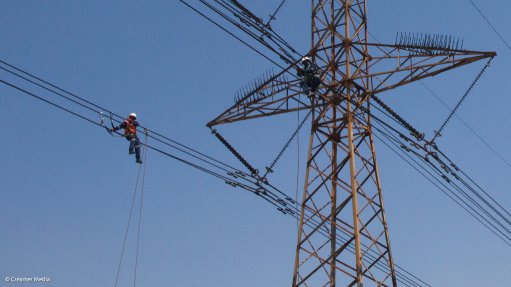
Considering the potential evolution of Africa’s grid in the years and decades to come, several trends are likely to emerge. The grid is expected to incorporate more digital technologies, automation and a dense network of sensors that generate data to provide real-time visibility and control. Data analytics will provide operator insights. The grid will be flexible and bidirectional, with power flowing in multiple directions as countless distributed resources generate or consume grid electrons.
Grid stability is expected to shift towards power-electronics solutions such as grid-forming inverters, fast frequency response and new system-strength protection schemes. Grid assets will no longer be manually measured, monitored or controlled. Networked and rich with sensors, this work will be done continuously and largely remotely, enhanced by AI-guided autonomy. Asset management is anticipated to move away from fixed-schedule planning, replacing it with data-powered, probabilistic, scenario-based planning that accounts for an asset's actual condition.
Building power lines is a necessary component of tomorrow’s grid, but the grid of the future will also see continued progress in expanding interconnections, not only within regional power pools but between power pools. To support this vision, GE Vernova regularly engages with both the private sector and governments.
Recently, the company participated at the B20 South Africa event as part of the Energy Mix & Just Transition Task Force to help advance practical solutions that scale up more affordable, reliable, sustainable and secure energy, and the grid infrastructure to support it. The company highlighted a significant regional integration milestone achieved by the West African Power Pool (WAPP). Supported by GE Vernova, the WAPP conducted its first full regional electric system synchronisation, unifying grid operations across 15 West African countries.
HOW ENERGY STAKEHOLDERS CAN HELP
To help bring about “the grid of the future”, regulators and policymakers have several options:
-Setting integrated national targets: Align electrification, generation, transmission, and reliability goals within a single, long-term plan.
-Streamlining interconnection: Modernize permitting, harmonize environmental reviews, and coordinate regionally to limit delays.
-Co-planning generation and evacuation: Use integrated resource and transmission planning to avoid transmission and distribution bottlenecks. This can also reduce total system cost.
-Building workforce and supply chains: Bring together academia and industry to implement training programmes, educate domestic manufacturing about standards, and provide industry incentives. Together, this can help de-risk delivery.
-Planning for resilience and equity: In a region disproportionately impacted by climate change, it’s essential to implement programmes to ensure access, such as microgrids, to help maintain critical services.
Utilities and grid operators can contribute by:
-Fostering grid interconnections: Standardize processes, upgrade analytical tools, and pre-build shared network upgrades when cost-effective.
-Strengthening physical infrastructure: Procure advanced hardware, deploy line sensors and grid-forming inverters, update fault and protection schemes, and add synchronous condensers where needed.
-Digitisation: Implement advanced distribution management systems and distributed energy resource management systems, advanced protection systems, and asset health analytics.
-Cybersecurity: With networked systems, cybersecurity is essential. Utilities should implement zero-trust architectures and secure device onboarding.
These recommendations are a starting point. Collaborative efforts from all stakeholders, from governments to utilities to industry, will drive us toward a sustainable, reliable and affordable energy future. The path may be complex, but the rewards – a thriving continent – make every step worthwhile.
Article Enquiry
Email Article
Save Article
Feedback
To advertise email advertising@creamermedia.co.za or click here
Research Reports

Projects
Latest Multimedia

Latest News
Showroom
Sweet-Orr, established in 1871, is a global leader in superior protective workwear, known for quality, innovation, and performance.
VISIT SHOWROOM
Goodwin Submersible Pumps Africa is sole distributors for Goodwin electrically driven, submersible, abrasion resistance slurry pumps.
VISIT SHOWROOM

Announcements
What's On
Subscribe to improve your user experience...
Option 1 (equivalent of R125 a month):
Receive a weekly copy of Creamer Media's Engineering News & Mining Weekly magazine
(print copy for those in South Africa and e-magazine for those outside of South Africa)
Receive daily email newsletters
Access to full search results
Access archive of magazine back copies
Access to Projects in Progress
Access to ONE Research Report of your choice in PDF format
Option 2 (equivalent of R375 a month):
All benefits from Option 1
PLUS
Access to Creamer Media's Research Channel Africa for ALL Research Reports, in PDF format, on various industrial and mining sectors
including Electricity; Water; Energy Transition; Hydrogen; Roads, Rail and Ports; Coal; Gold; Platinum; Battery Metals; etc.
Already a subscriber?
Forgotten your password?
Receive weekly copy of Creamer Media's Engineering News & Mining Weekly magazine (print copy for those in South Africa and e-magazine for those outside of South Africa)
➕
Recieve daily email newsletters
➕
Access to full search results
➕
Access archive of magazine back copies
➕
Access to Projects in Progress
➕
Access to ONE Research Report of your choice in PDF format
RESEARCH CHANNEL AFRICA
R4500 (equivalent of R375 a month)
SUBSCRIBEAll benefits from Option 1
➕
Access to Creamer Media's Research Channel Africa for ALL Research Reports on various industrial and mining sectors, in PDF format, including on:
Electricity
➕
Water
➕
Energy Transition
➕
Hydrogen
➕
Roads, Rail and Ports
➕
Coal
➕
Gold
➕
Platinum
➕
Battery Metals
➕
etc.
Receive all benefits from Option 1 or Option 2 delivered to numerous people at your company
➕
Multiple User names and Passwords for simultaneous log-ins
➕
Intranet integration access to all in your organisation