PwC report highlights ongoing cost-of-living concerns in South Africa, urges employers to pay heed


Strategy consulting business PwC Strategy&, in its December ‘South Africa Economic Outlook’ report, says South Africa’s real GDP per capita declined by a cumulative 4.2% over the past ten years.
This has contributed to concerns about the cost of living, economic stability at community level and access to healthcare.
While some headline data, including monthly inflation and income indicators, suggests that it is a bit easier for South African consumers now compared with the recent past, the cost of living is still too steep for most people, PwC says.
For example, a four-person household that receives one minimum-wage income does not have enough money to afford a nutritious diet, after transport and electricity costs are deducted.
Owing to employment and income constraints, one in five South Africans are considered moderately or severely food insecure, the report points out.
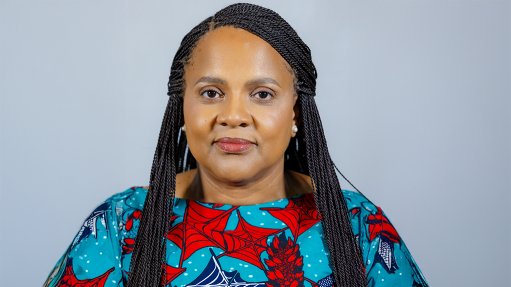
“The South African economy is driven by household expenditure. However, consumers are looking at 2026 with concerns about their cost of living, economic instability, health risks and climate change,” says PwC South Africa chief economist Lullu Krugel.
“While none of these trepidations are new, the imperative is for employers to support their workers with these challenges. Focusing on the wellbeing of the employee has tangible financial and other benefits for companies, and supports the stability of local communities where employees and their families live,” she recommends.
Further, a drop in the GDP per capita metric is generally associated with declining standards of living and economic instability.
South Africans feel the impact of economic instability at the community level where associated issues like poverty, inequality and unemployment result in many social challenges, including declining societal trust.
These conditions also adversely affect interpersonal trust within communities, the report says.
Social trust is a deep determinant of economic progress. It fosters cooperation, reduces transaction costs and encourages investment and innovation. When individuals trust each other, they engage in mutually beneficial exchanges, leading to economic growth and development, PwC points out.
Additionally, around 20-million South Africans do not have access to universal health coverage owing to multiple factors, including physical access and the cost of healthcare.
In terms of health risks, South Africans are concerned about chronic illness, the cost of medicine and mental health conditions, the report states.
In 2025, consumers faced several key challenges that have reduced, or could reduce in the future, their access to healthcare, including high inflation on healthcare costs, interruption in HIV and TB treatment delivery owing to funding disruptions from the US, as well as the impact of speculation about the reduction or elimination of medical aid tax credits, the report points out.
“Employee wellbeing is a shared responsibility. Employers play an important role in supporting the health of their people across seven dimensions of wellbeing, namely physical, emotional, intellectual, mental, spiritual, financial and social. These are proven drivers of performance, fulfilment and engagement,” says PwC Africa People leader Alinah Motaung.
“When corporate wellbeing practices are combined with individual commitment to healthy behaviours and attitudes, it leads to a positive impact not only on the individual, but on their teams and client relationships,” she adds.
A clear understanding is required of what employees need to cover costs for housing, basic nutrition, transport and healthcare.
This necessitates in-depth research into what a living wage would be by looking beyond national averages to understand what employees really need, and integrating these insights into strategic workforce planning, PwC says in the report.
“If South African companies want to deliver growth and transformation in a world of exponential innovation and technological disruption, business leaders must take care of their workers,” says PwC South Africa senior economist Dr Christie Viljoen.
“They need to continuously evaluate the skills they need, their approach to retaining talent and the development of their existing workforce. It has never been more important to engage with and listen to the workforce, cultivate a people-centric environment and support what matters most to employees,” he says.
Article Enquiry
Email Article
Save Article
Feedback
To advertise email advertising@creamermedia.co.za or click here


Projects


Latest Multimedia


Latest News

Showroom

For over 60 years, VEGA has provided industry-leading products for the measurement of level, density, weight and pressure. As the inventor of the...
VISIT SHOWROOM
EIMS is an independent specialised environmental consulting firm offering the full spectrum of environmental management services across all sectors...
VISIT SHOWROOM


Press Office
Announcements
What's On
Subscribe to improve your user experience...
Option 1 (equivalent of R125 a month):
Receive a weekly copy of Creamer Media's Engineering News & Mining Weekly magazine
(print copy for those in South Africa and e-magazine for those outside of South Africa)
Receive daily email newsletters
Access to full search results
Access archive of magazine back copies
Access to Projects in Progress
Access to ONE Research Report of your choice in PDF format
Option 2 (equivalent of R375 a month):
All benefits from Option 1
PLUS
Access to Creamer Media's Research Channel Africa for ALL Research Reports, in PDF format, on various industrial and mining sectors
including Electricity; Water; Energy Transition; Hydrogen; Roads, Rail and Ports; Coal; Gold; Platinum; Battery Metals; etc.
Already a subscriber?
Forgotten your password?
Receive weekly copy of Creamer Media's Engineering News & Mining Weekly magazine (print copy for those in South Africa and e-magazine for those outside of South Africa)
➕
Recieve daily email newsletters
➕
Access to full search results
➕
Access archive of magazine back copies
➕
Access to Projects in Progress
➕
Access to ONE Research Report of your choice in PDF format
RESEARCH CHANNEL AFRICA
R4500 (equivalent of R375 a month)
SUBSCRIBEAll benefits from Option 1
➕
Access to Creamer Media's Research Channel Africa for ALL Research Reports on various industrial and mining sectors, in PDF format, including on:
Electricity
➕
Water
➕
Energy Transition
➕
Hydrogen
➕
Roads, Rail and Ports
➕
Coal
➕
Gold
➕
Platinum
➕
Battery Metals
➕
etc.
Receive all benefits from Option 1 or Option 2 delivered to numerous people at your company
➕
Multiple User names and Passwords for simultaneous log-ins
➕
Intranet integration access to all in your organisation