S Africa targets strategic, efficient builds for new transmission lines

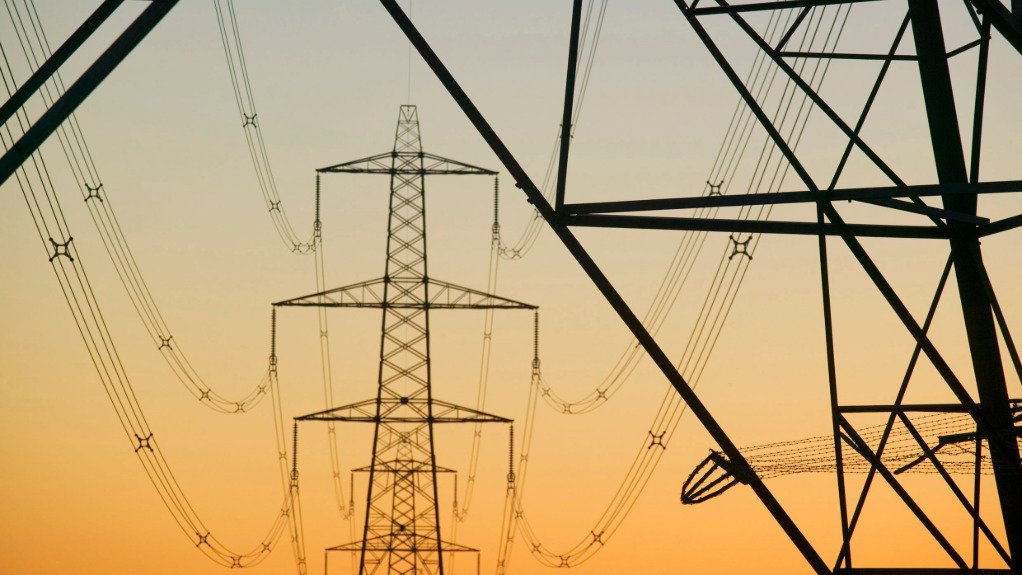
UNLOCKING POWER The Department of Electricity and Energy is prioritising projects that entails lines that unlock the most capacity
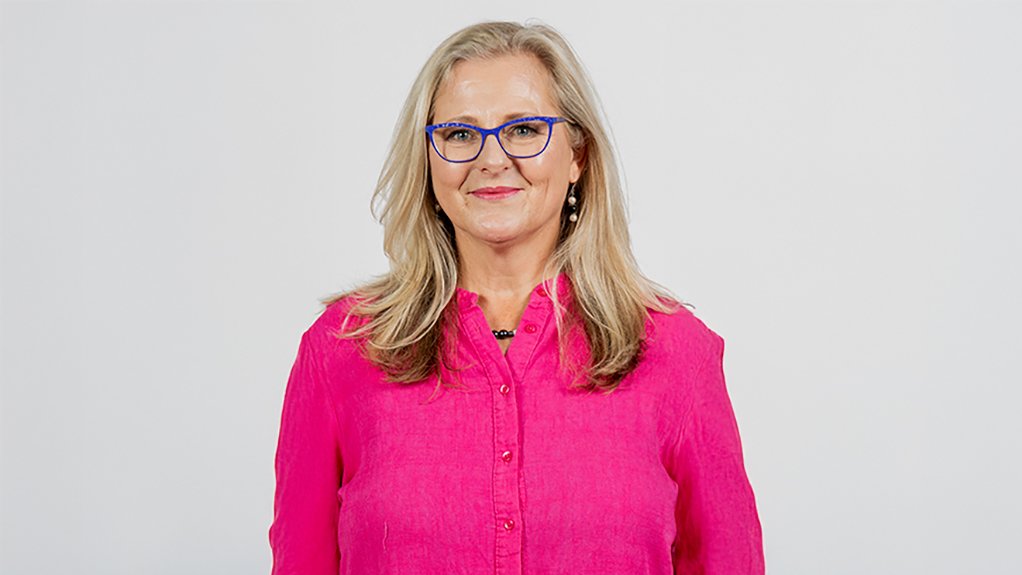
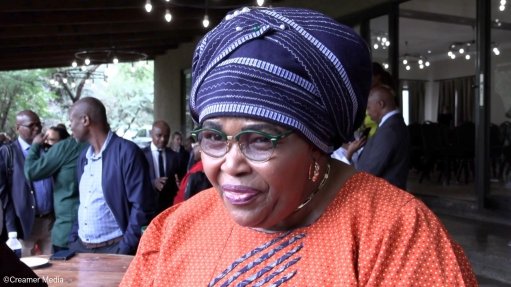
SAMANTHA GRAHAM-MARÉ The REIPPPP demonstrated that public–private partnerships can successfully deliver large-scale energy projects


For the national grid to facilitate increased renewable power generation, the Department of Electricity and Energy (DEE) has affirmed that about 14 000 km of new transmission lines are required over the next decade, with DEE Deputy-Minister Samantha Graham-Maré asserting that transmission remains a critical issue for the country.
Traditionally, State-owned power utility Eskom has set itself yearly targets of about 200 km of new transmission lines, and this remains part of its planning, with this year’s target being about 174 km.
However, while those incremental builds continue, Graham-Maré explains that it has become clear that far larger and more catalytic interventions are required to meet the South Africa’s future energy needs.
Aligned to this, priority projects comprise lines that unlock the most capacity, particularly in the Cape provinces where renewable- energy potential is greatest and grid capacity is particularly constrained.
However, transmission cannot be built arbitrarily, she says, emphasising that lines must be constructed strategically to unlock additional projects.
She notes that the 14 000 km figure is a “worst-case scenario”, explaining that the total requirement may be lower if new technologies emerge or if decommissioned coal stations can be repurposed, thereby retaining existing infrastructure.
“As the programme progresses, we’ll be able to ascertain whether or not we need to continue building but it’s going to be done very, very strategically to make it as efficient and as catalytic as possible,” Graham-Maré says.
Consequently, the DEE monitors Renewable Energy Independent Power Producer Procurement Programme (REIPPPP) project pipelines through the Independent Power Producer (IPP) Office and tracks grid-connection applications through Eskom.
This enables yearly reassessment of where additional capacity is required, ensuring alignment between grid expansion and renewable-energy growth.
Following these assessments, the DEE issued a request for quotation (RFQ) for the first tranche in June, which was slightly ahead of schedule, Graham-Maré says.
The first tranche covers 1 164 km of transmission lines, divided into seven projects to avoid the risk of a single project failure derailing an entire year’s progress, she says.
A subsequent request for proposals was issued in November, with adjudication expected by mid-2026, enabling construction to begin thereafter.
Graham-Maré notes that an early challenge for the first tranche has been its RFQ requirements, which some stakeholders argued were too stringent and excluded certain local IPPs.
Acknowledging these concerns, she explains that the department deliberately sought experienced bidders for the first tranche to reduce the risk of project failure, after which greater localisation can be introduced.
For subsequent projects, the department is evaluating how to balance increased localisation while ensuring bidders have extensive experience, with considerations including job creation and industrial development to ensure that South Africa benefits economically from the infrastructure rollout.
She asserts that the programme must stimulate local value chains, not simply deliver infrastructure.
Funding
Despite making significant progress, Graham-Maré notes financing is the biggest challenge, given the scale of investment required and Eskom’s limited balance-sheet capacity.
She explains that an estimated R450-billion is required for the full build-out, over the ten-year period.
To meet this, the DEE has established an Independent Transmission Programme (ITP), involving partnerships with the private sector and a specially designed credit- guarantee vehicle to facilitate financing.
Further, specialised funding models are being designed to avoid excessive strain on the national fiscus and to prevent significant cost increases for electricity consumers; public–private partnerships form an essential part of this, Graham-Maré asserts.
She explains that when considering how to implement transmission project roll-outs, it became clear that government could not do it alone.
“We simply did not have the balance sheet to support it, nor could we take on the level of loan funding required. As a result, this model was identified as the most viable approach. It has been used successfully in several countries and is the only practical way to deliver this programme,” she states.
Under the REIPPPP, IPPs continue to undertake smaller transmission extensions to connect to the grid, she says, adding that these projects are not widely publicised but form part of ongoing expansion.
“There have been instances where an IPP has had to build 85 km of line to get to the nearest substation or to link up to the grid,” she points out.
She explains that the REIPPPP demonstrated that public–private partnerships can successfully deliver large-scale energy projects, and its many lessons have informed the ITP’s design.
The ITP will mimic aspects of the REIPPPP, supported by a credit-guarantee mechanism. Projects will operate under a build-operate- transfer model, with government retaining ultimate ownership of the grid, owing to its strategic importance, says Graham-Maré.
She adds that substantial planning has gone into addressing the challenges that are likely to occur.
“What we have already achieved demonstrates that significant thought has gone into identifying those challenges and determined how best to address them without placing an additional burden on South Africans. I believe we are in a strong position,” she concludes.
Article Enquiry
Email Article
Save Article
Feedback
To advertise email advertising@creamermedia.co.za or click here

Projects

Latest Multimedia
Latest News

Showroom
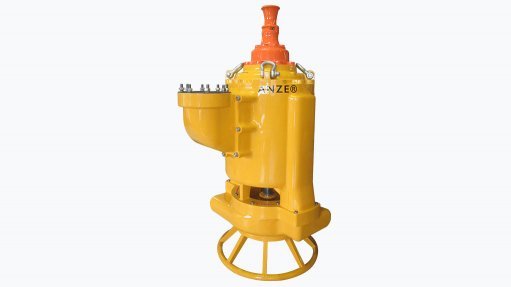
Goodwin Submersible Pumps Africa is sole distributors for Goodwin electrically driven, submersible, abrasion resistance slurry pumps.
VISIT SHOWROOM
ROSOND provides fast, efficient, safe, and cost-effective drilling and grouting services to mining and exploration industries throughout Africa.
VISIT SHOWROOM

Press Office
Announcements
What's On
Subscribe to improve your user experience...
Option 1 (equivalent of R125 a month):
Receive a weekly copy of Creamer Media's Engineering News & Mining Weekly magazine
(print copy for those in South Africa and e-magazine for those outside of South Africa)
Receive daily email newsletters
Access to full search results
Access archive of magazine back copies
Access to Projects in Progress
Access to ONE Research Report of your choice in PDF format
Option 2 (equivalent of R375 a month):
All benefits from Option 1
PLUS
Access to Creamer Media's Research Channel Africa for ALL Research Reports, in PDF format, on various industrial and mining sectors
including Electricity; Water; Energy Transition; Hydrogen; Roads, Rail and Ports; Coal; Gold; Platinum; Battery Metals; etc.
Already a subscriber?
Forgotten your password?
Receive weekly copy of Creamer Media's Engineering News & Mining Weekly magazine (print copy for those in South Africa and e-magazine for those outside of South Africa)
➕
Recieve daily email newsletters
➕
Access to full search results
➕
Access archive of magazine back copies
➕
Access to Projects in Progress
➕
Access to ONE Research Report of your choice in PDF format
RESEARCH CHANNEL AFRICA
R4500 (equivalent of R375 a month)
SUBSCRIBEAll benefits from Option 1
➕
Access to Creamer Media's Research Channel Africa for ALL Research Reports on various industrial and mining sectors, in PDF format, including on:
Electricity
➕
Water
➕
Energy Transition
➕
Hydrogen
➕
Roads, Rail and Ports
➕
Coal
➕
Gold
➕
Platinum
➕
Battery Metals
➕
etc.
Receive all benefits from Option 1 or Option 2 delivered to numerous people at your company
➕
Multiple User names and Passwords for simultaneous log-ins
➕
Intranet integration access to all in your organisation