https://newsletter.en.creamermedia.com
Africa|Automation|Efficiency|Manufacturing|Paper|Resources|Service|supply-chain|Systems|Technology|Waste|Equipment|Maintenance|Manufacturing |Waste|Operations
africa|automation|efficiency|manufacturing|paper|resources|service|supply chain|systems|technology|waste-company|equipment|maintenance|manufacturing-industry-term|waste|operations

The age of Lean 4.0: Orchestrating intelligence and efficiency in South Africa’s 2026 landscape

11th December 2025


Font size: - +

This article has been supplied and will be available for a limited time only on this website.

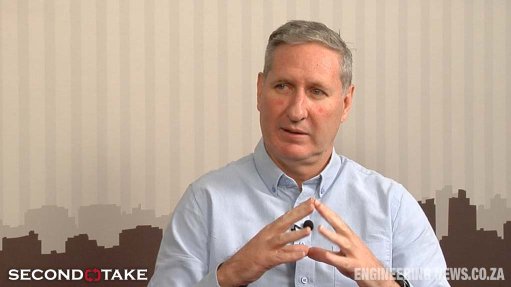
By: Rowen Pillai - CEO, Leantechnovations

If 2025 was the year the world woke up to the sheer scale of Artificial Intelligence (AI), 2026 is poised to be the year we stop merely adopting these tools and start truly orchestrating them. For South African businesses, the convergence of Lean principles and AI (what we now call "Lean 4.0") is no longer a theoretical exercise. It is the defining operational paradigm for survival and growth in a complex, data-intensive economy.

As we look toward 2026, the question for South African leaders is no longer "How fast can we transform?" but "How fluidly can we adapt?"

The integration of AI into our value streams offers us a unique opportunity to leapfrog legacy constraints, provided we remain grounded in the Lean fundamentals of respect for people and the relentless elimination of waste.

The rise of Lean 4.0: Beyond automation

Traditionally, Lean focused on the seven wastes (Muda). In 2026, AI exposes an eighth dimension of waste: unused information. We are witnessing the shift from static, reactive methodologies to dynamic, predictive systems.

Where we once relied on manual Value Stream Mapping (VSM) workshops using paper and post-its, we are now entering the era of Digital VSM. By leveraging the Internet of Things (IoT) and Cloud Computing, we can visualise material and information flows in real-time, allowing us to identify bottlenecks dynamically rather than taking a snapshot that is outdated the moment it is drawn.

This evolution touches the core pillars of our practice:

  • Just-in-Time (JIT) evolution: AI-driven demand forecasting is finally allowing JIT to overcome supply chain variability, reducing inventory levels by predicting needs with a precision human analysis cannot match.
  • Predictive total productive maintenance (TPM): We are moving from preventive maintenance to true predictive maintenance. AI algorithms analysing vibration and thermal data can now detect equipment failure weeks in advance, increasing asset availability significantly, a critical factor for South African manufacturers facing cost pressures.
  • Quality at Source: We are seeing the deployment of "Assembly Copilots" and computer vision systems that catch errors in real-time, effectively digitising the concept of Poka-Yoke (mistake-proofing) and reducing the cost of quality issues.

The human intelligence

A common fear is that AI conflicts with Lean’s human-centered approach. However, as noted by industry veteran John Shook, AI should be deployed to "augment, not automate, problem-solving". The goal is to use AI for data patterns while ensuring humans retain decision-making authority.

In 2026, the South African workforce will undergo a radical shift. We are seeing a trend described as "Conscious Unbossing," where Gen Z and Millennial employees are stepping away from traditional management roles in favour of self-leadership and personal growth. To accommodate this, organisations must utilise AI to tear down silos, allowing teams to function with greater autonomy.

This shifts the profile of the "ideal employee." By 2026, promotions and lucrative rewards will belong to the "data slicers", the workers who can cut through the noise of the massive amounts of data generated to mine unique insights. Proficiency in a single AI model is no longer enough; workers must be fluent in "ChatCoGem" (knowing ChatGPT, Microsoft Copilot, and Google Gemini) to remain employable.

According to a 2025 research by PwC on manufacturing, while 81% of South African manufacturing respondents expect AI to increase operating profits by at least 3% by 2030, only a small minority (about 13%) are currently "AI Operations Champions". To bridge this gap in 2026, we must focus on orchestration.

It is not enough to have models; we need "AI Orchestration Layers" that connect data, models, and human workflows. 

For South Africa, this is facilitated by the growing investment in local data centers and sovereign cloud capacity, which helps organisations embrace modern IT Service Management (ITSM) without worrying about latency or data residency.

Furthermore, 2026 presents an important moment for Africa to reclaim its narrative. As the continent provides the critical minerals for AI chips, we must move toward a "SaaS model for minerals," ensuring we capture value from the resources driving the global AI revolution.

Perhaps the most profound impact of AI in 2026 is its ability to melt the "iceberg of ignorance." In traditional corporate structures, leaders often see only the tip of the problems affecting their organisations. AI tools now give leaders deep visibility into the "underwater" issues, enabling better decision-making and the removal of toxic leadership traits that hinder performance. However, this transparency comes with a responsibility to govern. We must implement "Adaptive Governance," where compliance and policy logic are encoded directly into our processes ("policy-as-code"), allowing us to move fast without breaking trust

As we navigate 2026, our focus at Leantechnovations must be to help South African businesses transition from mere adoption to true adaptation. South Africa needs to build organisations that use AI agents as digital coworkers, capable of "self-healing" operations, while retaining the Lean discipline of going to the gemba (the place where value is created). 

The winners in this new landscape will not be those with the most technology, but those who use AI to empower their people to solve problems faster and more creatively than ever before.

As John Shook wisely reminds us: "The key question isn’t ‘Can AI help?’ but ‘How can it help without adding unnecessary complexity?’”

Let 2026 be the year we answer that question with clarity, purpose, and African ingenuity.

Edited by Creamer Media Reporter

Article Enquiry

Email Article

Save Article

Feedback

To advertise email advertising@creamermedia.co.za or click here

Comments

Latest Multimedia

Photo of Martin Creamer
On-The-Air (12/12/2025)
12th December 2025 By: Martin Creamer

Latest News

Nersa podium
Nersa appoints three new regulators
12th December 2025 By: Marleny Arnoldi

Showroom

AirNox Pty Ltd
AirNox Pty Ltd

AirNox (Pty) Ltd is a level 1 BBBEE manufacturer of complete AdBlue® solutions for operators of SCR diesel engines and AUS40 across South Africa...

VISIT SHOWROOM 
Egoli Gas (Pty) Ltd
Egoli Gas (Pty) Ltd

As a reticulator, Egoli Gas provides natural gas to homes and businesses via underground pipes.

VISIT SHOWROOM 

Latest Multimedia

sponsored by

Magazine round up | 10 December 2025
Magazine round up | 12 December 2025
12th December 2025

Option 1 (equivalent of R125 a month):

Receive a weekly copy of Creamer Media's Engineering News & Mining Weekly magazine
(print copy for those in South Africa and e-magazine for those outside of South Africa)
Receive daily email newsletters
Access to full search results
Access archive of magazine back copies
Access to Projects in Progress
Access to ONE Research Report of your choice in PDF format

Option 2 (equivalent of R375 a month):

All benefits from Option 1
PLUS
Access to Creamer Media's Research Channel Africa for ALL Research Reports, in PDF format, on various industrial and mining sectors including Electricity; Water; Energy Transition; Hydrogen; Roads, Rail and Ports; Coal; Gold; Platinum; Battery Metals; etc.

Already a subscriber?

Forgotten your password?

MAGAZINE & ONLINE

SUBSCRIBE

RESEARCH CHANNEL AFRICA

SUBSCRIBE

CORPORATE PACKAGES

CLICK FOR A QUOTATION


301

sq:0.15 0.547s - 235pq - 2rq
Subscribe Now