Transitional role of blended finance in focus, as green financing moves to more complex adaptation projects


Blended finance to support projects that reduce greenhouse-gas emissions or reduce the risks from future climate-related events is transitional in nature, a panel of investment and development finance specialists noted during a December 10 discussion.
The aim of blended finance is to leverage concessional and grant funding to reduce the perceived risks of projects and, thereby, bring in commercial capital to fund these projects.
Once these asset classes and their risks are well understood by commercial investors, the perceived risks will decline until the financial risks of the projects are used as the basis for investments, meaning they will be funded as part of commercial lending and project development and no longer require concessional or grant funding.
Sustainable development financing organisation Convergence Blended Finance director and head of Africa Aakif Merchant started the 'Structuring for Scale: How Blended Finance Can Unlock Bankable Green Projects in Africa' webinar with a definition of blended finance.
“Blended finance is a financial structuring approach that uses development funding on concessional or non-market terms from public agencies and donors with the express intent of mobilising private capital and pulling that into project funding through various structures and transactions on market terms and in line with market principles,” he explained.
This type of finance supports both climate change mitigation and adaptation projects, although the latter are more difficult to fund owing to challenges with revenue flows and immature business models to support funding to adaptation projects.
Blended finance was transitional, noted Netherlands-based climate resilience investment manager Climate Fund Managers (CFM) head of development finance and public institutions Jim Brands.
Blended finance was only required for certain sectors, such as renewable-energy projects, and by certain developing countries to crowd-in private funding and help commercial lenders develop an understanding of the risks of such projects, after which it would not be required anymore, he explained.
This was why CFM changed its teams constantly, as the demands for such derisking instruments changed. The company started with renewable-energy projects 12 years ago, then moved on to climate adaptation in its second phase and has recently started to focus on industrial decarbonisation projects, he said.
The aim of the CFM is to convince investors to invest in riskier or newer sectors, within the set boundaries that require CFM's investments to help combat climate change.
Further, blended finance was specifically useful in two areas, namely project preparation and to help developers get a project to a final investment decision, he noted.
For example, as the distributed renewable energy space matured, pension funds in Nigeria were more comfortable taking up investment opportunities in this sector, highlighted local currency guarantee organisation InfraCredit Nigeria origination and structuring VP Ojuru Adeniji.
However, climate change adaptation projects were more difficult to fund, owing to different risks, said Brands.
About 50% of the funds invested by multilateral climate fund the Climate Investment Fund were focused on adaptation and mainly around water and sanitation, which faced drought and flooding risks, he said.
Adaptation projects have three issues that make them more complicated to fund than climate change mitigation projects, such as renewable-energy projects.
The first challenge was around pricing for water and sanitation, which were human rights, because projects could not lead to a dramatic increase in the price of water and thereby make water less accessible or available than before the start of the project, he said.
The second challenge was that the investments required by such adaptation projects were typically smaller than the investments required by renewable-energy projects, and many institutional investors had minimum investment requirements, necessitating an aggregation of these projects within investment portfolios to solve this challenge.
The third challenge was that adaptation projects were typically public-focused and models for public-private projects were different in each country and more complicated than those typically used for mitigation projects, he added.
To try to tackle these challenges, CFM offers a diversified investment portfolio that includes not only water and sanitation, but also waste and mitigation investments, which gives more comfort to investors and allows them to accept a slightly lower return on investment ratio on these projects.
CFM is also focused on industrial and private sector markets where the main offtakers will be corporate companies, as this provides more room to manoeuvre in terms of pricing.
A third approach it took was to look not only at tariffs as the only source of revenue, but also to invest in water-efficiency projects to reduce non-revenue water losses and to work on new revenue models, Brands said.
“In the space we work, while there are challenges around offtakers and a lack of credit-worthiness on a utility level, and while investments in adaptation projects are a function of the supply of financing, investments are also a function of the demand side, including the end-user's ability to pay and regulations around tariffs,” said Merchant.
Adaptation projects were a challenge for climate investments, as they typically impacted on core infrastructure, such as water and sanitation. However, core infrastructure was at risk from future climatic events that were expected to be more intense and more frequent, said multilateral climate fund Green Climate Fund (GCF) project finance and private sector facility head Rajeev Mahajan.
“The challenge with adaptation is real. Since 2018, we looked at private sector investment models in adaptation, which proved tough to do because they do not have well-defined business models and investment committees cannot see how the GCF can finance such projects in adaptation,” he said.
The GCF was mandated to balance investments made in mitigation and adaptation projects, and it had built up its adaptation investment portfolio little by little over the past ten years, having started with agriculture- and then water-related investments, he said.
The blended finance facility Climate Investor Two (CI2), which reached $855-million in commitments in 2022 for water, sanitation and oceans infrastructure projects in emerging markets, was an example of investments in adaptation, he added.
He noted that the GCF was in negotiations with Brands' team at CFM to deploy some of this capital.
“What if we designed infrastructure with future climatic events in mind? That would entail a delta cost - and are our concession agreements today designed to pay for this? Probably not. Therefore, there is a lot of work to be done,” Mahajan illustrated.
The GCF is working with multilateral finance institution the Africa Finance Corporation to develop climate-resilient infrastructure in Africa. The fund has reached its first financial close and is targeting its second one in 2026.
However, the significant participation by African pension funds in this Africa Finance Corporation (AFC) fund was an important development, he pointed out.
“This is the beauty of derisking that we bring to the table. We are looking to scale this up going forward in core infrastructure and other segments for adaptation, including water and agriculture.
“There are lots of opportunities and, gradually, we are seeing the world warming up to the new and innovative thinking happening in this space, with the CI2 being a case in point and the AFC being another,” said Mahajan.
Meanwhile, with renewable-energy investments having proven to be good investments and with decarbonisation investments progressing well, the blended finance industry should start looking at nascent sectors to support, said Brands.
Green investment funds should look to hard-to-abate industrial sectors where blended finance would be most needed, he emphasised.
Mahajan agreed with the need to support industrial decarbonisation, but added that supply chains also needed to be decarbonised, which remained as a significant challenge.
He also added that, if it could be proven to pension fund managers that these mitigation and adaptation asset classes could be mainstreamed and were sufficiently derisked, then local currency money would flow into such projects, which was the ideal type of capital for these long-term climate-action projects.
“If we could sustainably attract pension and insurance funds into climate projects, then I would say our job as blended finance institutions was done,” Mahajan said.
Article Enquiry
Email Article
Save Article
Feedback
To advertise email advertising@creamermedia.co.za or click here

Projects
Latest Multimedia
Latest News
Showroom
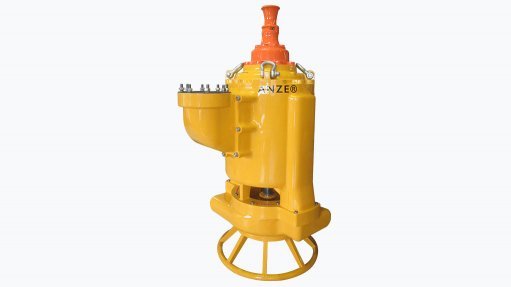
Goodwin Submersible Pumps Africa is sole distributors for Goodwin electrically driven, submersible, abrasion resistance slurry pumps.
VISIT SHOWROOM
ROSOND provides fast, efficient, safe, and cost-effective drilling and grouting services to mining and exploration industries throughout Africa.
VISIT SHOWROOM


Press Office
Announcements
What's On
Subscribe to improve your user experience...
Option 1 (equivalent of R125 a month):
Receive a weekly copy of Creamer Media's Engineering News & Mining Weekly magazine
(print copy for those in South Africa and e-magazine for those outside of South Africa)
Receive daily email newsletters
Access to full search results
Access archive of magazine back copies
Access to Projects in Progress
Access to ONE Research Report of your choice in PDF format
Option 2 (equivalent of R375 a month):
All benefits from Option 1
PLUS
Access to Creamer Media's Research Channel Africa for ALL Research Reports, in PDF format, on various industrial and mining sectors
including Electricity; Water; Energy Transition; Hydrogen; Roads, Rail and Ports; Coal; Gold; Platinum; Battery Metals; etc.
Already a subscriber?
Forgotten your password?
Receive weekly copy of Creamer Media's Engineering News & Mining Weekly magazine (print copy for those in South Africa and e-magazine for those outside of South Africa)
➕
Recieve daily email newsletters
➕
Access to full search results
➕
Access archive of magazine back copies
➕
Access to Projects in Progress
➕
Access to ONE Research Report of your choice in PDF format
RESEARCH CHANNEL AFRICA
R4500 (equivalent of R375 a month)
SUBSCRIBEAll benefits from Option 1
➕
Access to Creamer Media's Research Channel Africa for ALL Research Reports on various industrial and mining sectors, in PDF format, including on:
Electricity
➕
Water
➕
Energy Transition
➕
Hydrogen
➕
Roads, Rail and Ports
➕
Coal
➕
Gold
➕
Platinum
➕
Battery Metals
➕
etc.
Receive all benefits from Option 1 or Option 2 delivered to numerous people at your company
➕
Multiple User names and Passwords for simultaneous log-ins
➕
Intranet integration access to all in your organisation