Transmission projects target 37 GW capacity by 2030

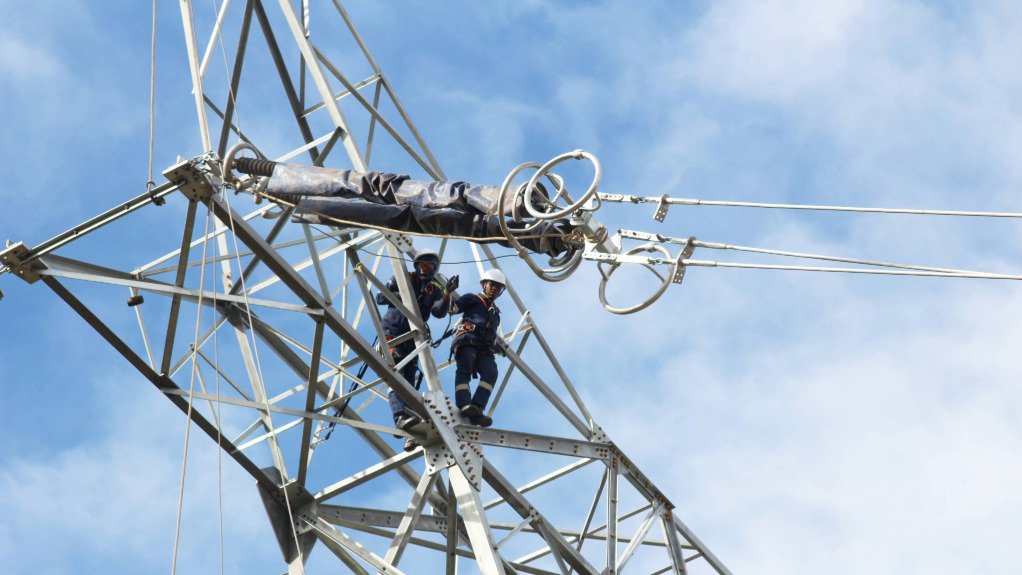
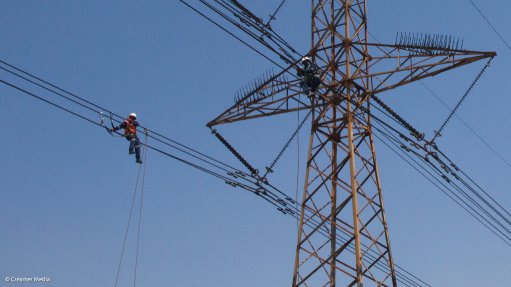
BEYOND LIMITATIONS The NTCSA's 75 projects will enable about 37 GW of new generation connection capacity by 2030
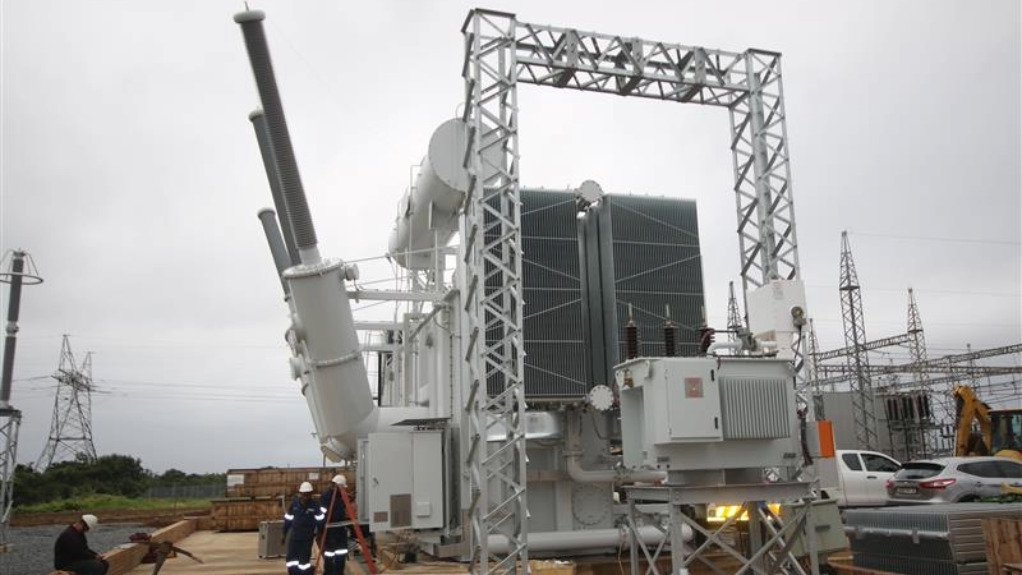
STRENGTHENED CONNECTION Alongside new transmission lines, the NTCSA is ensuring substations are operating efficiently


Aligned with the 2024 Transmission Development Plan (TDP), State-owned power utility Eskom subsidiary National Transmission Company South Africa (NTCSA) currently has 75 projects – at various stages of development from procurement to execution – that will enable about 37 GW of new generation connection capacity by 2030, says NTCSA CEO Monde Bala.
These projects include the construction of 3 000 km of transmission lines, of which 455 km have already been completed, along with about 28 000 MVA of transformer capacity, 5 800 MVA of which has been commissioned.
At present, more than 2 500 km of lines and 24 000 MVA of transformer capacity are in procurement or under construction, equating to about 22 GW of future connection capacity.
Bala explains that these critical corridors have been selected for their ability to rapidly unlock renewables potential, support immediate loadshedding mitigation and address grid constraints, particularly in the Cape regions which boast significant renewable power generation potential but have limited grid capacity.
Over the TDP’s full ten-year period, the plan seeks to facilitate the integration of 56 GW of mainly renewable energy through the construction of more than 14 000 km of new transmission lines and 130 000 MVA of transformer capacity, says Bala.
Among these initiatives, the TDP identifies 41 priority projects, which the NTCSA is actively fast-tracking under two programmes, including 19 transformer-addition projects and 22 expedited transmission projects.
These projects will provide the grid strengthening needed to connect new generation, move power to demand centres and maintain overall system stability.
To further maintain system stability as renewables generation increases, NTCSA has identified seven sites for synchronous condensers.
While funding has been allocated for several priority projects through Eskom’s Multi-Year Price Determination 6 revenue application and corporate plan, not all projects have secured funding yet. As a result, NTCSA is exploring additional funding mechanisms, says Bala.
He notes that programmes such as the independent transmission projects (ITP) initiative present opportunities to inject capital.
“The ITP programme comes at an opportune time to help provide the capital injection needed to realise this infrastructure over a shorter period, without putting pressure on the NTCSA’s or Eskom’s balance sheets,” he says, adding that, with the latest progress on the ITPs, NTCSA is confident in meeting its TDP commitments.
Reaching Completion
Several projects are nearing completion, including the Medupi Witkop 400 kV transmission line, the Upington strengthening scheme and the Ngwedi transformer upgrade.
The Medupi Witkop 400 kV transmission line, in Limpopo, entails integrating Medupi power station into the national network following its commissioning, which required stabilisation of the 400 kV network. This includes construction of a 200 km line between Medupi and Witkop substations, a transient stability scheme and associated base work at both substations.
The project is about 98% complete, with only around 3.5 km of stringing and some electrical work outstanding. The project has been delayed largely owing to a landowner refusing access to a section of the route, says Bala.
NTCSA has engaged extensively with the landowner and explored legal options. “We hope to conclude the matter soon so that the remaining 3.5 km can be completed.”
Meanwhile, the Upington strengthening scheme, in the Northern Cape, involves a 145 km 400 kV transmission line from Aries substation to Upington substation, as well as connection works at both substations and a bypass substation. The project is about 95% complete, with 127 km already built.
As the Northern Cape is South Africa’s strongest solar-resource region, this project is crucial for integrating large-scale solar generation, says Bala.
The Watershed Strengthening Project, in North West, involves installing a 400/132 kV, 500 MVA transformer, alongside the substation’s current two 250 MVA transformers, to support the integration of additional solar generation.
Bala explains that the civil works is in progress, with the main outstanding item being delivery of the new transformer, which is expected in August 2026.
He notes that the long lead time aligns with recent global baselines, with lead times increasing owing to heightened global demand and widespread supply-chain constraints. Efforts are under way to secure earlier deliveries, where possible, he affirms.
Navigating Hurdles
Despite its progress, Bala notes that the NTCSA is navigating various challenges that impact on project progress, including servitude acquisition, commodity availability – particularly steel – and South Africa’s limited construction capacity.
“We simply do not have enough construction capacity in the country to be able to deliver at the pace and scale that is required,” he says, adding that through various initiatives, the NTCSA is making progress in addressing this challenge.
To accelerate progress, internal processes have been streamlined and externally, engineering, procurement and construction models and expanded partnerships with owners’ engineers are being explored to boost execution capacity.
Five large contractors have already been incubated, with plans to widen this pool. Supply-chain processes are being streamlined to secure critical commodities and several transformers have been pre-ordered, Bala adds.
NTCSA is also engaging relevant government departments – notably the Department of Forestry, Fisheries and the Environment – to expedite statutory approvals. Industry expertise is being leveraged through Eskom’s established structures.
Amid these challenges, Bala enthuses that delivery rates are improving, with line delivery expected to increase from 250 km a year to 423 km in 2025/26.
Article Enquiry
Email Article
Save Article
Feedback
To advertise email advertising@creamermedia.co.za or click here

Projects
Latest Multimedia
Latest News

Showroom
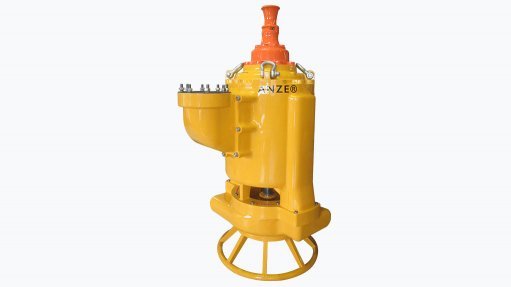
Goodwin Submersible Pumps Africa is sole distributors for Goodwin electrically driven, submersible, abrasion resistance slurry pumps.
VISIT SHOWROOM
ROSOND provides fast, efficient, safe, and cost-effective drilling and grouting services to mining and exploration industries throughout Africa.
VISIT SHOWROOM

Press Office
Announcements
What's On
Subscribe to improve your user experience...
Option 1 (equivalent of R125 a month):
Receive a weekly copy of Creamer Media's Engineering News & Mining Weekly magazine
(print copy for those in South Africa and e-magazine for those outside of South Africa)
Receive daily email newsletters
Access to full search results
Access archive of magazine back copies
Access to Projects in Progress
Access to ONE Research Report of your choice in PDF format
Option 2 (equivalent of R375 a month):
All benefits from Option 1
PLUS
Access to Creamer Media's Research Channel Africa for ALL Research Reports, in PDF format, on various industrial and mining sectors
including Electricity; Water; Energy Transition; Hydrogen; Roads, Rail and Ports; Coal; Gold; Platinum; Battery Metals; etc.
Already a subscriber?
Forgotten your password?
Receive weekly copy of Creamer Media's Engineering News & Mining Weekly magazine (print copy for those in South Africa and e-magazine for those outside of South Africa)
➕
Recieve daily email newsletters
➕
Access to full search results
➕
Access archive of magazine back copies
➕
Access to Projects in Progress
➕
Access to ONE Research Report of your choice in PDF format
RESEARCH CHANNEL AFRICA
R4500 (equivalent of R375 a month)
SUBSCRIBEAll benefits from Option 1
➕
Access to Creamer Media's Research Channel Africa for ALL Research Reports on various industrial and mining sectors, in PDF format, including on:
Electricity
➕
Water
➕
Energy Transition
➕
Hydrogen
➕
Roads, Rail and Ports
➕
Coal
➕
Gold
➕
Platinum
➕
Battery Metals
➕
etc.
Receive all benefits from Option 1 or Option 2 delivered to numerous people at your company
➕
Multiple User names and Passwords for simultaneous log-ins
➕
Intranet integration access to all in your organisation