Urgent implementation of PPP investment model needed to halt multiyear slump – Seifsa

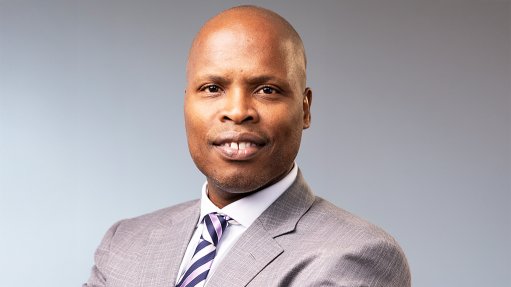
Seifsa CEO Tafadzwa Chibanguza outlines what Seifsa believes is needed to ensure that the metals sector begins to benefit from government's economic reforms. Recording and Editing: Shadwyn Dickinson



The multiyear slide in South Africa’s metals and engineering sector, which makes up about 25% of South Africa’s manufacturing sector and 5% of GDP, continued last year, the Steel and Engineering Industries Federation of Southern Africa (Seifsa) has confirmed.
In its ‘State of the Metals and Engineering Sector 2026’ report, Seifsa shows that production fell by 1.6%, having declined at a compound annual growth rate of 1.7% since 2008. In addition, employment fell by 0.43% to about 360 000 employees from over 575 000 in 2008.
The sector’s weak performance comes despite signs of growth in other parts of the South African economy, which has experienced four consecutive quarters of expansion, raising yet more deindustrialisation concerns.
The deterioration in 2025 was particularly pronounced in the upstream basic iron and steel subsector, which saw ArcelorMittal South Africa move its Newcastle mill into care and maintenance and wind down much of its long-steel business.
Production in the subsector fell by 12% for the year as a whole, and Seifsa indicated that capacity utilisation fell to only 53% for the year, and slumped precipitously in the fourth quarter of 2025 to only 48%.
Despite weak domestic steel consumption, which has declined by 12% since 2018, there had still been a 93% rise in imports over the period, rising to nearly 1.6-million tons last year.
Seifsa CEO Tafadzwa Chibanguza stressed that the difficulties were not confined to the upstream sector, however, with downstream companies also reporting insufficient demand, suboptimal capacity utilisation levels and growing import threats.
These difficulties were being amplified by the reality that South Africa’s developmental-State model had “reached its fiscal and operational limits”, while other countries were employing trade and industrial policies that were limiting export prospects for domestic firms.
Chibanguza argued that both these realities would have to be navigated for the “green shoots” of growth being experienced elsewhere in the economy to be transmitted to the metals and engineering sector.
The domestic economy, he said, would need to do the “heavy lifting” by raising gross fixed capital formation well beyond the current level of 12% of GDP, and by adopting an investment architecture based on public–private partnerships (PPPs).
However, PPPs alone would prove insufficient “without embedding domestic capacity development” into their design.
“If not structured carefully, PPP programmes may crowd-in capital fiscally, but fail to catalyse industrial deepening or strengthen local capacity,” Chibanguza warned.
Seifsa also remained concerned about the prevailing uncertainty in relation to the public procurement framework. Concerns that it has been especially vocal in expressing in relation to the potential for local industry to be excluded, owing to the way the rules have been drafted, from participating in the inaugural procurement of electricity transmission infrastructure from the private sector.
Seifsa warns that interim arrangements are disrupting localisation enforcement and investment planning, while weakening one of the State’s most powerful industrial policy levers.
Chibanguza said that 2026 should not be about managing the ongoing decline of the sector, but about converting reform into sustained domestic demand and the country’s long-term industrial base.
“The principal risk is not reform failure, but reform without execution,” he said.
Such an outcome, he warned, would entrench stagnation, as it would be characterised by policy drift, procurement instability, and rising administered costs, in a context of intensifying global trade fragmentation.
Article Enquiry
Email Article
Save Article
Feedback
To advertise email advertising@creamermedia.co.za or click here
Research Reports

Projects
Latest Multimedia

Latest News

Showroom
Established in 1983, the ASTPM is an industry association and representative body of the welded carbon steel tube and pipe manufacturers of South...
VISIT SHOWROOM
As a reticulator, Egoli Gas provides natural gas to homes and businesses via underground pipes.
VISIT SHOWROOM
Press Office
Announcements
What's On
Subscribe to improve your user experience...
Option 1 (equivalent of R125 a month):
Receive a weekly copy of Creamer Media's Engineering News & Mining Weekly magazine
(print copy for those in South Africa and e-magazine for those outside of South Africa)
Receive daily email newsletters
Access to full search results
Access archive of magazine back copies
Access to Projects in Progress
Access to ONE Research Report of your choice in PDF format
Option 2 (equivalent of R375 a month):
All benefits from Option 1
PLUS
Access to Creamer Media's Research Channel Africa for ALL Research Reports, in PDF format, on various industrial and mining sectors
including Electricity; Water; Energy Transition; Hydrogen; Roads, Rail and Ports; Coal; Gold; Platinum; Battery Metals; etc.
Already a subscriber?
Forgotten your password?
Receive weekly copy of Creamer Media's Engineering News & Mining Weekly magazine (print copy for those in South Africa and e-magazine for those outside of South Africa)
➕
Recieve daily email newsletters
➕
Access to full search results
➕
Access archive of magazine back copies
➕
Access to Projects in Progress
➕
Access to ONE Research Report of your choice in PDF format
RESEARCH CHANNEL AFRICA
R4500 (equivalent of R375 a month)
SUBSCRIBEAll benefits from Option 1
➕
Access to Creamer Media's Research Channel Africa for ALL Research Reports on various industrial and mining sectors, in PDF format, including on:
Electricity
➕
Water
➕
Energy Transition
➕
Hydrogen
➕
Roads, Rail and Ports
➕
Coal
➕
Gold
➕
Platinum
➕
Battery Metals
➕
etc.
Receive all benefits from Option 1 or Option 2 delivered to numerous people at your company
➕
Multiple User names and Passwords for simultaneous log-ins
➕
Intranet integration access to all in your organisation