2026 will test South Africa’s leadership depth



This article has been supplied and will be available for a limited time only on this website.
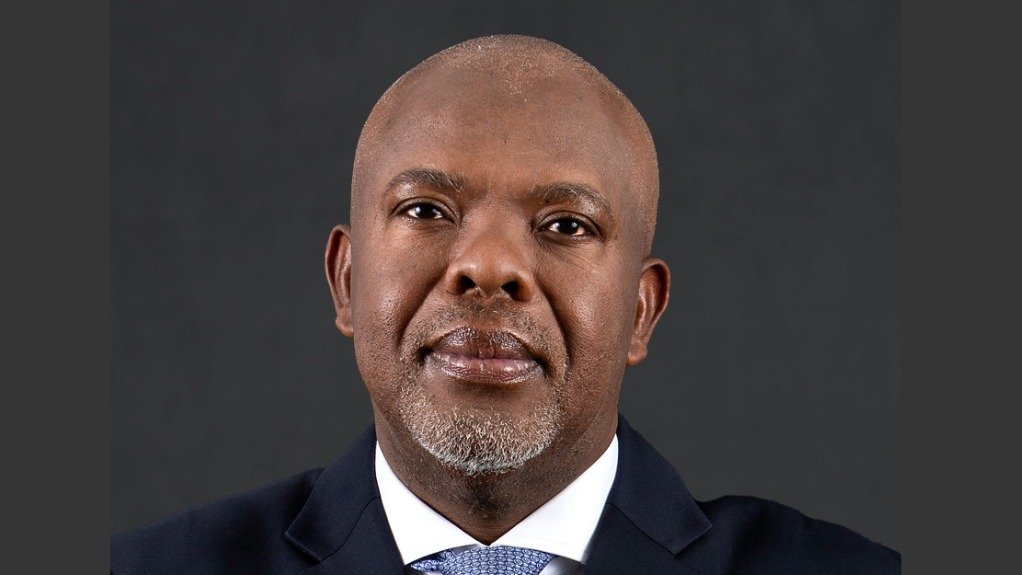
By: Thabiso Legoete - Partner at Heidrick & Struggles South Africa and Member of the Global CEO & Board of Directors Practice
South African companies are entering 2026 with a sharper sense of how quickly disruption can reshape sectors after recent years have showed how rapidly assumptions about markets, supply chains, technology, and talent can shift. As a result, boards and executive teams are increasingly questioning whether existing leadership models are sufficient for the next phase of uncertainty.
The environment is unlikely to settle or become more predictable anytime soon. The idea that this level of disruption was temporary and that stability will return is unrealistic, and corporate leaders will need to adapt faster than ever.
Drawing on its work with boards and senior executives, global leadership advisory firm Heidrick & Struggles has identified four likely developments that will shape leadership agendas in 2026:
1. AI and digital revolutions continue to gain traction
The strongest force shaping 2026 is AI. Companies that treat it as a technical project rather than a human initiative requiring growth and upskilling will fall behind. Boards are increasingly focused on how AI will impact competitive advantage, decision-making, skills, and organisational culture, and leaders will be expected to demonstrate real value rather than deploying the technology for its own sake.
The accelerating pace of digital change is a particular concern for leaders. Over the past decade, we have seen automation become digitisation, digitisation become AI, and AI become generative AI. Each shift has arrived faster than the one before, and the next five years will be especially decisive for corporate adoption, setting new expectations and performance measures for leaders.
Under these pressures, ineffective leadership can lead to inconsistent application and loss of valuable company resources as teams course-correct. By contrast, leadership teams that share a common understanding of AI’s strategic implications will make quicker decisions, direct investment wisely, redesign roles at speed, and deploy data at scale, translating technological change into sustained value.
2. The pace of organisational change will demand faster learning cycles
Beyond the AI boom, product innovations, advanced digital and mechanical technology, and new operational structures are emerging faster than most organisations can absorb. To compensate, leaders will need shorter learning cycles and clearer decision pathways, while recognising which legacy systems, incentives, and behaviours that once served the business now hinder execution rather than enable it.
Organisations that cope best will embed learning as a core leadership discipline, adopting ‘unlearn, learn, and relearn’ practices as daily habits. This requires leaders to demonstrate exceptional confidence under pressure, composure in the face of ambiguity, and disciplined prioritisation.
From a governance perspective, boards are paying closer attention to how leaders learn and adapt together, as this often determines whether strategy produces results. In response, many boards are taking a more evidence-based approach to leadership oversight, using large-scale assessments to help pinpoint where learning has stalled, which habits limit execution, and which capabilities must be strengthened to support faster adaptation across senior teams.
3. Supply chain volatility may continue disrupting industries
Global supply chains are likely to remain unstable across multiple regions, reinforcing the need for organisations to treat disruption as a constant rather than an exception. Costs, timelines, and access to critical inputs will continue to shift with little warning, demanding operating models that can absorb shocks and adjust quickly without sacrificing momentum.
The challenge for leaders is to anticipate interruptions before they occur. Companies that diversify suppliers, shorten planning horizons, and build structural buffers are more likely to sustain performance, while those that respond only once disruption is visible will remain on the defensive. Boards, in turn, will progressively assess whether leadership teams possess the strategic insight to interpret geopolitical signals, trade policy, and regulatory movements – factors that often trigger the next wave of volatility.
4. Leadership stability will be essential in a constrained talent market
Critically, South Africa’s executive talent pool remains relatively shallow compared to larger economies, limiting organisations’ ability to manage frequent turnover at senior levels. High mobility may appear dynamic when taken at face value, but excessive churn risks eroding continuity when replacement options are scarce. Many organisations depend on a small circle of senior leaders whose institutional knowledge, strategic oversight, and relationships are not easily replaced.
Boards will need to safeguard leadership stability. Succession planning must be anchored in real candidates, with internal upskilling bolstering future leadership pipelines. Companies that invest early in developing internal talent and act decisively during transitions will preserve performance through change. Those that rely too heavily on external recruitment risk delays, uncertainty, and weaker leadership outcomes.
Looking ahead, boards are expected to focus less on individual roles and more on how leadership teams function as an integrated whole. The organisations that maintain their advantage will be those where leaders work as a connected system, make high-quality decisions with speed, and steer through uncertainty without losing direction.
Article Enquiry
Email Article
Save Article
Feedback
To advertise email advertising@creamermedia.co.za or click here
Comments
Research Reports

Projects

Latest Multimedia
Latest News


Showroom
Sika South Africa is a trusted partner for the nation’s infrastructure, commercial, residential, and industrial sectors.
VISIT SHOWROOM
Roytec Global is an international company specializing in liquid / solid and mineral separation technologies for the Mining and Industrial sectors.
VISIT SHOWROOM

Press Office
Announcements
What's On
Subscribe to improve your user experience...
Option 1 (equivalent of R125 a month):
Receive a weekly copy of Creamer Media's Engineering News & Mining Weekly magazine
(print copy for those in South Africa and e-magazine for those outside of South Africa)
Receive daily email newsletters
Access to full search results
Access archive of magazine back copies
Access to Projects in Progress
Access to ONE Research Report of your choice in PDF format
Option 2 (equivalent of R375 a month):
All benefits from Option 1
PLUS
Access to Creamer Media's Research Channel Africa for ALL Research Reports, in PDF format, on various industrial and mining sectors
including Electricity; Water; Energy Transition; Hydrogen; Roads, Rail and Ports; Coal; Gold; Platinum; Battery Metals; etc.
Already a subscriber?
Forgotten your password?
Receive weekly copy of Creamer Media's Engineering News & Mining Weekly magazine (print copy for those in South Africa and e-magazine for those outside of South Africa)
➕
Recieve daily email newsletters
➕
Access to full search results
➕
Access archive of magazine back copies
➕
Access to Projects in Progress
➕
Access to ONE Research Report of your choice in PDF format
RESEARCH CHANNEL AFRICA
R4500 (equivalent of R375 a month)
SUBSCRIBEAll benefits from Option 1
➕
Access to Creamer Media's Research Channel Africa for ALL Research Reports on various industrial and mining sectors, in PDF format, including on:
Electricity
➕
Water
➕
Energy Transition
➕
Hydrogen
➕
Roads, Rail and Ports
➕
Coal
➕
Gold
➕
Platinum
➕
Battery Metals
➕
etc.
Receive all benefits from Option 1 or Option 2 delivered to numerous people at your company
➕
Multiple User names and Passwords for simultaneous log-ins
➕
Intranet integration access to all in your organisation