Eskom’s revised unbundling plan in focus as grid constraint continues to weigh on outlook

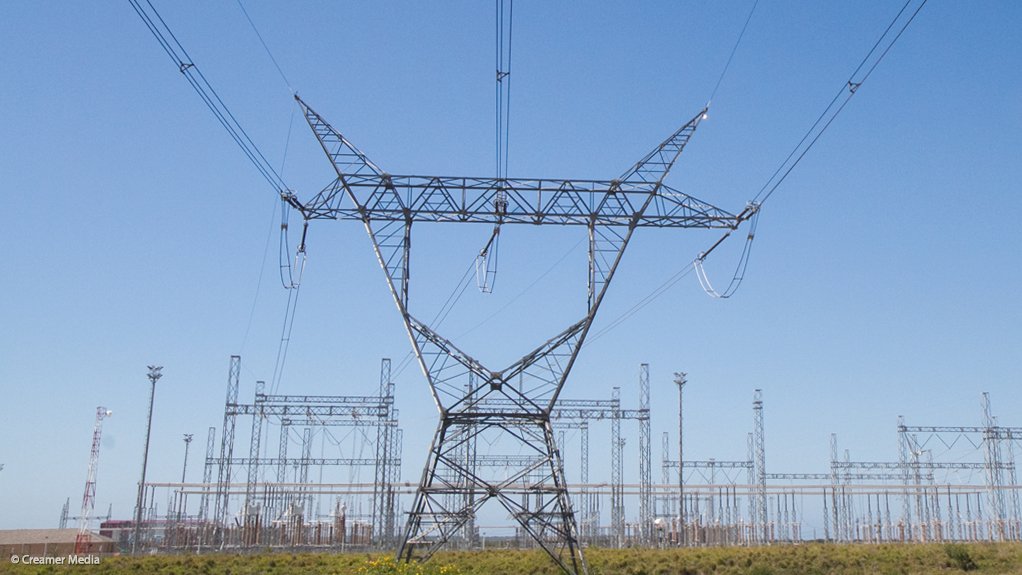


Eskom has offered assurances that the power system is more stable and predictable than it has been for the past five years in light of a strong recovery in the energy availability factor, a decline in unplanned breakdowns, more predictable planned maintenance and the return or introduction to service of some 4 400 MW of capacity when compared with the previous year.
The improvements, CEO Dan Marokane says, have had positive economic spinoffs in the form of improved investor confidence, and have also contributed to South Africa’s first credit rating upgrade in two decades.
The stabilisation has been facilitated by a R230-billion debt-relief package, improved maintenance planning and operational performance at Eskom and ongoing structural and regulatory changes, now also backed by legislation, that have enabled the introduction of non-Eskom supply.
There is some uncertainty, however, on whether the current period of stability will add further impetus to the reforms that have been pursued to improve the long-term sustainability of the electricity supply industry, or whether it could emerge as a reason for slowing the pace of these reforms.
This ambiguity is partly reflected in the views of the electricity industry commentators that Engineering News canvassed for their views on what issues should receive priority in 2026. More specifically, whether Eskom’s recently revised unbundling plan is supportive of the investments needed to ensure long-term security of supply and greater affordability for both large users and households.
All respondents highlighted the importance of Eskom’s unbundling, but some raised questions about the model that has now been adopted, and which has the backing of Electricity and Energy Minister Dr Kgosientsho Ramokgopa.
Under the revised unbundling framework, the National Transmission Company South Africa (NTCSA) is set to remain a wholly owned subsidiary of Eskom Holdings and retain ownership of the transmission system assets, while a new Transmission System Operator (TSO) will be established as a new State-owned company outside of Eskom Holdings.
The framework suggests that the TSO will develop and approve the Transmission Development Plan (TDP), operate the power system, run the wholesale market, act as the central purchasing agency and provide nondiscriminatory access to the grid for all market participants.
The NTCSA would remain the owner of the transmission assets, however, and will be responsible for financing, constructing and maintaining the physical grid, including the build associated with the TDP.
UNBUNDLING ‘HOT POTATO’
Energy Council of South Africa CEO James Mackay describes the unbundling framework as a “hot potato”, indicating that valid points and concerns have been raised by both supporters and opponents.
“The optimal end state is to move the transmission asset base into an independent TSO. But, timing, risk and ensuring Eskom Generation doesn’t collapse is equally important. So, we need stepped implementation, and I think what Eskom has proposed is a palatable first step if it is done urgently,” Mackay tells Engineering News.
However, Professor Anton Eberhard, of the Power Futures Lab at the University of Cape Town’s Graduate School of Business, argues that the revised plan is not an optimal solution for accelerating investment, as well as for widening competition and private sector participation.
“Eskom needs to explain why it is proposing a sub-optimal unbundling outcome which may be in its own narrow interests but not that of the sector or country as a whole,” he tells Engineering News.
For Eberhard, the most pressing issue facing the electricity supply industry in 2026 is, thus, to have a transmission grid that is “fully liberated” from Eskom.
Failure to complete this fundamentally important structural reform, he adds, will compromise future investment and competition in the power sector and greatly increase the risk of loadshedding from 2030.
“Eskom, as the dominant generator in South Africa, clearly faces a conflict of interest in also owning the grid and we have seen this in practice – independent power producers (IPPs) face a myriad of obstacles to timely and adequate connection to the grid.”
South African Independent Power Producer Association chairperson Leoné Human also underlines the importance of unbundling, arguing that it is needed to reduce any mistrust or discriminatory actions that will make investors and contractors wary.
“When Eskom can indicate and prove that they are implementing grid development and strengthening plans for the good of the country on a level playing field for all, I believe they will receive more support,” Human tells Engineering News.
Mackay believes that both the Department of Electricity and Energy and Eskom remain open to engagement on the matter, and is convinced there will still be an opportunity to put forward counter arguments and trade-offs.
Where there should be no delay is in ensuring urgent grid expansion and the efficient, transparent and fair allocation of grid capacity. But Mackay believes the larger restructuring could take many years beyond the five-year interim period set in the Electricity Regulation Amendment Act for the creation of an independent TSO.
He also argues that restructuring cannot be considered in isolation from broader sector reform, including the establishment of the South African Wholesale Electricity Market, distribution and municipal reform, and tariff unbundling.
“Eskom is central to all these issues, so the energy sector needs a financially sound and competent Eskom. But, rightly so, there is little public trust in Eskom and the public sector in general due to historical performance and optics of continued monopolistic statements and behaviour.”
Such behaviour is highlighted in a new article by EE Business Intelligence MD Chris Yelland. The article indicates that Eskom is in fact proceeding with its review application against the National Energy Regulator of South Africa (Nersa) over the granting of electricity trading licences to five private electricity traders, despite having stated that the case has been paused.
Mackay is proposing a sector roadmap beyond the Integrated Resource Plan, which has not provided such a pathway. This alongside strengthened ministerial and regulatory oversight, which will require the capacities of both the department and Nersa to be significantly strengthened.
“There will be many uncomfortable reform elements that Eskom will naturally push back on and it can’t be the custodian of reform implementation – that is the role of the Ministry.”
FINANCIAL ARGUMENTS QUESTIONED
However, Eberhard also questions the financial arguments being used to justify the revised unbundling plan; arguments that include the proposition that Eskom’s financial sustainability and ‘going concern' status require it to hold onto transmission, despite these representing only 10% of its assets.
“It also argues that lenders won’t provide consent for the unbundling of assets and associated debt. However, when I speak to some of the largest holders of Eskom bonds, they say that Eskom has not seriously engaged with them on these issues and that they would find an independent TSO with its own assets, and with regulated and predictable revenues, an attractive investment,” Eberhard states.
Human and Eberhard also emphasise the need to accelerate the expansion and modernisation of the grid, but Eberhard views restructuring as fundamental to achieving that goal, while Human believes more attention should be given to the integrity of the grid infrastructure.
The full liberation of the grid is not a trivial issue, Eberhard avers.
“Thousands of megawatts of old and expensive coal generation plant will be retired from 2030. Tens of thousands of new generation capacity will need to come online. The single biggest threat to maintaining electricity supply security is a constrained grid. Allowing Eskom to own grid assets will mean inadequate investment in transmission, ongoing grid constraints and a high risk of loadshedding returning.”
Human is also concerned about the slow pace at which the grid refurbishment schedule is being implemented.
“Most of the technology that needs to be replaced is very old and will have a significant impact on supply when it starts to fail. Some of the technology is so old that there are no spares available, should a component fail. Maintenance and monitoring of this equipment is crucial, which requires extra resources from Eskom,” Human says.
The slow pace of the TDP roll-out is also underlined by Eberhard, who notes that only 73 km of transmission lines were built two years ago, while 1400 km is needed yearly to meet the plan’s overall target of 14 500 km by 2034.
“Eskom is highly indebted, it won’t be able to raise sufficient capital to meet the country’s transmission needs. The Independent Transmission Project programme will help, but it also will be too slow and too little.”
Article Enquiry
Email Article
Save Article
Feedback
To advertise email advertising@creamermedia.co.za or click here

Projects
Latest Multimedia
Latest News

Showroom

Rooted in the hearts of South Africans, combining technology and a quest for perfection to bring you a battery of peerless standing. Willard...
VISIT SHOWROOM
ATI systems comprises five divisions: electrical assemblies, drives and controls, feedback sensors, enclosures, and strip guiding.
VISIT SHOWROOM

Press Office
Announcements
What's On
Subscribe to improve your user experience...
Option 1 (equivalent of R125 a month):
Receive a weekly copy of Creamer Media's Engineering News & Mining Weekly magazine
(print copy for those in South Africa and e-magazine for those outside of South Africa)
Receive daily email newsletters
Access to full search results
Access archive of magazine back copies
Access to Projects in Progress
Access to ONE Research Report of your choice in PDF format
Option 2 (equivalent of R375 a month):
All benefits from Option 1
PLUS
Access to Creamer Media's Research Channel Africa for ALL Research Reports, in PDF format, on various industrial and mining sectors
including Electricity; Water; Energy Transition; Hydrogen; Roads, Rail and Ports; Coal; Gold; Platinum; Battery Metals; etc.
Already a subscriber?
Forgotten your password?
Receive weekly copy of Creamer Media's Engineering News & Mining Weekly magazine (print copy for those in South Africa and e-magazine for those outside of South Africa)
➕
Recieve daily email newsletters
➕
Access to full search results
➕
Access archive of magazine back copies
➕
Access to Projects in Progress
➕
Access to ONE Research Report of your choice in PDF format
RESEARCH CHANNEL AFRICA
R4500 (equivalent of R375 a month)
SUBSCRIBEAll benefits from Option 1
➕
Access to Creamer Media's Research Channel Africa for ALL Research Reports on various industrial and mining sectors, in PDF format, including on:
Electricity
➕
Water
➕
Energy Transition
➕
Hydrogen
➕
Roads, Rail and Ports
➕
Coal
➕
Gold
➕
Platinum
➕
Battery Metals
➕
etc.
Receive all benefits from Option 1 or Option 2 delivered to numerous people at your company
➕
Multiple User names and Passwords for simultaneous log-ins
➕
Intranet integration access to all in your organisation