Better regulatory, operating mining milieu urgently needed, Indaba hears





CAPE TOWN (miningweekly.com) – South Africa’s mining sector is showing the benefits of higher prices for certain commodities and record chrome and manganese exports.
However, the Minerals Council South Africa’s Facts and Figures 2025 Pocketbook demonstrates the urgent need for an improved regulatory and operating environment.
While certain commodities are benefiting from higher prices amid global uncertainty, which has contributed to increased export revenues for 2025, the underlying performance of the sector remains concerning.
Mining’s contribution to GDP falling to R439.2-billion from R442.7-billion in 2024, means mining made up 5.8% of the economy compared with 6% the year before.
Gold and platinum group metals (PGMs) prices have reached record highs, but production of both commodities fell in 2025. Gold output has fallen by 1.9% in 2025. PGMs declined by 4.1% last year compared to 2024 and remains below pre-Covid 19 production levels.
Most gold and PGM mines are deep-level, labour-intensive operations, with high operating costs and deferred capital expenditure.
Electricity prices for energy-intensive users have increased by more than 900% since 2008 making mining, processing, smelting and refining more expensive, however, inflation has more than doubled over the same period. The steady supply of electricity because of improved energy provision from Eskom has meant no load curtailment contributing to steadier operational processes.
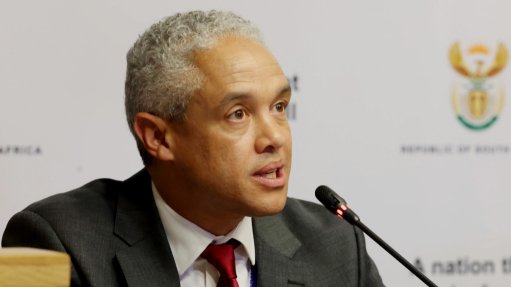
“The mining sector’s competitiveness is constrained by high and rapidly increasing power tariffs, underperforming rail and ports services and rising unit labour costs. Execution on logistics recovery, energy reliability and affordability as well as reduced permitting times for prospecting and mineral rights will determine whether 2026 shifts from stabilisation to sustained growth,” Minerals Council South Africa acting chief economist Bongani Motsa emphasised at a key media briefing on day-one of the Investing in African Mining Indaba covered by Mining Weekly.
“Pragmatic and investor-friendly changes on the policy and institutional fronts are critical for the capacity of the mining industry to compete for international and domestic capital to promote sustainable, inclusive economic development and jobs growth, which is a national priority listed by President Ramaphosa in his 2024 State of the Nation Address. These changes will expand on the gains made thus far in social transformation and extend into infrastructure and economic impacts that will also enable a just transition,” Motsa outlined.
An improvement in logistics amid encouraging steps to address rail performance recovery has increased coal and iron-ore exports. Chrome and manganese export volumes reached record highs in 2025.
In chrome, indications are that about nine-million tonnes of the 23.4-million tonnes of chrome ore exported were transported by truck, equivalent to more than 826 trucks a day and attracting a cost premium of about 40% compared to rail.
A reduction in ferrochrome production because of uncompetitive electricity prices diverted chrome ore to export markets, supporting record export volumes. With total annual manganese ore exports in 2025 reaching about 26-million tonnes, around 10-million tonnes of manganese ore was transported by road.
In its annual Facts & Figures 2025 booklet summarising the performance of the South African mining industry and its contribution to society and the country in the nine months to end-September, the Minerals Council South Africa highlights that:
- mining directly contributed 5.8% to South Africa’s total nominal GDP, estimated at R439-billion.
- mineral ores and related exports contributed about 52% of the value of overall South African merchandise exports.
- mining contributed more than R100-billion to the national fiscus in the form of corporate taxes, royalties and VAT payments, and through personal income tax payments by mining sector employees.
The mining sector provided direct employment to an average of 469 765 people in the first nine months of the year. This represented about 4.5% of total formal sector employment.
The compensation of mining employees amounted to an estimated R200-billion on an annualised basis. This was about 5.7% of total employee compensation in South Africa.
South Africa’s mining exports in 2025 were mostly unaffected by US tariffs, remaining resilient off the back of strong demand from key markets such as China, India and the US.
Further trade tensions, exacerbated by the White House administration’s tariff measures, and significant geopolitical developments in Ukraine, Russia, and the Middle East will continue to shape global mineral demand, supply chains and trade with impacts on commodity prices, presenting challenges and opportunities for the industry.
The publication of the revised Mineral Resources Development Bill will hopefully reflect the extensive collaboration of Minerals Council South Africa with the Department of Mineral and Petroleum Resources to create laws that will encourage investment and growth in the mining sector from exploration, mine development and in existing operations.
“At the same time, we must address persistent domestic constraints – electricity tariffs, regulatory hurdles and infrastructure limitations – if we are to unlock mining’s full potential,” Minerals Council South Africa CEO Mzila Mthenjane said.
Article Enquiry
Email Article
Save Article
Feedback
To advertise email advertising@creamermedia.co.za or click here
Research Reports

Projects

Latest Multimedia

Latest News
Showroom

For over 15 years, Lilak Aluminium, a trusted leader in architectural extrusion supply, has delivered excellence to businesses like yours.
VISIT SHOWROOM
Rio Carb is an OEM (Original Equipment Manufacturer) of R-C700 Chromium Carbide (CrC) alloy clad wear plates and pipes used for heavy materials...
VISIT SHOWROOM
Press Office
Announcements
What's On
Subscribe to improve your user experience...
Option 1 (equivalent of R125 a month):
Receive a weekly copy of Creamer Media's Engineering News & Mining Weekly magazine
(print copy for those in South Africa and e-magazine for those outside of South Africa)
Receive daily email newsletters
Access to full search results
Access archive of magazine back copies
Access to Projects in Progress
Access to ONE Research Report of your choice in PDF format
Option 2 (equivalent of R375 a month):
All benefits from Option 1
PLUS
Access to Creamer Media's Research Channel Africa for ALL Research Reports, in PDF format, on various industrial and mining sectors
including Electricity; Water; Energy Transition; Hydrogen; Roads, Rail and Ports; Coal; Gold; Platinum; Battery Metals; etc.
Already a subscriber?
Forgotten your password?
Receive weekly copy of Creamer Media's Engineering News & Mining Weekly magazine (print copy for those in South Africa and e-magazine for those outside of South Africa)
➕
Recieve daily email newsletters
➕
Access to full search results
➕
Access archive of magazine back copies
➕
Access to Projects in Progress
➕
Access to ONE Research Report of your choice in PDF format
RESEARCH CHANNEL AFRICA
R4500 (equivalent of R375 a month)
SUBSCRIBEAll benefits from Option 1
➕
Access to Creamer Media's Research Channel Africa for ALL Research Reports on various industrial and mining sectors, in PDF format, including on:
Electricity
➕
Water
➕
Energy Transition
➕
Hydrogen
➕
Roads, Rail and Ports
➕
Coal
➕
Gold
➕
Platinum
➕
Battery Metals
➕
etc.
Receive all benefits from Option 1 or Option 2 delivered to numerous people at your company
➕
Multiple User names and Passwords for simultaneous log-ins
➕
Intranet integration access to all in your organisation