Budget 2026 Delivers SME Relief as VAT Threshold Increases to R2.3 Million





This article has been supplied.
South Africa’s 2026 National Budget has delivered targeted relief for small and medium-sized enterprises (SMEs), including a significant increase in the Value Added Tax (VAT) registration threshold, alongside enhanced capital gains tax exemptions for qualifying business owners.
In his Budget Speech, Minister of Finance Enoch Godongwana announced that the VAT registration threshold will increase to R2.3 million, responding directly to concerns that compliance costs have not kept pace with the rising cost of doing business. The measure follows this month’s State of the Nation Address (SONA) pronouncements on SME support and provides practical regulatory and cash-flow relief for growing enterprises.
The Budget gives practical effect to aspects of this month’s SONA, particularly in reducing compliance pressure for SMEs and reinforcing regional trade integration. While SONA set out ambitious growth and funding commitments for the sector, the Budget signals early delivery through regulatory relief and trade enablement measures.
Minister Godongwana further confirmed that:
- The capital gains tax exemption on the sale of a small business for older persons will increase from R1.8 million to R2.7 million; and
- The qualifying business value cap rises from R10 million to R15 million.
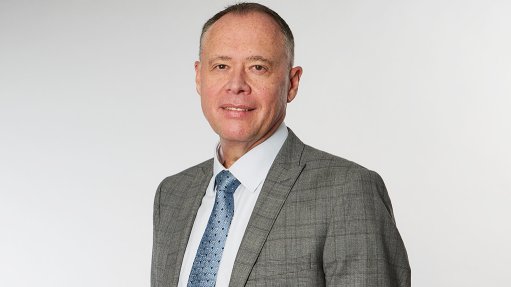
Simone Cooper, Head of Business & Commercial Banking: Standard Bank South Africa, says the VAT threshold increase is a tangible intervention for growing businesses.
“For many SMEs, compliance costs can be disproportionate to turnover. The increase in the VAT registration threshold to R2.3 million is a welcome and practical measure. This adjustment creates breathing room for entrepreneurs to reinvest in growth, strengthen resilience and focus on expansion rather than administration.”
Beyond SME compliance relief, the Budget reinforces South Africa’s commitment to regional integration.
Minister Godongwana emphasised that a key policy objective is to ensure that the financial sector supports regional integration and the implementation of the Africa Continental Free Trade Agreement (AfCFTA). He also confirmed that National Treasury will ease certain cross-border capital flow restrictions to improve competitiveness and position South Africa as a hub for investment into the continent.
Among the most advanced public-private partnership initiatives are six border post projects aimed at easing congestion and lifting regional trade flows, while logistics reforms seek to dismantle rail and port bottlenecks that have constrained exports and raised the cost of doing business.
Cooper notes that these measures reinforce work already underway in the private sector.
“We have long supported clients operating across Africa in alignment with the AfCFTA. The Budget’s focus on regional integration, capital flow flexibility and improved trade infrastructure reinforces this trajectory. As Business & Commercial Banking, we are present in 15 markets across Africa, as well as in Jersey and the Isle of Man. We continue to support businesses expanding across borders through integrated trade, payments and working capital solutions.”
The Budget places significant emphasis on infrastructure investment, with public-sector spending expected to exceed R1 trillion over the medium term. This includes allocations across state-owned companies, provinces and municipalities, with transport and logistics representing the largest share.
These commitments, alongside energy transmission reforms and water infrastructure investment, are aimed at removing structural bottlenecks that have weighed on economic growth.
Minister Godongwana confirmed that government debt will stabilise for the first time in 17 years and begin to decline over the medium term, reinforcing fiscal credibility and investor confidence. Economic growth is projected at 1.6% for 2026.
“Targeted SME relief improves short-term viability, but sustained growth will depend on reliable infrastructure, efficient payments systems, strong trade corridors and continued access to finance. While the 2026 Budget provides important building blocks, the focus now shifts to implementation,” concludes Cooper.
Article Enquiry
Email Article
Save Article
Feedback
To advertise email advertising@creamermedia.co.za or click here
Research Reports


Latest Multimedia
Latest News

Showroom

Leading condition monitoring specialists, WearCheck, help boost machinery lifespan and reduce catastrophic component failure through the scientific...
VISIT SHOWROOM
Rooted in the hearts of South Africans, combining technology and a quest for perfection to bring you a battery of peerless standing. Willard...
VISIT SHOWROOM


Press Office
Announcements
What's On
Subscribe to improve your user experience...
Option 1 (equivalent of R125 a month):
Receive a weekly copy of Creamer Media's Engineering News & Mining Weekly magazine
(print copy for those in South Africa and e-magazine for those outside of South Africa)
Receive daily email newsletters
Access to full search results
Access archive of magazine back copies
Access to Projects in Progress
Access to ONE Research Report of your choice in PDF format
Option 2 (equivalent of R375 a month):
All benefits from Option 1
PLUS
Access to Creamer Media's Research Channel Africa for ALL Research Reports, in PDF format, on various industrial and mining sectors
including Electricity; Water; Energy Transition; Hydrogen; Roads, Rail and Ports; Coal; Gold; Platinum; Battery Metals; etc.
Already a subscriber?
Forgotten your password?
Receive weekly copy of Creamer Media's Engineering News & Mining Weekly magazine (print copy for those in South Africa and e-magazine for those outside of South Africa)
➕
Recieve daily email newsletters
➕
Access to full search results
➕
Access archive of magazine back copies
➕
Access to Projects in Progress
➕
Access to ONE Research Report of your choice in PDF format
RESEARCH CHANNEL AFRICA
R4500 (equivalent of R375 a month)
SUBSCRIBEAll benefits from Option 1
➕
Access to Creamer Media's Research Channel Africa for ALL Research Reports on various industrial and mining sectors, in PDF format, including on:
Electricity
➕
Water
➕
Energy Transition
➕
Hydrogen
➕
Roads, Rail and Ports
➕
Coal
➕
Gold
➕
Platinum
➕
Battery Metals
➕
etc.
Receive all benefits from Option 1 or Option 2 delivered to numerous people at your company
➕
Multiple User names and Passwords for simultaneous log-ins
➕
Intranet integration access to all in your organisation