Illicit economy is eroding legitimate economy, Mavuso warns

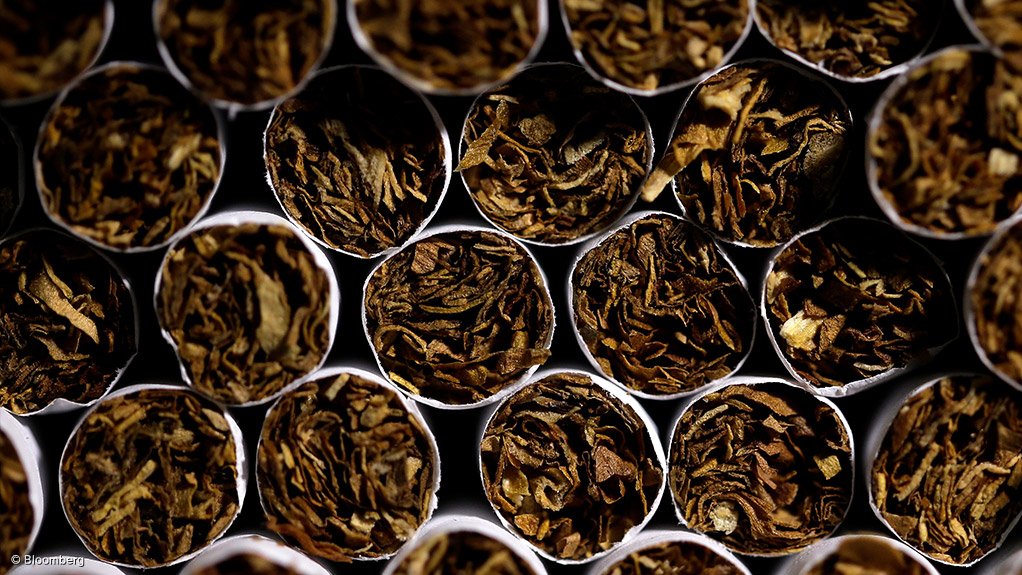


The illicit economy is killing jobs, Business Leadership South Africa (BLSA) CEO Busisiwe Mavuso has said, citing the recent announcement by British American Tobacco (BAT) that it will shut its only cigarette factory in South Africa this year as demonstrative of how policy failures and enforcement gaps are destroying legitimate manufacturing.
The cigarette company noted last week that its factory has been operating at 35% capacity and can no longer sustain operations. As a result, 230 direct jobs will be lost, but Mavuso believed the ripple effects could affect as many as 35 000 jobs across the value chain, from the 100 tobacco farmers in Limpopo, North West and Mpumalanga, who produced more than seven-million kilograms of tobacco last year, through to distributors and retailers.
“How did we reach this point? In 2019, illicit cigarettes represented roughly one-third of the market. Today, BAT estimates that proportion has more than doubled to 75%. The acceleration came from policy missteps during Covid-19, when legal cigarette and alcohol sales were banned (which was later declared unconstitutional) while enforcement capacity was diverted elsewhere, allowing illegal networks to establish distribution chains that never closed.”
“Subsequent steep increases in excise duties on legal products created even wider price gaps that illicit operators exploited. Illegal boxes now sell for less than the R26.22 in combined excise and value-added tax that should be collected, circumventing health warnings and age restrictions, while costing the fiscus roughly R30-billion annually in lost tax revenue,” Mavuso pointed out in her weekly newsletter on January 19.
However, she emphasised that it would be shortsighted to believe this was happening only in the cigarette market, noting that the same dynamics were destroying legitimate businesses across multiple sectors.
She pointed out that illicit alcohol sales had grown 55% by volume since 2017, with one in five drinks now coming from illegal sources, according to the Drinks Federation of South Africa.
Counterfeit pharmaceuticals, fake branded clothing, electronics, cosmetics and even food products are also flooding the market, Mavuso said. The Consumer Goods Council of South Africa has estimated the total illicit economy now represents about 10% of GDP.
“[This is] a staggering figure that, while difficult to measure precisely, indicates the massive scale of the problem,” she said.
Mavuso posited that these illegal operations fed organised criminal networks involved in illegal mining, construction mafia activity, and other serious crimes, with the profits funding everything from cash-in-transit heists to more sophisticated criminal enterprises.
“Beyond the immediate tax losses and job destruction, the illicit economy undermines the rule of law and erodes public trust in institutions when criminals operate openly with apparent impunity,” Mavuso said.
She said the South African business community had proposed concrete solutions.
For example, minimum retail pricing would make it harder for retailers to sell cigarettes below the tax threshold, while unique product marking systems – such as tamper-proof verification stickers on legal products – would allow for easy identification of authentic goods and help enforcement agencies target illegal imports and local production.
“Technology exists to enable consumers to verify product authenticity through smartphone apps, crowdsourcing enforcement. Yet these proposals have sat with government departments for years without implementation,” Mavuso said.
She noted that BLSA had joined the Illicit Economy Task Force established by the Consumer Goods Council to drive coordinated action. The task force would develop specific proposals for product authentication systems across multiple sectors, create public awareness campaigns about the economic and safety risks of illicit goods and work directly with the South African Revenue Service (Sars), the police and the National Prosecuting Authority (NPA) to identify enforcement bottlenecks and propose solutions.
“We're bringing together affected industries, from tobacco and alcohol to pharmaceuticals and textiles, to share intelligence on supply chains and criminal networks. This coordinated approach allows us to present government with actionable, cross-sector solutions rather than individual company complaints,” Mavuso said.
However, she pointed out that business action alone would not be able solve the problem.
“Government must act with urgency across multiple fronts. Sars needs dedicated resources for its illicit trade task team, including specialised investigators and technology for supply chain monitoring. The police require trained specialists who understand how to build cases against sophisticated criminal networks, not just street-level vendors. The NPA must prioritise prosecutions that target the organising networks.
“This cannot just be about seizing individual shipments. The Department of Trade, Industry and Competition needs to tighten import controls, strengthen intellectual property enforcement and work with industry to implement product authentication systems,” Mavuso said.
She said the infrastructure for effective action existed, highlighting that Sars had recovered institutional capacity, that the NPA was being strengthened and that the Madlanga Commission was examining police effectiveness.
“What's needed now is political will to prioritise this issue and coordinate action across agencies. The BAT closure should be the catalyst, not the beginning of a pattern. Alcohol producers, textile manufacturers and pharmaceutical companies are all vulnerable to a similar collapse if illicit competitors continue to operate unchecked,” Mavuso said.
She added, however, that the threat to manufacturing did not come only from illicit trade.
Mavuso pointed to South Africa's automotive sector – which in many respects was an “economic crown jewel” that employed tens of thousands directly and supported extensive supply chains – that now faced what industry leaders had described as an existential crisis from the surge of low-cost Chinese vehicle imports.
“This is a different challenge requiring different policy responses, potentially including tariff adjustments, local content requirements or revised trade agreements, but it reflects the same underlying problem: government has been slow to respond to clear and present threats to domestic manufacturing.
“Business has sought engagement on this issue repeatedly, but we have yet to see the level of urgency the situation demands. Protecting domestic manufacturing capacity must be recognised as a strategic economic priority,” she said.
Mavuso noted that other countries had successfully tackled illicit trade through partnerships between industry and law enforcement, combining technology, enforcement and public awareness. She believed South Africa could do the same, but that the window for action was closing.
“Every month of delay means more factories operating below viable capacity, more jobs at risk and more entrenchment of criminal networks,” Mavuso lamented.
She said the business community stood ready to partner with government on the fight against illicit trade.
“The task force BLSA has joined demonstrates our commitment to bringing resources, expertise, and coordination to the effort. What we need from government is a matching commitment – resources for enforcement agencies, implementation of proposed authentication systems and sustained focus from political leadership.”
“Breaking the back of the illicit economy will require resources and professionalism, but the benefits are substantial: preserved manufacturing jobs, recovered tax revenue, strengthened rule of law and reduced funding for organised crime. The BAT factory closure is a warning. Let's ensure it's also the turning point,” Mavuso said.
Article Enquiry
Email Article
Save Article
Feedback
To advertise email advertising@creamermedia.co.za or click here


Projects

Latest Multimedia

Latest News

Showroom

ESAB South Arica, the leading supplier of high-end welding and cutting products to the Southern African industrial market is based in...
VISIT SHOWROOM
Established in 1983, the ASTPM is an industry association and representative body of the welded carbon steel tube and pipe manufacturers of South...
VISIT SHOWROOM


Press Office
Announcements
What's On
Subscribe to improve your user experience...
Option 1 (equivalent of R125 a month):
Receive a weekly copy of Creamer Media's Engineering News & Mining Weekly magazine
(print copy for those in South Africa and e-magazine for those outside of South Africa)
Receive daily email newsletters
Access to full search results
Access archive of magazine back copies
Access to Projects in Progress
Access to ONE Research Report of your choice in PDF format
Option 2 (equivalent of R375 a month):
All benefits from Option 1
PLUS
Access to Creamer Media's Research Channel Africa for ALL Research Reports, in PDF format, on various industrial and mining sectors
including Electricity; Water; Energy Transition; Hydrogen; Roads, Rail and Ports; Coal; Gold; Platinum; Battery Metals; etc.
Already a subscriber?
Forgotten your password?
Receive weekly copy of Creamer Media's Engineering News & Mining Weekly magazine (print copy for those in South Africa and e-magazine for those outside of South Africa)
➕
Recieve daily email newsletters
➕
Access to full search results
➕
Access archive of magazine back copies
➕
Access to Projects in Progress
➕
Access to ONE Research Report of your choice in PDF format
RESEARCH CHANNEL AFRICA
R4500 (equivalent of R375 a month)
SUBSCRIBEAll benefits from Option 1
➕
Access to Creamer Media's Research Channel Africa for ALL Research Reports on various industrial and mining sectors, in PDF format, including on:
Electricity
➕
Water
➕
Energy Transition
➕
Hydrogen
➕
Roads, Rail and Ports
➕
Coal
➕
Gold
➕
Platinum
➕
Battery Metals
➕
etc.
Receive all benefits from Option 1 or Option 2 delivered to numerous people at your company
➕
Multiple User names and Passwords for simultaneous log-ins
➕
Intranet integration access to all in your organisation