Johannesburg needs new water approach, says water department's Phillips


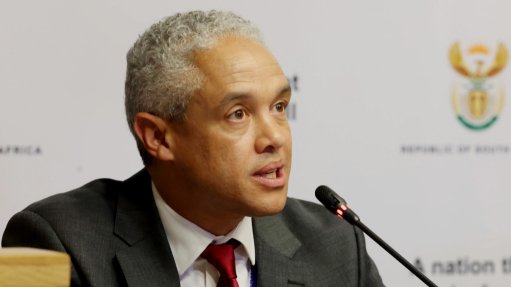
Johannesburg needs a new approach to water provision, one that aligns responsibility with authority and supports stable, accountable service delivery, says Department of Water and Sanitation director-general Dr Sean Phillips.
The critical issue is to replace current, dysfunctional structures with effective ones; however, any model will fail unless it incorporates three elements: competition leading to the best providers being rewarded with contracts and customers; incentives that ensure that companies will increase their revenue if they supply cleaner water at a lower cost to more customers; and regulations that hold operators to clear standards.
This message emerged in a brief by independent policy research and advocacy organisation Centre for Development and Enterprise (CDE) following a discussion with Phillips in December.
The CDE brief ‘Johannesburg in Brief: Water Services’, published on Thursday, quoted Phillips as saying that South Africa’s main challenge was not water availability or national infrastructure, but the breakdown of water and sanitation services in municipalities.
Water and wastewater treatment, as technical, industrial processes, require skilled operators, engineers and managers who follow strict procedures.
“Where municipalities do not employ people with the right qualifications, systems start to slip. Maintenance is delayed. Standards are not met. Over time, infrastructure degrades and service quality drops,” he said, focusing on how water services were organised.
“The law separates two roles: the water services authority, to oversee and regulate services, and the water services provider which is responsible for distributing water.
For example, Johannesburg Water is the water service provider, while the City of Johannesburg remains the water service authority.
While the separation is meant to improve accountability, in practice, accountability is weakened as water services are absorbed into the wider municipal bureaucracy, with responsibility spread across multiple departments, procurement in one place, staffing decisions in another and billing and revenue collection elsewhere.
“Water services in South Africa are meant to pay for themselves. National government provides some support, mainly for free basic water for poorer residents and capital infrastructure. But day-to-day operations and maintenance are meant to be funded from water sales.”
That model was rapidly breaking down, he said, pointing out that, on average, municipalities lost 47% of the water they bought without generating any revenue owing to leaks, illegal connections and poor metering.
Further, councils can legally use water revenue to fund other municipal services. In Johannesburg, income from water and electricity is often used to plug revenue gaps elsewhere.
“This leaves many water services operating at a loss. When revenue does not cover costs, maintenance is deferred. Skilled staff are not hired or retained. Infrastructure continues to deteriorate. Could any organisation be expected to function on a financially self-sustaining basis under these conditions?” Phillips questioned.
He proposed a move towards a utility model in which providers controlled their revenue, and were professionally managed and accountable with control over the functions needed to recover costs and deliver services.
There are reforms now under way that would lend themselves to a utilities company model, including public-private partnerships and private concessions.
The Water Services Amendment Bill, which has been tabled in Parliament, would introduce licensing for water service providers, with minimum technical and financial requirements.
Where providers fail to meet these standards, the Minister will be able to initiate a process that could lead to a different provider being appointed.
National Treasury is also pushing for clearer separation of water services from general municipal administration, including ring-fencing revenue and establishing clearer lines of accountability.
Article Enquiry
Email Article
Save Article
Feedback
To advertise email advertising@creamermedia.co.za or click here


Projects

Latest Multimedia

Latest News

Showroom

Established in 1983, the ASTPM is an industry association and representative body of the welded carbon steel tube and pipe manufacturers of South...
VISIT SHOWROOM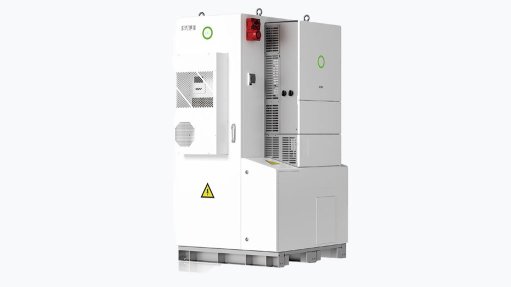
Smart energy storage solutions for efficient, safe, and profitable power.
VISIT SHOWROOM
Press Office
Announcements
What's On
Subscribe to improve your user experience...
Option 1 (equivalent of R125 a month):
Receive a weekly copy of Creamer Media's Engineering News & Mining Weekly magazine
(print copy for those in South Africa and e-magazine for those outside of South Africa)
Receive daily email newsletters
Access to full search results
Access archive of magazine back copies
Access to Projects in Progress
Access to ONE Research Report of your choice in PDF format
Option 2 (equivalent of R375 a month):
All benefits from Option 1
PLUS
Access to Creamer Media's Research Channel Africa for ALL Research Reports, in PDF format, on various industrial and mining sectors
including Electricity; Water; Energy Transition; Hydrogen; Roads, Rail and Ports; Coal; Gold; Platinum; Battery Metals; etc.
Already a subscriber?
Forgotten your password?
Receive weekly copy of Creamer Media's Engineering News & Mining Weekly magazine (print copy for those in South Africa and e-magazine for those outside of South Africa)
➕
Recieve daily email newsletters
➕
Access to full search results
➕
Access archive of magazine back copies
➕
Access to Projects in Progress
➕
Access to ONE Research Report of your choice in PDF format
RESEARCH CHANNEL AFRICA
R4500 (equivalent of R375 a month)
SUBSCRIBEAll benefits from Option 1
➕
Access to Creamer Media's Research Channel Africa for ALL Research Reports on various industrial and mining sectors, in PDF format, including on:
Electricity
➕
Water
➕
Energy Transition
➕
Hydrogen
➕
Roads, Rail and Ports
➕
Coal
➕
Gold
➕
Platinum
➕
Battery Metals
➕
etc.
Receive all benefits from Option 1 or Option 2 delivered to numerous people at your company
➕
Multiple User names and Passwords for simultaneous log-ins
➕
Intranet integration access to all in your organisation