Rail reform puts investment on track

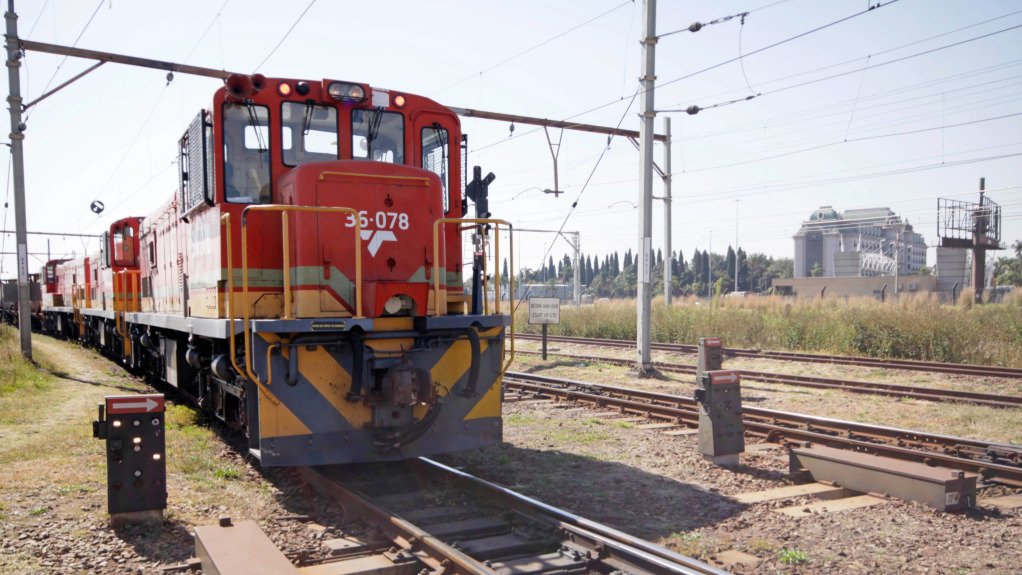
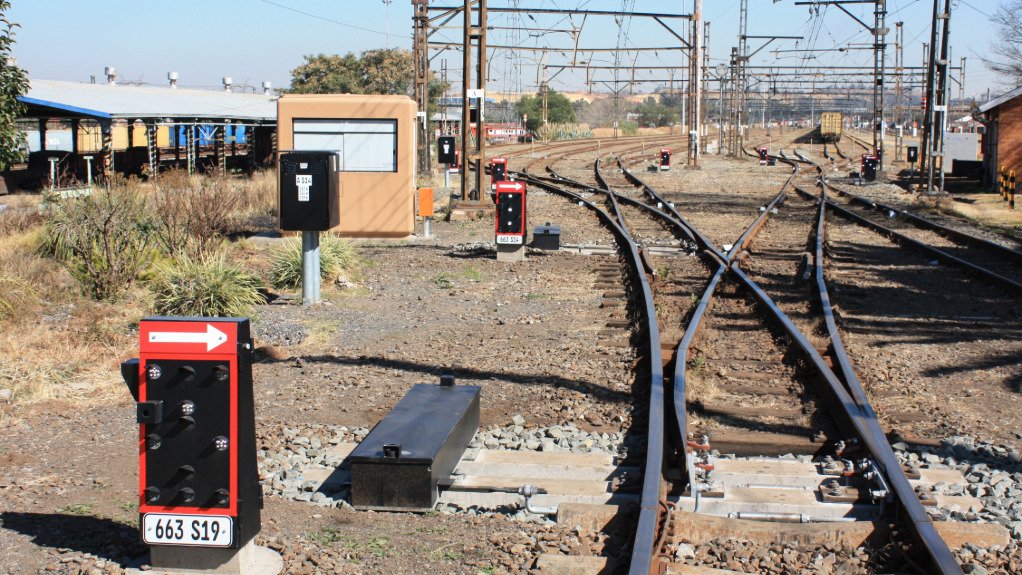
AUTOMATED EFFICIENCY Advanced yard automation and control technologies can transform rail yards into real-time, data-driven logistics systems
LEVERAGING ENABLERS Policy and procurement frameworks need to evolve in ways that reduce risk, derisk investment


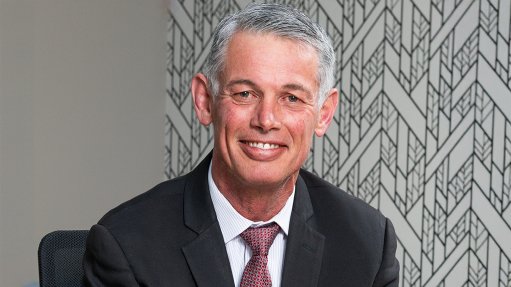
Recent regulatory developments and proposed reforms in South Africa’s freight rail sector are having a meaningful influence on investor confidence by unlocking new opportunities while also highlighting regulatory areas still in need of clarity, says electrical equipment solutions provider Actom business development manager Nqobile Mthembu.
A key reform has been the publishing of State-owned freight operator Transnet’s network statement, which facilitates open access to South Africa’s rail network by third-party operators, and the allocation of train operating company (TOC) slots to private players, says Mthembu.
Last year, Transnet’s rail infrastructure manager assigned 11 new TOCs access to 41 routes across six strategic corridors, which is projected to help meet the government’s rail volume target of 250-million tons by 2029.
This, in turn, enabled a R3.4-billion investment by private freight operator Traxtion, focused on acquiring and modernising locomotives and wagons, which is widely interpreted as a “vote of confidence” in rail reform policy.
In a December press release, Traxtion stated that its investment was driven by the policy certainty created by opening the network and enabling third-party participation, adding that private rail investments can unlock logistic capacity and jobs.
“This is arguably the largest private freight rail investment in South African history, spanning locally produced assets and skills development, which reinforces the idea that clear regulatory frameworks can attract capital and industrial participation,” says Mthembu.
To further leverage enablers and effectively accelerate private-sector participation and technology deployment in South Africa’s freight rail infrastructure, Mthembu asserts that policy and procurement frameworks need to evolve in ways that reduce risk, derisk investment and create clear opportunities for return on capital.
High Impact Corridors
Currently, three rail corridors present the greatest opportunity for impact through refurbishment and modernisation. These include the North Corridor, the Container Corridor between Gauteng and KwaZulu-Natal and the Cape Corridor.
Comprising a diverse mix of line types and capacities, the North Corridor serves domestic and export markets and carries more than 50% of total freight rail volumes.
Primarily, the corridor transports coal to State-owned power utility Eskom power plants and to the Richard’s Bay Coal Terminal and Transnet Multipurpose Terminal for export purposes.
Mthembu explains that the North Corridor is a key bulk export route, adding that the corridor historically moved high volumes. However, the corridor has since been challenged by ageing tracks, signalling issues and capacity constraints, limiting its volumes.
Meanwhile, Transnet has described the Container Corridor as “the backbone of South Africa’s overall rail freight network”. This corridor is the rail ‘artery’ to the Port of Durban and plays a key role in connecting the port to inland areas, especially inland freight terminals serving the Gauteng province and neighbouring countries.
While the Container Corridor is the most vital link for manufactured goods, it currently faces bottlenecks that force 80% of containers onto the N3 highway, says Mthembu. Therefore, modernising this line would benefit manufacturing, retail and import and export flows.
The Cape Corridor also has significant potential as the natural hinterland for the ports of Cape Town, Mossel Bay, Gqeberha, Ngqura and East London.
The Cape Corridor connects the Northern Cape’s manganese mines and the Western Cape’s fruit exporters to the ports, Mthembu explains, adding that it is a prime candidate for third-party access.
“Modernising the corridor’s signalling systems will allow private operators to run their own rolling stock, effectively doubling capacity without a total State-funded rebuild,” she points out.
Additionally, integrated rail-port strategies will yield greater economic impact. Renewal programmes that link rail upgrades to port handling and terminal improvements will deliver significant benefits, Mthembu says, adding that South Africa’s rail strategy explicitly addresses synchronising rail network rehabilitation with port upgrades to reduce bottlenecks at export hubs.
Digitalisation
Amid South Africa’s rail reform, digitalisation is increasingly being recognised as a key enabler of improved rail operations in South Africa, particularly in the freight sector. However, adoption remains uneven owing to structural, technical and institutional barriers, says Mthembu.
To improve the rail network, Mthembu puts forward condition-based maintenance and predictive diagnostics as critical tools for addressing South Africa’s deferred maintenance backlog.
By using real-time data and analytics to determine when and where maintenance is required, these approaches help reduce unexpected failures, improve asset availability, extend infrastructure life and lower total life-cycle costs. They also enable a shift from reactive crisis management towards planned reliability, says Mthembu.
In parallel, advanced yard automation and control technologies can transform rail yards into real-time, data-driven logistics systems.
“At busy freight hubs, where trains are assembled, split, inspected and dispatched, automation has a massive impact on throughput, safety and turnaround times,” Mthembu says.
She points out that Transnet has been upgrading its information and communication technology backbone to support data-driven rail operations, which includes the deployment of an all-optical network to replace outdated infrastructure. This upgrade is intended to provide scalable, high-bandwidth connectivity capable of supporting real-time applications such as asset tracking, condition monitoring, yard automation and centralised traffic control, says Mthembu.
Despite these advances, wider digital adoption continues to be limited by legacy infrastructure, skills shortages, budget pressures, cybersecurity and interoperability risks as well as institutional complexity, she concludes.
Article Enquiry
Email Article
Save Article
Feedback
To advertise email advertising@creamermedia.co.za or click here
Research Reports
Projects

Latest Multimedia


Latest News
Showroom
ISO-certified Condra manufactures overhead cranes, portal cranes, cantilever cranes and crane components: hoists, drives, end-carriages, brakes and...
VISIT SHOWROOM
For over 60 years, VEGA has provided industry-leading products for the measurement of level, density, weight and pressure. As the inventor of the...
VISIT SHOWROOM
Press Office
Announcements
What's On
Subscribe to improve your user experience...
Option 1 (equivalent of R125 a month):
Receive a weekly copy of Creamer Media's Engineering News & Mining Weekly magazine
(print copy for those in South Africa and e-magazine for those outside of South Africa)
Receive daily email newsletters
Access to full search results
Access archive of magazine back copies
Access to Projects in Progress
Access to ONE Research Report of your choice in PDF format
Option 2 (equivalent of R375 a month):
All benefits from Option 1
PLUS
Access to Creamer Media's Research Channel Africa for ALL Research Reports, in PDF format, on various industrial and mining sectors
including Electricity; Water; Energy Transition; Hydrogen; Roads, Rail and Ports; Coal; Gold; Platinum; Battery Metals; etc.
Already a subscriber?
Forgotten your password?
Receive weekly copy of Creamer Media's Engineering News & Mining Weekly magazine (print copy for those in South Africa and e-magazine for those outside of South Africa)
➕
Recieve daily email newsletters
➕
Access to full search results
➕
Access archive of magazine back copies
➕
Access to Projects in Progress
➕
Access to ONE Research Report of your choice in PDF format
RESEARCH CHANNEL AFRICA
R4500 (equivalent of R375 a month)
SUBSCRIBEAll benefits from Option 1
➕
Access to Creamer Media's Research Channel Africa for ALL Research Reports on various industrial and mining sectors, in PDF format, including on:
Electricity
➕
Water
➕
Energy Transition
➕
Hydrogen
➕
Roads, Rail and Ports
➕
Coal
➕
Gold
➕
Platinum
➕
Battery Metals
➕
etc.
Receive all benefits from Option 1 or Option 2 delivered to numerous people at your company
➕
Multiple User names and Passwords for simultaneous log-ins
➕
Intranet integration access to all in your organisation