What impact will Africa’s busy 2026 election calendar have on the economic outlook?

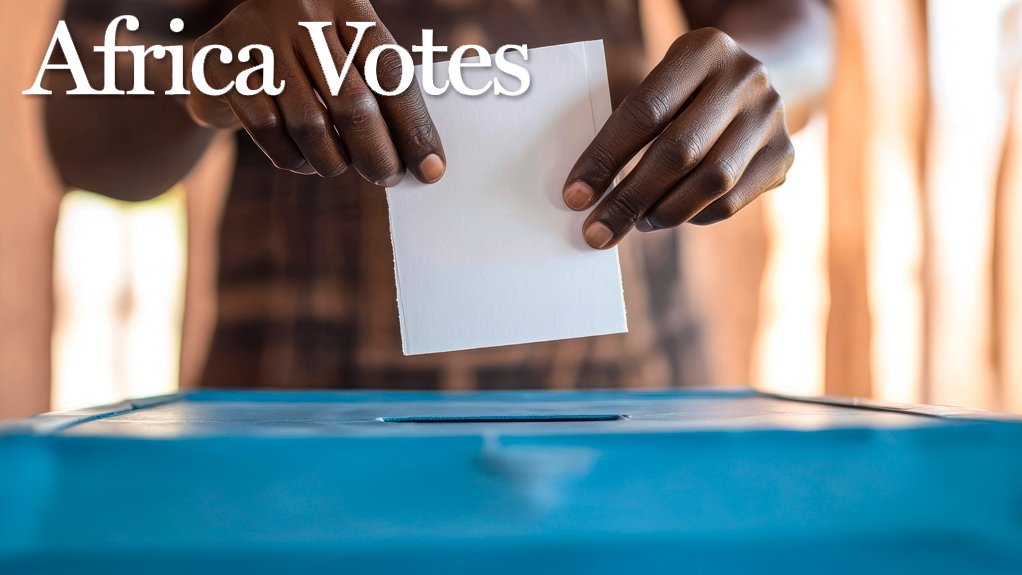


Africa faces one of its most crowded electoral calendars this year at a time of shrinking global tolerance for political risk, turning the ballot box into a policy credibility test for investors rather than a purely democratic exercise.
The cycle began in January with elections in Uganda, where veteran leader Yoweri Museveni and his National Resistance Movement – in power since 1986 – secured another five-year mandate, while, on the other end of the continent, parties aligned to Benin’s President made a clean sweep of Parliamentary seats, an outcome detractors attributed to legislative tweaks that seriously disadvantage the opposition. The Beninese return to the polls in April for Presidential elections.
Voting Storm
The 2026 line-up includes multiple high- stakes contests beyond Uganda, notably in Zambia, which is in the midst of a landmark debt restructuring programme; Ethiopia, whose $119-billion economy is second only to Kenya’s in East Africa; and South Sudan, where elections first scheduled for 2015 and postponed twice – in 2021 and 2024 – are again due, with any further delay likely to deepen humanitarian and regional security risks.
Elsewhere, Presidential elections will take place in Djibouti, the Republic of Congo, São Tomé and Príncipe, Cabo Verde and The Gambia, alongside general elections in Guinea-Bissau and Libya, as well as Parliamentary polls in Algeria, Morocco and Somaliland, the self-declared republic that seceded from Somalia in 1991. Cabo Verde and São Tomé and Príncipe are also due to hold separate Parliamentary elections.
If any of these elections increase political risk – whether it be political decisions such as radical legislative changes, general instability or unconstitutional regime changes – investor willingness to commit resources to an economy will be severely affected, warns John Mukum Mbaku, a close Africa watcher and distinguished economics professor at Weber State University in Utah, US.
While acknowledging that macroeconomic fundamentals are also important determinants of investment, entrepreneurship, economic growth and wealth creation, he argues that the political environment materially influences those conditions.
“For example, political instability can have a significant negative impact on many macroeconomic indicators and hence affect investment decisions,” he tells Engineering News & Mining Weekly.
Uganda’s elections may have come and gone – having taken place on January 15 – but their longer-term implications remain uncertain. Analysts at Chatham House, a London-based think-tank, see limited immediate disruption in a country preparing for its first oil production in 2026/27. Kampala is also advancing major strategic infrastructure projects, including a $4-billion oil refinery and a long-planned railway line to Kenya.
Yet, while the elections were not a tipping point, they did little to ease the pressure surrounding political succession or the need to deliver economic results for Uganda’s vocal youth.
“On these issues at least, the stakes remain high,” Chatham House Africa programme research fellow Fergus Kell wrote in a January commentary.
Elsewhere in East Africa, Ethiopia is preparing to hold its first elections since the end of the devastating 2022 conflict in its northern Tigray region.
The Horn of Africa country presents one of Africa’s most compelling investment propositions, boasting a population of about 120-million people. It is also pursuing ambitious economic reforms backed by the International Monetary Fund (IMF) and initiated the implementation of trade operations under the African Continental Free Trade Area (AfCFTA) in 2025.
Although tensions persist in Tigray and clashes have occurred between federal forces and separatist groups in Amhara and Oromia, the US-based, government-affiliated Africa Center for Strategic Studies (ACSS) believes the country’s army and police are able to ensure peaceful voting. Moreover, the National Election Board of Ethiopia has stated that it is pressing ahead with its plans to hold the elections on June 1, having opened candidate registration in November.
For investors accustomed to emerging- market election cycles, this should be reassuring: a government committed to its constitutional timelines, functioning institutions, and ongoing reform momentum.
Debt Referendum
Mbaku describes Zambia’s August 13 elections as “likely to be a referendum on how Zambians feel about the country’s debt restructuring and the accompanying austerity measures”. The country defaulted on a $42.5-million Eurobond payment in November 2020, at a time when its public external debt stock had risen to about $15.4-billion, out of total public debt of about $28.7-billion, according to Ministry of Finance and National Planning statistics from mid-2025. The country has since restructured the bulk of the external debt – covering official bilateral and private creditors – under the G20 Framework, alongside programmes supported by the IMF.
As part of the associated austerity measures, subsidies on various staples have been removed and taxes hiked, weighing heavily on poorer households.
President Hakainde Hichilema’s government, which has cited improvements in sovereign credit ratings, currency stabilisation, and increased investment in education, health and infrastructure as evidence of progress since assuming power in 2021, is seeking to conclude more debt-relief agreements with commercial creditors.
“Of importance are agreements with China and other bilateral creditors in order to secure about $7.6-billion in total debt relief,” says Mbaku.
He cautions, however, that Zambian politicians often use ethnic and regional rhetoric during campaigning to secure votes, potentially blunting the upcoming elections’ role as a referendum on the debt restructuring if voters prioritise identity over reform agendas.
He says if the winning party engages in “policy slippage” – particularly if public resistance to IMF-linked debt restructuring conditionality intensifies – investors may reassess their exposure to the Zambian economy.
“However, if Zambia is able to successfully carry out its August 2026 elections and the winner stays the course and convinces the population to accept the austerity measures, that could indeed provide a template for other African countries in similar situations,” he tells Engineering News & Mining Weekly.
In South Sudan, which ranks at the bottom of the UN’s Human Development Index, despite generating $1.6-billion in yearly oil revenue, the ACSS says the primary question shaping the electoral process is whether the polls will be held at all on December 22, as scheduled, arguing that the country’s political leaders appear to have little incentive to organise a contest that may end their grip on power.
Concerns have already surfaced, following the announcement in December that the polls will proceed without a census and a permanent Constitution, with civil society groups warning that such loose parameters will create significant potential for abuse.
Coup Surge
Mbaku also points to the resurgence of military coups on the continent – with 11 having succeeded since 2020, compared with nine from 2010 to 2019 – as a significant drag on investment and economic activity in the affected countries and regions.
He elaborates that seizures of power often trigger sanctions by powerful nations and multilateral institutions, deter foreign direct and portfolio investment, suppress domestic capital formation, and accelerate financial and human capital flight.
Moreover, governments installed through military takeovers tend to lose access to aid, budget support and concessional financing, pushing them towards new partners and new geopolitical alignments.
Coups also generate economic spillover effects beyond national borders, Mbaku highlights. “The coups in Niger and Burkina Faso, for example, created significant spillover effects, weakened the Economic Community of West African States (Ecowas), disrupted trade and hindered continuing regional integration,” he says.
“In fact, the sanctions imposed by Ecowas on Niger after its coup have affected not just Niger but also its trading partners, which include Nigeria and Ghana.
“In addition, the decision by Burkina Faso, Mali and Niger to withdraw from Ecowas not only threatens the stability of [that regional bloc] and its long-term survival but also undermines the realisation of the AfCFTA.
“It also provides an opportunity for countries such as China and Russia to thwart African unity, which includes the continent’s ability to approach global issues from a unified position.”
Quiet Contest
While much of Africa’s electoral risk is associated with continuity shocks and coups, South Africa is heading into a far quieter contest – local government elections. Expected later this year or in early 2027, these polls will reshuffle neither the Union Buildings nor Parliament and are viewed by commentators as unlikely to materially shift investor sentiment.
Political researcher Ebrahim Fakir notes that even if the elections produce fragmented councils or unstable municipal coalitions, they are unlikely to trigger major market reactions – a view echoed by governance and political analyst Sandile Swana.
Fakir argues that investors have, over time, become less responsive to electoral outcomes and more focused on structural conditions. While earlier electoral cycles saw markets closely track internal African National Congress (ANC) contests and national election outcomes, this sensitivity has diminished as the party’s electoral dominance has waned and coalition politics has become entrenched.
Any investor reaction, he notes, is typically short lived and tends to correct once attention returns to economic fundamentals.
Fakir further argues that the principal determinants of investment decisions lie beyond electoral outcomes, with investors more concerned with the predictability and “hospitality” of the policy environment, as well as the State’s capacity to deliver basic infrastructure.
He notes that while South Africa’s policy framework has remained relatively predictable, failures in electricity, water, transport and logistics impose indirect costs on business, effectively acting as a hidden tax on investment.
These constraints stem less from political turnover than from administrative performance and institutional capacity, particularly at the municipal level. “As a result, coalition arrangements are not inherently problematic for investors unless they materially disrupt governance and service delivery,” he says.
Meanwhile, Swana says local government elections have greater economic significance in reinforcing longer-term shifts in municipal governments. He contends that the gradual erosion of ANC dominance in the country’s 12 economically dominant municipalities – which account for more than 60% of national GDP – could support improved administrative performance, with potentially outsized effects on growth.
Poor municipal governance, he argues, acts as a structural constraint on economic expansion, while even incremental improvements in governance can yield disproportionately large gains in economic growth and investment.
According to Swana, if GDP growth were 0.25%, the “missing 0.75%” would be attributable to bad governance, suggesting a fourfold good governance multiplier effect.
“The source of bad governance in South African municipalities is the ANC. It’s like your mother telling you to stop drinking alcohol and you find yourself performing better at work, and you start saying God is blessing you. No, you stopped the alcohol. The alcohol of South Africa is the ANC, and we need to get less of it, much less of it. Ideally, none of it.”
Article Enquiry
Email Article
Save Article
Feedback
To advertise email advertising@creamermedia.co.za or click here
Research Reports

Projects
Latest Multimedia


Latest News

Showroom

ATI systems comprises five divisions: electrical assemblies, drives and controls, feedback sensors, enclosures, and strip guiding.
VISIT SHOWROOM
FLANDERS Southern Africa provides integrated solutions for mining and industrial operations, covering field services, automation, electrification,...
VISIT SHOWROOM
Press Office
Announcements
What's On
Subscribe to improve your user experience...
Option 1 (equivalent of R125 a month):
Receive a weekly copy of Creamer Media's Engineering News & Mining Weekly magazine
(print copy for those in South Africa and e-magazine for those outside of South Africa)
Receive daily email newsletters
Access to full search results
Access archive of magazine back copies
Access to Projects in Progress
Access to ONE Research Report of your choice in PDF format
Option 2 (equivalent of R375 a month):
All benefits from Option 1
PLUS
Access to Creamer Media's Research Channel Africa for ALL Research Reports, in PDF format, on various industrial and mining sectors
including Electricity; Water; Energy Transition; Hydrogen; Roads, Rail and Ports; Coal; Gold; Platinum; Battery Metals; etc.
Already a subscriber?
Forgotten your password?
Receive weekly copy of Creamer Media's Engineering News & Mining Weekly magazine (print copy for those in South Africa and e-magazine for those outside of South Africa)
➕
Recieve daily email newsletters
➕
Access to full search results
➕
Access archive of magazine back copies
➕
Access to Projects in Progress
➕
Access to ONE Research Report of your choice in PDF format
RESEARCH CHANNEL AFRICA
R4500 (equivalent of R375 a month)
SUBSCRIBEAll benefits from Option 1
➕
Access to Creamer Media's Research Channel Africa for ALL Research Reports on various industrial and mining sectors, in PDF format, including on:
Electricity
➕
Water
➕
Energy Transition
➕
Hydrogen
➕
Roads, Rail and Ports
➕
Coal
➕
Gold
➕
Platinum
➕
Battery Metals
➕
etc.
Receive all benefits from Option 1 or Option 2 delivered to numerous people at your company
➕
Multiple User names and Passwords for simultaneous log-ins
➕
Intranet integration access to all in your organisation