Dynamic roof support enhances deep-level underground mining

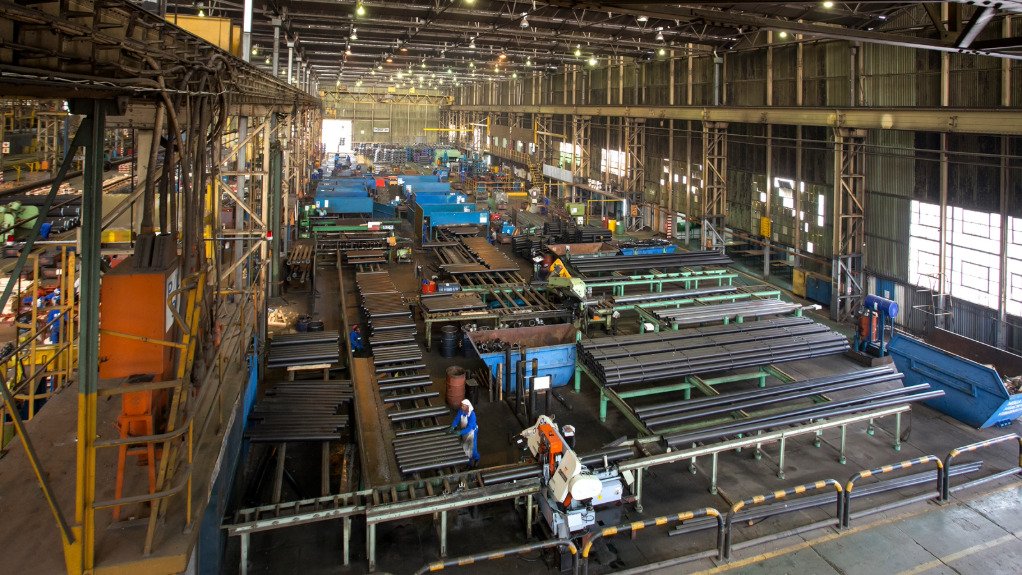
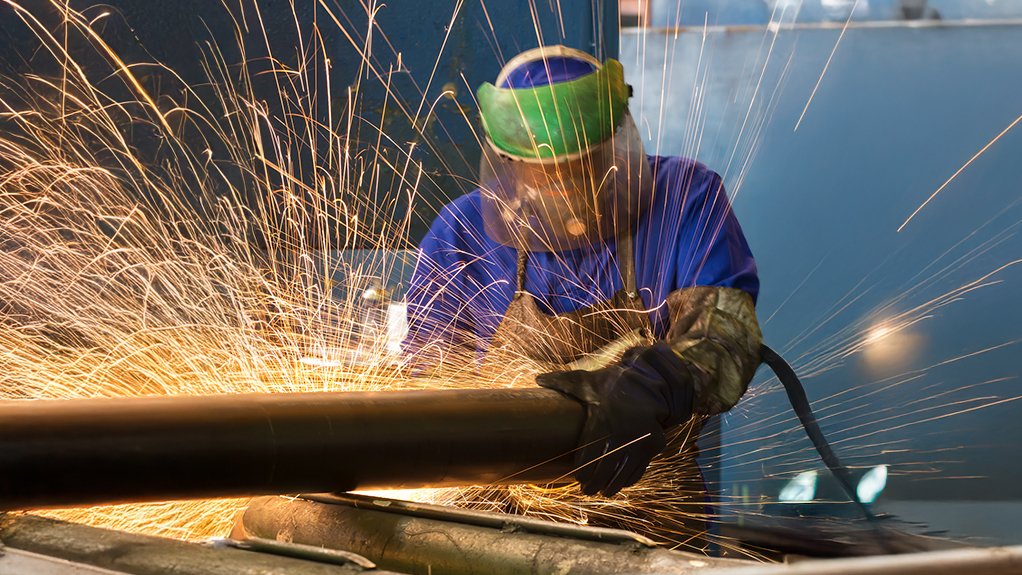
CONSISTENT DESIGN The Rocprop's simplified, consistent design reduces delays caused by complex setups or rework
IN DEVELOPMENT The next-generation Rocprop is designed to enhance underground performance as underground mines reach new depths


As platinum group metal (PGM) mines in South Africa reach greater depths, often exceeding 1 000 m and at times reaching depths of 2 000 m, traditional roof support solutions are becoming increasingly inadequate for deep excavations, says underground roof control systems specialist Mine Support Products (MSP) MD Conrad Engelbrecht.
To better support the PGMs sector, MSP is developing the next-generation Rocprop – an all-steel elongated roof support system that was originally designed for deep-level gold mines in applications such as tubular orebodies with mining widths of up to 6 m.
MSP plans to launch its next-generation Rocprop solution this year, with development and validation progressing steadily.
The system is designed to enhance underground performance across the key operational areas of safety, productivity, logistics, cost efficiency and worker wellbeing.
Engelbrecht explains that the improved Rocprop system responds to the PGM mining industry’s growing need for reliable, active ground support in high-stress underground environments, where seismicity and geological instability remain persistent risks.
Available in 20 t and 40 t variants, the system offers more consistent performance than traditional timber supports, which can vary in strength, owing to natural inconsistencies.
While conventional support systems often involve multiple components, extensive manual handling and inconsistent performance, the Rocprop solution is designed to deliver “predictable and repeatable behaviour, reducing installation variability and improving overall ground control consistency”, he outlines.
The Rocprop support system incorporates static and dynamic yielding capability, enabling it to respond to changing ground conditions in a controlled manner.
“The elongate, or ‘prop’, allows for controlled deformation under dynamic loads, maintaining roof integrity during seismic events without creep, and ensuring predictable energy absorption of up to 200 kN dynamic yield.”
This engineered consistency reduces the risk of support failure under high rock-pressure conditions and integrates “seamlessly” into existing PGM mining methods and support standards, he adds.
Rocprop has also demonstrated strong stability and efficiency performance in high-stress and seismic environments during actual in-mine trials, notes Engelbrecht.
The system’s initial installations date back to 1995 at the East Driefontein Consolidated Gold Mine, in Gauteng, providing long-term field data on reliability.
Deepening Dilemma
As mines deepen, their underground risk profile intensifies, owing to elevated stress levels and geological features, such as potholes associated with the Bushveld Complex, which can increase mining-induced seismicity, says Engelbrecht.
This can lead to a higher frequency of rockbursts from stress concentrations and production disruptions.
Deeper excavations are also subject to higher rates of long-term convergence, exacerbating instability in high-closure environments and increasing fall-of-ground risks, particularly in seismically active zones, such as the Merensky reef and Upper Group 2 orebodies, associated with South African PGM mines.
Owing to these factors, traditional roof support solutions in PGM operations, including rigid timber elongates, steel arches and mechanical anchors, are increasingly proving inadequate in deep-level mining environments, as many were designed using shallow-mining data, with depths of about 500 m, he states.
In high-stress zones, these outdated systems cannot effectively absorb dynamic loads from seismicity, often leading to failure, uneven loading, creep under static conditions and insufficient yield-ability, adds Engelbrecht.
“As depths increase, induced stresses overwhelm conventional supports, which are unable to dissipate energy effectively during blasting or seismic events.”
These factors heighten geotechnical hazards, which, consequently, requires more resilient support systems to mitigate dynamic energy releases and maintain excavation integrity, he adds.
Easy Installation
Underground productivity is closely linked to the speed and efficiency of support installation, states Engelbrecht. Here, he says, the Rocprop system is designed for rapid installation cycles, potentially delivering up to a 30% productivity improvement and a 90% reduction in installation time.
Using Rocprop enables underground mining crews to spend less time installing support and more time on advancing the mining face, adds Engelbrecht.
“The simplified, consistent design also reduces delays caused by complex setups or rework, improving overall shift performance and advance rates.”
Faster installation also reduces the time workers spend under unsupported ground, thereby further enhancing safety, he adds.
The system is also about 40% lighter and 80% more compact than timber, reducing the physical strain associated with manual handling, transport and installation.
Through the system’s compact design, more Rocprop units can be transported in a material car, with up to 120 units, in comparison to about 20 timber poles.
The system’s reduced size also improves manoeuvrability in confined spaces, decreasing the likelihood of strain-related injuries and supporting better ergonomic practices of installers.
Article Enquiry
Email Article
Save Article
Feedback
To advertise email advertising@creamermedia.co.za or click here


Projects


Latest Multimedia
Latest News

Showroom
Roytec Global is an international company specializing in liquid / solid and mineral separation technologies for the Mining and Industrial sectors.
VISIT SHOWROOM
Established in 1933, EKATO is the world leader in agitation technology, supplying agitators for processes and applications such as chemicals and...
VISIT SHOWROOM

Announcements
What's On
Subscribe to improve your user experience...
Option 1 (equivalent of R125 a month):
Receive a weekly copy of Creamer Media's Engineering News & Mining Weekly magazine
(print copy for those in South Africa and e-magazine for those outside of South Africa)
Receive daily email newsletters
Access to full search results
Access archive of magazine back copies
Access to Projects in Progress
Access to ONE Research Report of your choice in PDF format
Option 2 (equivalent of R375 a month):
All benefits from Option 1
PLUS
Access to Creamer Media's Research Channel Africa for ALL Research Reports, in PDF format, on various industrial and mining sectors
including Electricity; Water; Energy Transition; Hydrogen; Roads, Rail and Ports; Coal; Gold; Platinum; Battery Metals; etc.
Already a subscriber?
Forgotten your password?
Receive weekly copy of Creamer Media's Engineering News & Mining Weekly magazine (print copy for those in South Africa and e-magazine for those outside of South Africa)
➕
Recieve daily email newsletters
➕
Access to full search results
➕
Access archive of magazine back copies
➕
Access to Projects in Progress
➕
Access to ONE Research Report of your choice in PDF format
RESEARCH CHANNEL AFRICA
R4500 (equivalent of R375 a month)
SUBSCRIBEAll benefits from Option 1
➕
Access to Creamer Media's Research Channel Africa for ALL Research Reports on various industrial and mining sectors, in PDF format, including on:
Electricity
➕
Water
➕
Energy Transition
➕
Hydrogen
➕
Roads, Rail and Ports
➕
Coal
➕
Gold
➕
Platinum
➕
Battery Metals
➕
etc.
Receive all benefits from Option 1 or Option 2 delivered to numerous people at your company
➕
Multiple User names and Passwords for simultaneous log-ins
➕
Intranet integration access to all in your organisation