HDPE pipes experiencing growing demand

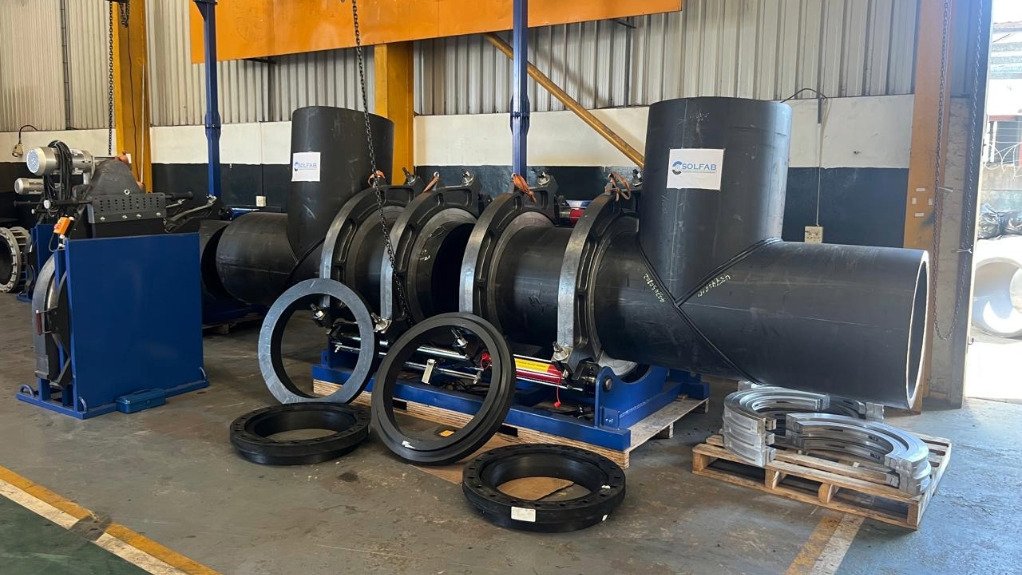
SKILLS GAP Adequate training in HDPE welding, jointing and handling is required as HDPE demand grows
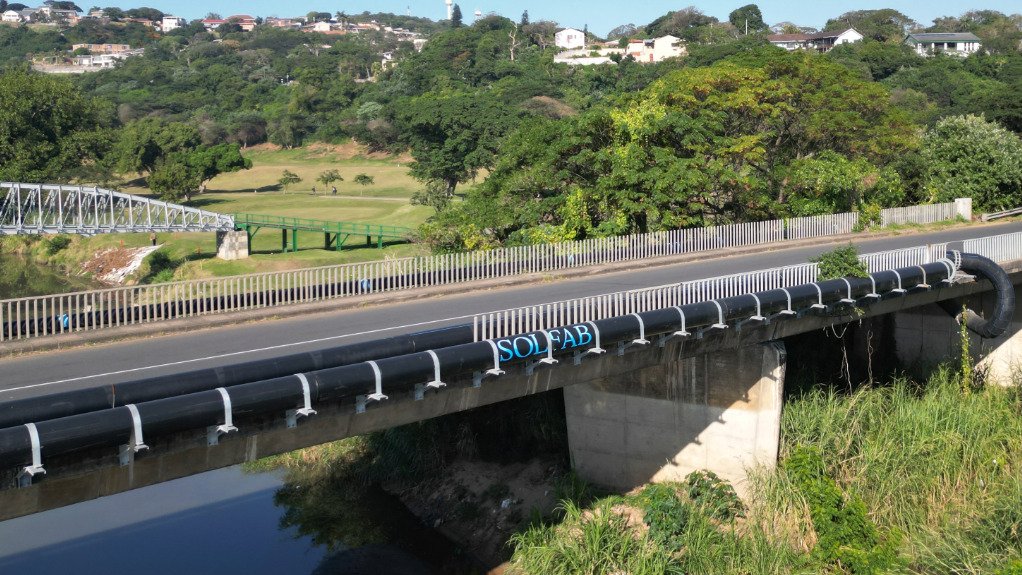
ABOVE AND BEYOND HDPE offers greater longevity, maintains structural integrity regardless of soil movement and is UV-stable



Growing urbanisation and infrastructure development are driving increased demand for high- density polyethylene (HDPE) pipes in water, sewage and industrial pipeline systems, owing to their durability and low maintenance requirements, says thermoplastic pipe and fittings supplier and fabricator Solfab technical manager Mike Schutte.
HDPE and other plastic piping systems are recyclable, with HDPE pipes also meeting sustainability standards increasingly required by end-users and municipalities.
HDPE pipes also require less installation energy, compared with steel or concrete, he adds.
Concrete and steel pipelines tend to develop internal calcification over time, significantly reducing their original design capacity, but there is no internal calcification in plastic pipes, which means that they retain their capacity throughout their life span.
Further, HDPE pipes offer “leak-free joints”, whereby welded pipelines form a single, homogeneous line with no intermediate joints. They are also significantly lighter than traditional materials, making them easier to handle and install.
HDPE maintains structural integrity regardless of soil movement, vibration and pressure fluctuations. It is corrosion and chemically resistant, as well as UV-stable, making it suitable for installation above ground without compromising on life span.
Owing to its corrosion resistance, HDPE requires minimal maintenance, with fewer repairs and replacements compared with metal pipes.
Schutte notes that, in South Africa, metal pipelines are increasingly affected by theft of metal pipes’ cathodic-protection systems, adding that this can be mitigated through HDPE piping systems.
He suggests that concrete sewer pipes also encounter problems, owing to modern detergents, which accelerate deterioration. HDPE provides a more reliable alternative, either through lining existing pipelines or installing fully welded HDPE systems.
They also offer greater longevity, as HDPE pipelines are now specified for a life span of 100 years.
Despite being in use for only about 50 years, reassessments of early HDPE installations in Europe show that the pipes have remained in excellent condition after their initial design life, Schutte explains. As a result, their operational life span has been extended by a further 50 years.
Owing to these factors, preferences are shifting towards using HDPE for water and wastewater applications, he says. HDPE pipe use is also increasing across the mining, agriculture and energy sectors, with its applications expanding to include gas pipelines and fire- retardant pipes.
Schutte cites a Solfab project, currently under review, in collaboration with the Department of Water and Sanitation in Durban, KwaZulu-Natal, where HDPE is being evaluated as an alternative material. If successful, this could lead to broader adoption and fewer pipeline failures, he says.
Challenges
Amid growing demand for HDPE pipes, a key challenge impacting on the plastic pipe industry is skills shortages. Schutte says adequate training in HDPE welding, jointing and handling is limited, as HDPE has not been included in university or technical training programmes.
“We often encounter students at industry events who are unfamiliar with the product. As a result, industry players have had to become actively involved in education and training initiatives.”
Despite industry involvement, he asserts that there needs to be a stronger focus on workforce skills development, particularly for correct installation and welding.
Schutte adds that, while these skills are not yet fully regulated, he anticipates that the increased adoption of HDPE will support the development of more structured training programmes “and hopefully mitigate any problems with installations, standards and adherence”.
Additionally, variations in manufacturing standards among local suppliers – often driven by economic pressures, or clients prioritising upfront costs over long-term performance – can compromise quality and negatively affect product performance.
To mitigate this, Schutte emphasises the need for stricter regulation and oversight of manufacturing processes.
He states that encouraging certification to recognised standards organisations, such as the South African National Standards and the International Organisation for Standardisation, which requires properly trained inspectors on site to enforce compliance, will help standardise product quality.
Further, industry association Southern African Plastic Pipe Manufacturers Association (Sappma) requires such certification to become a member, allowing members to leverage its credibility while upholding high-quality standards.
Schutte elaborates that Sappma sets guidelines for quality manufacturing and installation and has introduced a stringent code of conduct, which applies directly to products in the field.
He asserts that effective self-regulation encourages uniform industry standards, helps clients trust HDPE and other plastic pipe products and supports quality through training, certification and inspection programmes.
Beyond these benefits, Sappma also provides a forum for innovation and information sharing, addressing challenges as they occur.
Article Enquiry
Email Article
Save Article
Feedback
To advertise email advertising@creamermedia.co.za or click here

Latest Multimedia


Latest News


Showroom
ISO-certified Condra manufactures overhead cranes, portal cranes, cantilever cranes and crane components: hoists, drives, end-carriages, brakes and...
VISIT SHOWROOM
Columbus Stainless, based in Middelburg, Mpumalanga, is Africa’s only producer of stainless steel flat products. In addition, Columbus is the only...
VISIT SHOWROOM


Press Office
Announcements
What's On
Subscribe to improve your user experience...
Option 1 (equivalent of R125 a month):
Receive a weekly copy of Creamer Media's Engineering News & Mining Weekly magazine
(print copy for those in South Africa and e-magazine for those outside of South Africa)
Receive daily email newsletters
Access to full search results
Access archive of magazine back copies
Access to Projects in Progress
Access to ONE Research Report of your choice in PDF format
Option 2 (equivalent of R375 a month):
All benefits from Option 1
PLUS
Access to Creamer Media's Research Channel Africa for ALL Research Reports, in PDF format, on various industrial and mining sectors
including Electricity; Water; Energy Transition; Hydrogen; Roads, Rail and Ports; Coal; Gold; Platinum; Battery Metals; etc.
Already a subscriber?
Forgotten your password?
Receive weekly copy of Creamer Media's Engineering News & Mining Weekly magazine (print copy for those in South Africa and e-magazine for those outside of South Africa)
➕
Recieve daily email newsletters
➕
Access to full search results
➕
Access archive of magazine back copies
➕
Access to Projects in Progress
➕
Access to ONE Research Report of your choice in PDF format
RESEARCH CHANNEL AFRICA
R4500 (equivalent of R375 a month)
SUBSCRIBEAll benefits from Option 1
➕
Access to Creamer Media's Research Channel Africa for ALL Research Reports on various industrial and mining sectors, in PDF format, including on:
Electricity
➕
Water
➕
Energy Transition
➕
Hydrogen
➕
Roads, Rail and Ports
➕
Coal
➕
Gold
➕
Platinum
➕
Battery Metals
➕
etc.
Receive all benefits from Option 1 or Option 2 delivered to numerous people at your company
➕
Multiple User names and Passwords for simultaneous log-ins
➕
Intranet integration access to all in your organisation