Insolvencies globally expected to rise only modestly unless interest rates spike





Global trade credit insurance company Coface expects business insolvencies to rise by 2.8% this year if interest rates remain at current levels, but warns that a rise in interest rates of just 25 basis points could trigger a global increase in insolvencies to 4% or 5%.
Behind the apparent stabilisation of financing costs lies a persistently high level of fragility in industries such as construction, chemicals and textiles.
This year should offer a respite rather than an improvement, Coface states, explaining that the number of insolvencies will not fall but rather stop accelerating. However, should interest rates ease less quickly than anticipated, that stabilisation would come to a halt, it adds.
Coface Northwestern countries economist Jonathan Steenberg adds that this year should mark a period of calm with slower-paced insolvencies following three years of sustained increases, owing to gradual easing of rates and credit conditions. However, debt levels remain high globally, margins are compressed and most exposed sectors continue to show signs of tension.
In South Africa, a total 1 534 business liquidations were recorded in 2025, with most closures having been voluntary. This is down by 1.1% from the 1 551 closures recorded in 2024.
The numbers reflect the ongoing challenges faced by local businesses in a complex and evolving economic environment.
In December 2025 alone, South Africa had 100 business closures, which marks an 11% year-on-year increase compared with December 2024.
The sectors most affected by liquidations in South Africa include finance, insurance, real estate, business services, trade, catering and accommodation. These industries have been especially vulnerable to the prevailing economic headwinds.
Coface chief Africa economist Aroni Chaudhuri says interpreting liquidation data in South Africa presents several challenges.
Firstly, official liquidation statistics exclude the informal economy, which plays a significant role in some sectors in South Africa, such as construction.
Secondly, liquidation figures only capture businesses that have formally entered compulsory or voluntary procedures. Given the country’s substantial regulatory hurdles, many businesses may cease operations without ever being officially liquidated.
Thirdly, subdued economic growth can lead to a lower level of liquidations, not necessarily because conditions are improving, but because fewer new companies are being created.
“Liquidation is a natural part of the economic cycle, allowing for renewal and market entry. When business creation, especially among small and medium-sized enterprises, is constrained, the number of liquidations may also decline,” Chaudhuri explains.
Coface finds that one in four South African liquidations are owing to unpaid debt, with 80% of businesses struggling to recover unpaid debts. This underscores the importance of robust credit management and risk mitigation strategies for South African companies.
In other parts of the world, insolvencies are expected to increase - by 2% this year in France and the UK and by 4% in the US, with US sectors becoming vulnerable to recent policy changes.
There is a 1% insolvency increase forecast for Germany despite government stimulus, while Italy and Spain will record declines of between 2% and 3% in insolvencies. In Italy’s case, it will be owing to fewer active companies but Spanish companies are benefitting from improved macroeconomic momentum.
Japan is expected to record a 7% increase in insolvencies owing to higher interest rates and several vulnerable sectors while insolvencies in Australia are expected to plateau after a strong post-pandemic normalisation.
These dynamics all confirm that local shocks – be it monetary, sectoral or regulatory – will continue to shape defaults this year, Coface points out.
Overall, companies remain very sensitive to the cost of credit globally after several years of excessive debt.
A rise in borrowing rates could particularly affect European economies which are more exposed to variable-rate debt, as well as sectors with low debt servicing capacity such as construction, chemicals and textiles.
Coface says this increased sensitivity serves as a reminder that the trajectory of insolvencies this year will depend less on growth than on the pace of monetary adjustment, making the cost of financing the real arbiter of the coming year.
As a suggestion of how businesses can respond, Coface says trade credit insurance and business information offer proactive and effective solutions to mitigate risks from unpaid invoices and unstable debt collection.
“By harnessing business intelligence and predictive analytics, companies can gain invaluable insights into the creditworthiness of customers and partners, minimising risks and gaining a competitive edge. Integrating robust risk management strategies with technological innovation enhances resilience.”
Article Enquiry
Email Article
Save Article
Feedback
To advertise email advertising@creamermedia.co.za or click here


Projects

Latest Multimedia
Latest News


Showroom
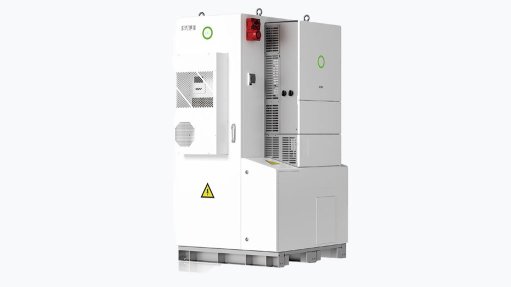
Smart energy storage solutions for efficient, safe, and profitable power.
VISIT SHOWROOM
North Ridge Pumps is an independent manufacturer of pumps. We have a proven track record for product support and customer service throughout the...
VISIT SHOWROOM



Press Office
Announcements
What's On
Subscribe to improve your user experience...
Option 1 (equivalent of R125 a month):
Receive a weekly copy of Creamer Media's Engineering News & Mining Weekly magazine
(print copy for those in South Africa and e-magazine for those outside of South Africa)
Receive daily email newsletters
Access to full search results
Access archive of magazine back copies
Access to Projects in Progress
Access to ONE Research Report of your choice in PDF format
Option 2 (equivalent of R375 a month):
All benefits from Option 1
PLUS
Access to Creamer Media's Research Channel Africa for ALL Research Reports, in PDF format, on various industrial and mining sectors
including Electricity; Water; Energy Transition; Hydrogen; Roads, Rail and Ports; Coal; Gold; Platinum; Battery Metals; etc.
Already a subscriber?
Forgotten your password?
Receive weekly copy of Creamer Media's Engineering News & Mining Weekly magazine (print copy for those in South Africa and e-magazine for those outside of South Africa)
➕
Recieve daily email newsletters
➕
Access to full search results
➕
Access archive of magazine back copies
➕
Access to Projects in Progress
➕
Access to ONE Research Report of your choice in PDF format
RESEARCH CHANNEL AFRICA
R4500 (equivalent of R375 a month)
SUBSCRIBEAll benefits from Option 1
➕
Access to Creamer Media's Research Channel Africa for ALL Research Reports on various industrial and mining sectors, in PDF format, including on:
Electricity
➕
Water
➕
Energy Transition
➕
Hydrogen
➕
Roads, Rail and Ports
➕
Coal
➕
Gold
➕
Platinum
➕
Battery Metals
➕
etc.
Receive all benefits from Option 1 or Option 2 delivered to numerous people at your company
➕
Multiple User names and Passwords for simultaneous log-ins
➕
Intranet integration access to all in your organisation