New export markets the next logical step for poultry industry growth, SAPA and BFAP say

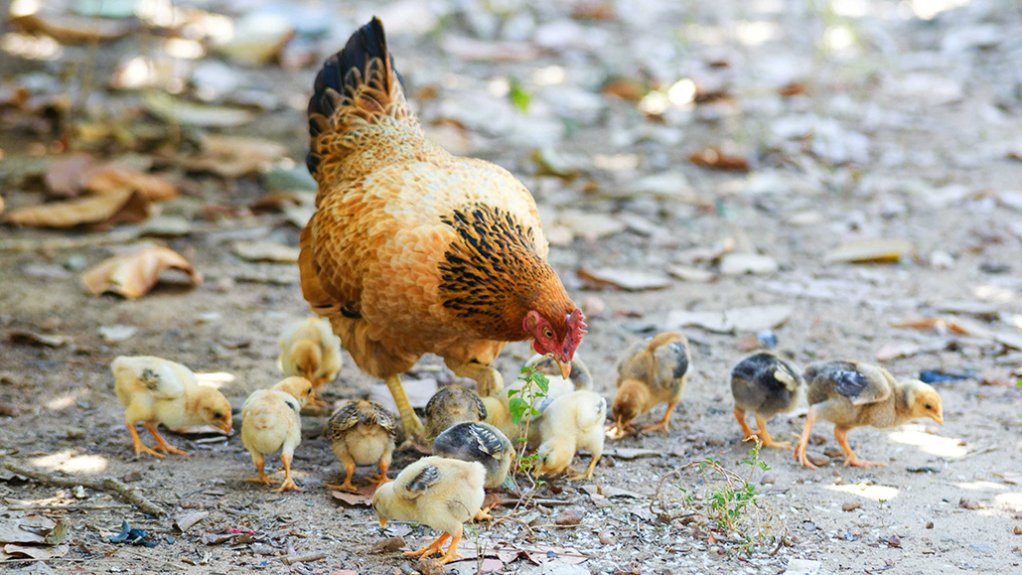


With the national poultry industry having grown to meet domestic demand including significant import replacement, the next logical step is to transition to exports, says South African Poultry Association (SAPA) CEO Izaak Breitenbach.
This comes as the Bureau for Food and Agricultural Policy (BFAP) found in a study that South Africa is the second-most-competitive poultry producer globally after Brazil from a cost of production perspective.
The countries in the study included the Netherlands, Germany, Poland, the US, Brazil and South Africa, which were evaluated according to technical efficiency – which factors in slaughter weight and feed conversion ratios.
South Africa was found to have the shortest production cycle among the countries included in the sample but, notably, South Africa’s typical slaughter weights are the lowest at about 1.87 kg compared with 2.9 kg for Brazil.
South Africa’s poultry industry achieved these competitiveness gains since publishing of the Poultry Industry Masterplan in 2019 despite infrastructural constraints relating to roads, ports, energy and water, wide-scale bird flu outbreaks in 2023 and a lack of government subsidies – which is testament to technical efficiency.
Chicken production increased by 11.8% over the past decade locally, compared with consumption that increased by 8.8% over the same period. South Africa currently slaughters 23-million birds a week, compared with 19.7-million birds a week in 2019.
Accordingly, industry turnover increased from R65-billion a year in 2019 to R74-billion in 2025, which has led to thousands of new jobs being created.
BFAP commodity markets and foresight programme lead and executive director Dr Tracy Davids says South Africa is technically efficient from a poultry production perspective, with the efforts of the masterplan having yielded significant production growth. Farmers are becoming increasingly proficient in production processes, genetics and technology.
For example, after a sustained period of rising imports, which peaked in 2018 and were core to the poultry industry being declared in distress, imports of bone-in portions, in particular, have declined substantially from 287 000 t in 2018 to less than 40 000 in 2024. Total imports have decreased from 500 000 t of chicken in 2018 to less than 400 000 t in 2024.
Notably, more than half of the chicken that South Africa imports comprise of mechanically deboned meat, which is not produced at a large scale in South Africa.
“While a success in itself, this suggests that opportunities for further import replacement are more limited going forward relative to the past. While some opportunities for import replacement remain in the offal and whole chicken categories, these are small relative to the volumes that have been replaced in the past,” Davids explains.
BFAP finds while much of the industry’s struggles in the past were underpinned by struggles to compete with imported products, it is now entering a new phase in its growth trajectory. Domestic income growth prospects, while improved from the recent past, remain slow, suggesting that production growth of similar rates to the past decade will continue to outpace that of consumption.
Simultaneously, the runway for further import replacement is limited, suggesting that the industry will soon need to enter a new phase, where exports become core to accelerated growth strategies.
In this environment, the ability to compete with leading global exporters becomes paramount.
Breitenbach agrees that the next frontier for growth in the poultry industry lies in exports and penetrating new markets. “For the local industry to meet its next set of growth ambitions and maintain this competitiveness, accessing new markets and vaccinating chickens against highly pathogenic [bird flu] is imperative,” he states.
Despite the decision having been made in June 2025 that the poultry industry will undertake mass vaccination, technical issues have hampered the start of a rollout.
Breitenbach confirms that the Department of Agriculture insists on very high biosecurity protocols which are impractical and expensive even for commercial producers. “We have elevated our concerns to a Section 23 committee, which will hopefully result in a solution to prevent further delays to a vaccination rollout.”
The first step would be getting vaccines approved and getting mass vaccination going. When asked whether government will also be expected to foot the bill for vaccination for bird flu, as it has committed to do with foot-and-mouth disease, Breitenbach says yes indeed.
“What is different with [bird flu] vaccines, however, is that there is no shortage of vaccines for the H5 strain commonly infecting chickens in South Africa. The three vaccines we have registered for H5 are all available in the country. If Agriculture Minister John Steenhuisen gives us permission to vaccinate, we will not run into the same constraints as in the beef industry,” he states.
Breitenbach motivates that a culling policy still leaves a lot more free virus in the environment compared with the amount of free virus present when mass vaccinating. He cites examples of vaccinations in France and Egypt having drastically reduced the number of HPAI outbreaks in these countries in recent years.
EXPORT FOCUS
Meanwhile, pertinent export opportunities being pursued in the poultry industry consist in exporting cooked chicken products to markets with high-income households in Europe, the UK and the United Arab Emirates – particularly Saudi Arabia.
Breitenbach says South African producers did not have the cooking facilities for these types of exports ten years ago, but it does now thanks to continued investment.
It will take some time for these markets to open up for South Africa’s exports, Breitenbach explains. “We have submitted all the documentation needed for cooked exports to those regions. We are awaiting inspections by those countries to approve our exports. Should we get approval, there is a further process to prove there are no antibiotics in our chicken before the physical market opens up for us.”
He is confident that the economic benefits can be exponential for the chicken value chain, should South Africa successfully secure new export markets, including increasing the industry’s direct employment from 56 000 people to 70 000 people.
Currently, most of South Africa’s chicken exports are shipped to neighbouring countries. However, it will reduce much of the industry’s risk to diversify the markets it exports to, as well as the products that are exported.
Davids affirms the future of the poultry industry depends on export-led growth, which has been achieved by many other industries including beef, maize and soybeans. To achieve this, the competitiveness gap with Brazil needs to be closed.
“Brazil’s whole value chain is structured to export efficiently. For us it is a new process. There is a lot we can learn by collaborating with other value chains in South Africa that have made this work, but it will be a long-term endeavour,” she says.
Breitenbach concludes that increased exports cannot eliminate the structural vulnerabilities in South Africa, but it can certainly help offset them.
Article Enquiry
Email Article
Save Article
Feedback
To advertise email advertising@creamermedia.co.za or click here
Research Reports


Projects

Latest Multimedia

Latest News

Showroom

Occupational health services, mobile clinics, wellness campaigns, aviation.
VISIT SHOWROOM
Rio Carb is an OEM (Original Equipment Manufacturer) of R-C700 Chromium Carbide (CrC) alloy clad wear plates and pipes used for heavy materials...
VISIT SHOWROOM


Press Office
Announcements
What's On
Subscribe to improve your user experience...
Option 1 (equivalent of R125 a month):
Receive a weekly copy of Creamer Media's Engineering News & Mining Weekly magazine
(print copy for those in South Africa and e-magazine for those outside of South Africa)
Receive daily email newsletters
Access to full search results
Access archive of magazine back copies
Access to Projects in Progress
Access to ONE Research Report of your choice in PDF format
Option 2 (equivalent of R375 a month):
All benefits from Option 1
PLUS
Access to Creamer Media's Research Channel Africa for ALL Research Reports, in PDF format, on various industrial and mining sectors
including Electricity; Water; Energy Transition; Hydrogen; Roads, Rail and Ports; Coal; Gold; Platinum; Battery Metals; etc.
Already a subscriber?
Forgotten your password?
Receive weekly copy of Creamer Media's Engineering News & Mining Weekly magazine (print copy for those in South Africa and e-magazine for those outside of South Africa)
➕
Recieve daily email newsletters
➕
Access to full search results
➕
Access archive of magazine back copies
➕
Access to Projects in Progress
➕
Access to ONE Research Report of your choice in PDF format
RESEARCH CHANNEL AFRICA
R4500 (equivalent of R375 a month)
SUBSCRIBEAll benefits from Option 1
➕
Access to Creamer Media's Research Channel Africa for ALL Research Reports on various industrial and mining sectors, in PDF format, including on:
Electricity
➕
Water
➕
Energy Transition
➕
Hydrogen
➕
Roads, Rail and Ports
➕
Coal
➕
Gold
➕
Platinum
➕
Battery Metals
➕
etc.
Receive all benefits from Option 1 or Option 2 delivered to numerous people at your company
➕
Multiple User names and Passwords for simultaneous log-ins
➕
Intranet integration access to all in your organisation