Opinion: Solar PV in South Africa – policy is in place; focus must now be on execution

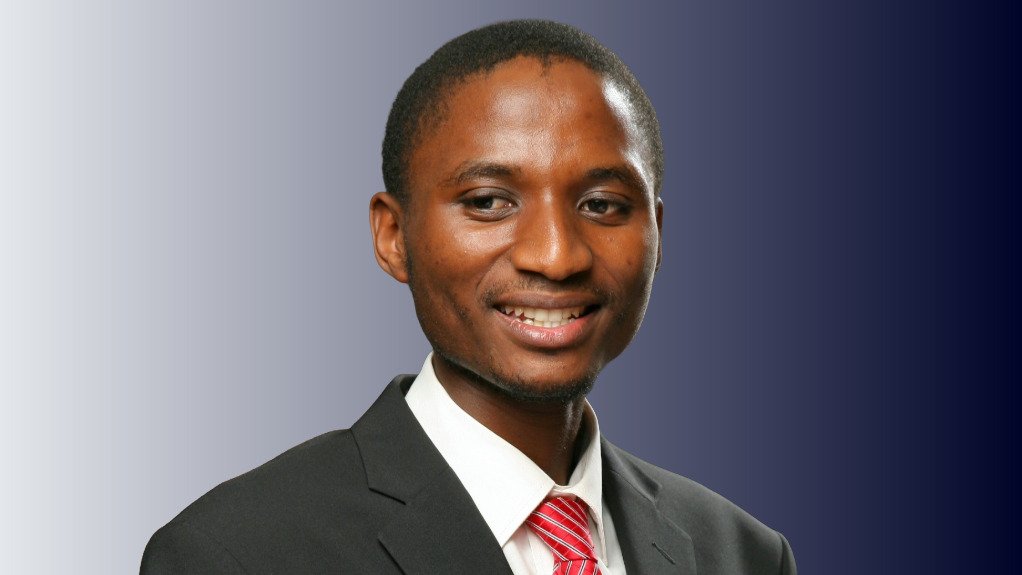



In this article, South African Photovoltaic Industry Association (SAPVIA) technical and policy manager Sim Khuluse writes that South Africa’s solar PV sector has entered a pivotal execution phase, with installed capacity now exceeding 10.2 GW and a strong pipeline of utility‑scale projects approaching commercial operation; however, without urgent grid modernisation and clear market rules ahead of the South African Wholesale Electricity Market’s (SAWEM's) launch, the sector’s current investment momentum could be at risk.
As the South African solar PV industry enters 2026, the sector has moved beyond the reactive "crisis-mode" installations of previous years toward a phase of sophisticated, market-led growth.
Following the surge of 2023 and a subsequent correction in 2024, the industry has demonstrated resilience, with installed capacity in South Africa now exceeding 10.2 GW. This progress firmly establishes South Africa as the continental leader for installed capacity and secures its place among the top 20 solar PV markets globally.
However, to maintain this momentum and ensure the benefits of the transition are felt across all sectors of society, our focus for 2026 must shift toward execution, grid expansion and policy coherence.
The 2026 energy landscape is set to be defined by the commercial operationalisation of utility-scale projects. Some capacity procured under the Renewable Energy Independent Power Producer Procurement Programme (REIPPPP) will be transitioning from construction to active grid contribution, marking a significant milestone for the national procurement programme.
Between late 2024 and the end of 2025, Bid Window 7 awarded a total of 3 940 MW of solar PV capacity, a critical milestone for solar PV industry. Notably, the window was defined exclusively by solar successes, as grid constraints in traditional resource areas limited the diversification to other renewable energy technologies.
Several major utility-scale projects are expected to reach financial close, commence construction or enter commercial operation this year. These developments are across the Free State, Northern Cape, Limpopo and Mpumalanga and include:
*Scatec’s Kroonstad PV Cluster, in the Free State, which will contribute 846 MW across three co-located projects: Oslaagte Solar 2, Oslaagte Solar 3 and Leeuwspruit Solar.
*Red Rocket continues to solidify its market-leading position with a significant 1040 MW portfolio, including the Dwaalboom 3 project (180 MW), in Limpopo, and the Virginia 4 (210 MW) and Springhaas (410 MW combined) parks, in the Free State, as well as Rondebosch (240 MW), in Mpumalanga.
*Engie has started the year strong with the 75 MW Grootspruit project, in the Free State, reaching full commercial operation in February. Simultaneously, the construction on the 240 MW Corona PV project located in Virginia, in the Free State, is expected to commence later this year.
*EDF Renewables' hybrid, Avondale Solar PV site (115 MW solar + 30 MW battery), in the Northern Cape, is scheduled for full commercial operation this year, providing dispatchable renewable energy that brings necessary stability to the grid.
While the project pipeline is robust, the singular priority for 2026 remains grid modernisation and expansion. The sector currently faces a paradoxical constraint where the industry is ready to build and capital is available, but access to grid remains limited. We cannot accelerate the transition if we cannot connect new generation to the points of demand.
The anticipated launch of the SAWEM in April represents a watershed moment for energy liberalisation. By transitioning to an open multi-player market, SAWEM can unlock the private investment necessary to modernise our national grid systems. Without a stable regulatory framework, we risk repeating the industrial setbacks of the past, specifically the R1.69-billion in lost manufacturing investment and jobs shed in the solar value chain due to inconsistent local content enforcement. For SAWEM to be bankable, the rules of engagement must be ironclad.
A critical component of SAPVIA’s mission is ensuring that the energy transition translates into tangible local industrial value. While South Africa has established manufacturing excellence in balance-of-plant (BoP) components such as mounting and tracker systems, we believe the strategic priority should be to scale these labour-intensive capabilities into a competitive advantage for both the domestic and export markets. By specialising in these high-growth sectors, South Africa can secure its place in the global supply chain while pragmatically forgoing the capital-intensive manufacturing of upstream components like silicon cells and ingots.
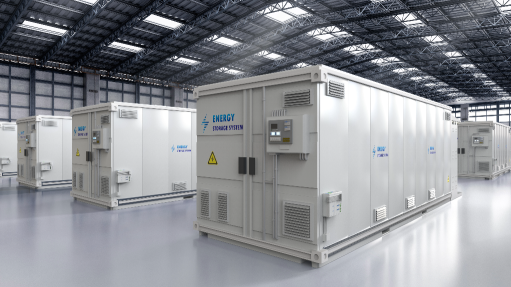
The hybrid era has arrived, roughly half of South Africa's 220 GW renewable energy project pipeline now integrates with battery energy storage systems (BESS), according to the data from the latest South Africa Renewable Energy Grid and Survey (SAREGS). BESS addresses the intermittency of solar power and provides the flexibility required for a stable grid. As electricity costs continue to rise, SAPVIA anticipate a rebound in the residential, commercial and industrial (C&I) market segments, where storage integration allows consumers to maximise their self-consumption and achieve greater energy independence.
Finally, universal energy access is no longer a peripheral goal; it is the cornerstone of a truly Just Energy Transition. While the solar surge has successfully de-risked the middle-class residential and C&I sectors, 2026 must be the year we begin to bridge the energy poverty gap. SAPVIA is advocating for integrated models that bring low-cost renewable power to indigent households and low-cost housing schemes, ensuring that the 'solar dividend' is equitably shared across all socioeconomic tiers.
To bridge the energy access divide, South Africa must adapt proven global benchmarks in community driven solar schemes, rent-to-own systems and microgrids to our unique local landscape. Transitioning these from pilots to scalable solutions requires a three-pronged approach: robust programme design that protects municipal revenue, access to concessional de-risking finance, and a standardised governmental framework for municipal small-scale embedded generation integration. 2026 must be the year we move from 'exclusive' solar to 'inclusive' energy security.
In summary, the South Africa’s solar PV is moving in the right direction, supported by the policy framework that is conducive to growth.
The challenge for the year ahead is one of execution. By focusing on grid modernisation and expansion, strengthening local manufacturing and assembly, and ensuring equitable access to clean energy, we can position South Africa as a global leader in the renewable energy sector.
Article Enquiry
Email Article
Save Article
Feedback
To advertise email advertising@creamermedia.co.za or click here

Latest News
Showroom
ROSOND provides fast, efficient, safe, and cost-effective drilling and grouting services to mining and exploration industries throughout Africa.
VISIT SHOWROOM
Design, Construction and Maintenance of Site Erected, Welded Bulk Storage Tanks for the Petrochemical, LNG, Ammonia and Sustainable fuel Sectors.
VISIT SHOWROOM
Press Office
Announcements
What's On
Subscribe to improve your user experience...
Option 1 (equivalent of R125 a month):
Receive a weekly copy of Creamer Media's Engineering News & Mining Weekly magazine
(print copy for those in South Africa and e-magazine for those outside of South Africa)
Receive daily email newsletters
Access to full search results
Access archive of magazine back copies
Access to Projects in Progress
Access to ONE Research Report of your choice in PDF format
Option 2 (equivalent of R375 a month):
All benefits from Option 1
PLUS
Access to Creamer Media's Research Channel Africa for ALL Research Reports, in PDF format, on various industrial and mining sectors
including Electricity; Water; Energy Transition; Hydrogen; Roads, Rail and Ports; Coal; Gold; Platinum; Battery Metals; etc.
Already a subscriber?
Forgotten your password?
Receive weekly copy of Creamer Media's Engineering News & Mining Weekly magazine (print copy for those in South Africa and e-magazine for those outside of South Africa)
➕
Recieve daily email newsletters
➕
Access to full search results
➕
Access archive of magazine back copies
➕
Access to Projects in Progress
➕
Access to ONE Research Report of your choice in PDF format
RESEARCH CHANNEL AFRICA
R4500 (equivalent of R375 a month)
SUBSCRIBEAll benefits from Option 1
➕
Access to Creamer Media's Research Channel Africa for ALL Research Reports on various industrial and mining sectors, in PDF format, including on:
Electricity
➕
Water
➕
Energy Transition
➕
Hydrogen
➕
Roads, Rail and Ports
➕
Coal
➕
Gold
➕
Platinum
➕
Battery Metals
➕
etc.
Receive all benefits from Option 1 or Option 2 delivered to numerous people at your company
➕
Multiple User names and Passwords for simultaneous log-ins
➕
Intranet integration access to all in your organisation