Policy certainty and open access critical for transmission investment — ENGIE

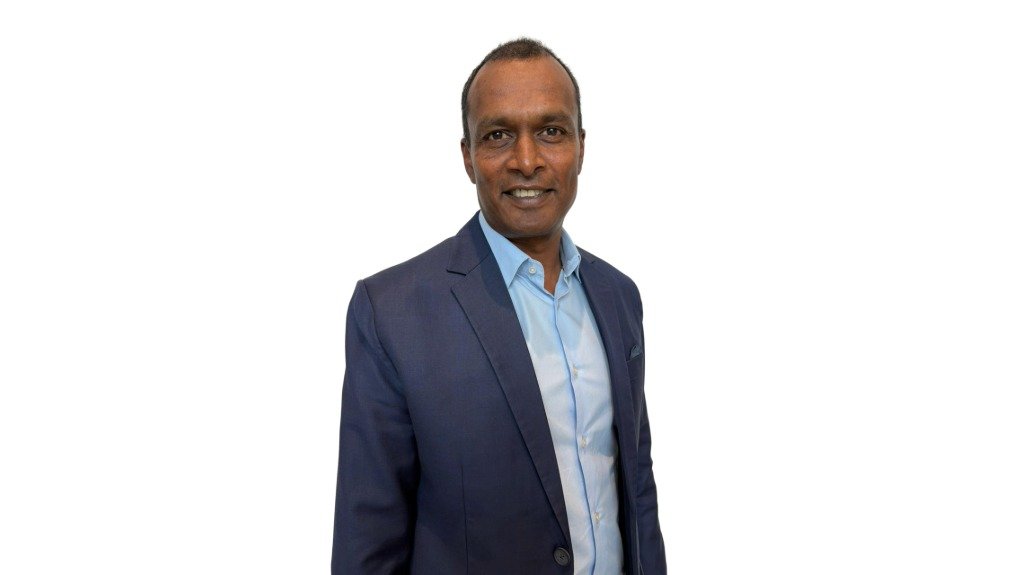



South Africa’s electricity transmission grid is emerging as a central pillar of the country’s energy reform and decarbonisation drive, with global energy group ENGIE positioning itself as a potential long-term partner in grid expansion, flexibility solutions and market development.
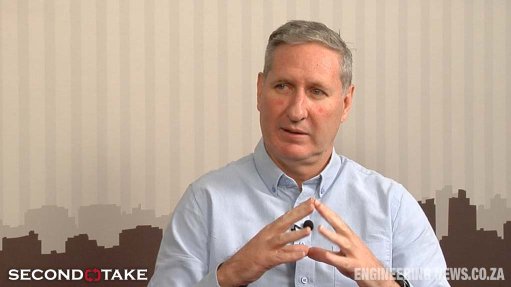
Speaking during a recent webinar on investing in South Africa’s electricity transmission grid, ENGIE South Africa’s MD for Renewables and Batteries Sanjeev Mungroo said the country’s reform trajectory broadly aligns with international best practice, particularly in the move from a vertically integrated monopoly model towards a more competitive, unbundled electricity sector.
He noted that South Africa’s planned wholesale electricity market and the unbundling of transmission functions mirror reforms implemented in regions such as the EU and Latin America, where market liberalisation helped unlock private investment and accelerate infrastructure build-out.
ENGIE, which entered the South African market about two decades ago and has been prequalified under the country’s Independent Transmission Projects (ITP) programme, brings international transmission experience that it believes is directly relevant. Globally, the group owns and operates about 5 800 km of transmission lines across Brazil and Chile and is targeting expansion to 10 000 km by 2030.
Drawing comparisons with other markets, Mungroo pointed out that South Africa’s current constraints — including heavy coal reliance and transmission congestion — are not unique. India, historically dependent on coal, has rapidly expanded renewables through policy reform and grid investment, while Chile’s geographically stretched system faced regional congestion that catalysed major transmission development. ENGIE has been active in both markets.
He cautioned, however, that transmission roll-out is inherently complex and time-consuming. As an example, ENGIE’s construction of over 2 000 km of transmission lines in Brazil took about six years to complete. This underlines the need for complementary, faster-to-deploy solutions to relieve grid pressure while large-scale build programmes progress.
Among these are battery storage, hybrid energy projects and demand-side management. Mungroo said these technologies should not be treated as add-ons, but as integral tools to ease congestion and improve system flexibility. Flexible dispatch and storage can reduce strain on constrained corridors and, in some cases, lower the required level of fixed transmission infrastructure, even where managed curtailment carries a cost.
From an investment perspective, policy certainty and transparent rules remain decisive. Mungroo stressed that private capital historically flowed at scale when frameworks were predictable, competitive and bankable. Priority measures include a clear, bankable transmission policy, transparent grid access allocation, and streamlined permitting processes to avoid project delays.
He also highlighted the importance of stable, multiyear planning instruments, including the ITP and market reforms such as the South African Wholesale Electricity Market, alongside competitive, open-access transmission tariffs and the operational independence of the National Transmission Company South Africa to prevent market distortion.
While the transmission build-out presents a significant engineering challenge, Mungroo highlighted that it should ultimately be viewed as an economic growth opportunity, provided that implementation is accelerated and scaled.
Article Enquiry
Email Article
Save Article
Feedback
To advertise email advertising@creamermedia.co.za or click here

Projects

Latest Multimedia
Latest News

Showroom
Your global lifecycle technology & service partner for materials & minerals processing equipment for coal, iron ore, copper, manganese & other...
VISIT SHOWROOM
Complete range of security sealing solutions including security seals bags and labels.
VISIT SHOWROOM

Press Office
Announcements
What's On
Subscribe to improve your user experience...
Option 1 (equivalent of R125 a month):
Receive a weekly copy of Creamer Media's Engineering News & Mining Weekly magazine
(print copy for those in South Africa and e-magazine for those outside of South Africa)
Receive daily email newsletters
Access to full search results
Access archive of magazine back copies
Access to Projects in Progress
Access to ONE Research Report of your choice in PDF format
Option 2 (equivalent of R375 a month):
All benefits from Option 1
PLUS
Access to Creamer Media's Research Channel Africa for ALL Research Reports, in PDF format, on various industrial and mining sectors
including Electricity; Water; Energy Transition; Hydrogen; Roads, Rail and Ports; Coal; Gold; Platinum; Battery Metals; etc.
Already a subscriber?
Forgotten your password?
Receive weekly copy of Creamer Media's Engineering News & Mining Weekly magazine (print copy for those in South Africa and e-magazine for those outside of South Africa)
➕
Recieve daily email newsletters
➕
Access to full search results
➕
Access archive of magazine back copies
➕
Access to Projects in Progress
➕
Access to ONE Research Report of your choice in PDF format
RESEARCH CHANNEL AFRICA
R4500 (equivalent of R375 a month)
SUBSCRIBEAll benefits from Option 1
➕
Access to Creamer Media's Research Channel Africa for ALL Research Reports on various industrial and mining sectors, in PDF format, including on:
Electricity
➕
Water
➕
Energy Transition
➕
Hydrogen
➕
Roads, Rail and Ports
➕
Coal
➕
Gold
➕
Platinum
➕
Battery Metals
➕
etc.
Receive all benefits from Option 1 or Option 2 delivered to numerous people at your company
➕
Multiple User names and Passwords for simultaneous log-ins
➕
Intranet integration access to all in your organisation