Project targets low-cost rare earths supply outside China

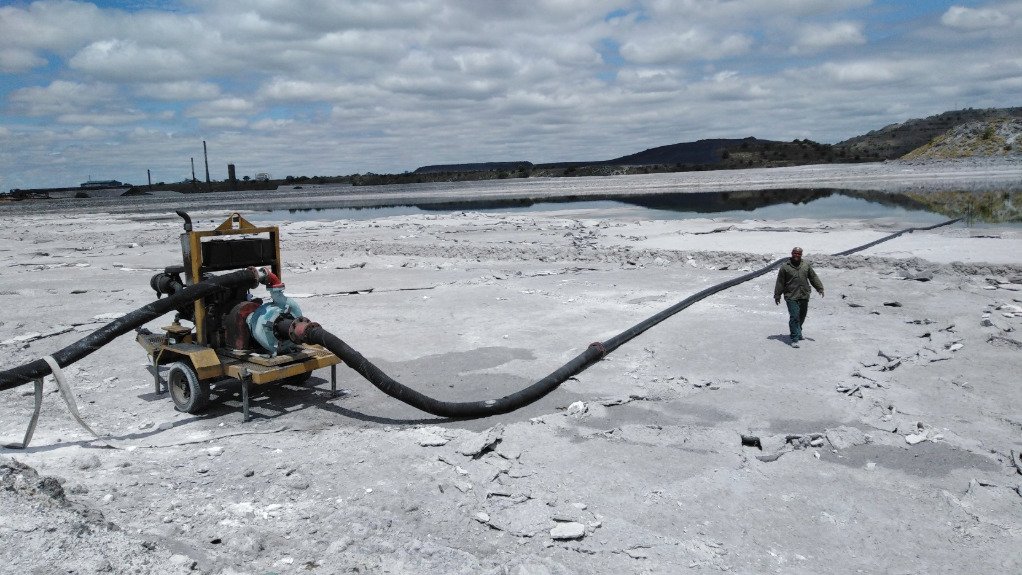
WASTE TO TREASURE The Phalaborwa project involves extracting rare earths from about 35-million tonnes of phosphogypsum waste residue with a rare earth grade of 0.44% total rare earth oxides


Leveraging phosphogypsum waste residue, rare earth element producer Rainbow Rare Earths’ Phalaborwa rare earths project, in Limpopo, aims to support the development of a diversified global supply chain outside of China at lower capital and operating expenditures compared to major Western hard-rock rare earths projects, says Rainbow Rare Earths CEO George Bennett.
The Phalaborwa project involves extracting rare earths from about 35-million tonnes of phosphogypsum waste residue, which was accumulated from over 60 years of phosphoric acid production at the site of the project.
Extracting rare earths from phosphogypsum has been discussed academically for about 40 years, but has never been achieved economically, with Rainbow being the first company to do so, he enthuses.
During operation, phosphate slurry mined from a hard-rock deposit at Phalaborwa was processed through flotation, concentrated into a slurry and pumped to the phosphoric acid plant.
Producing phosphoric acid requires phosphate slurry, sulphuric acid and heat, which generates gypsum waste, explains Bennett.
During concentration, the rare earths present in the phosphate rock are deported into this waste stream, which, at Phalaborwa, was accumulated on two gypsum stacks.
This presents a key advantage at Phalaborwa, he says, as the material is chemically altered phosphogypsum produced through a consistent industrial process as opposed to mineral form.
Extensive drilling at the project has confirmed that the stacks are homogeneous, with minimal grade variability; this contrasts with typical mine-waste tailings, which often show large fluctuations in grade.
These stacks now contain about 35-million tonnes of phosphogypsum with a rare earth grade of 0.44% total rare earth oxides (TREO).
Operations at the phosphoric acid plant were suspended in 2014, with infrastructure having since been dismantled; therefore, the gypsum stacks are finite.
Rainbow plans to treat 2.2-million tonnes a year of this material, giving the project a life of roughly 16 years.
Yttrium Addition, Project Progress
Last month, Rainbow was able to add yttrium in its updated mineral resource estimate for the Phalaborwa rare earths project.
While yttrium was present in the resource model, the mineral had not been specifically highlighted owing to its previously low economic significance, explains Bennett.
However, China’s recent minerals export restrictions, which include yttrium, have elevated the mineral’s strategic importance, given its use in defence applications, and “shortages of this rare metal have led to surging prices”.
This dynamic, he says, has reaffirmed the need for the “West to focus on building an independent supply chain of all the strategically significant rare earth elements, including yttrium, outside of China”.
Rainbow’s Phalaborwa project is planned to produce a bundled product of medium and heavy rare earth elements.
“This mixed product is known in the industry as a SEG+ product and it is of strategic importance as it includes samarium, europium, gadolinium, the very high value dysprosium and terbium, as well as yttrium.”
Rainbow reports that the mixed product is expected to yield about 213 t of yttrium a year, which could add about $20-million at current Chinese prices, or up to $40-million based on current European prices, to the project’s yearly earnings before interest, taxes, depreciation and amortisation (EBITDA).
This, says Bennett, strengthens the project’s value proposition.
Phalaborwa Progress
Following a delay, Phalaborwa’s definitive feasibility study (DFS) is progressing well and is expected to be completed next year, says Bennett.
The delay, announced in December 2024, resulted from the relocation of the pilot plant from Florida, in the US, and the construction of Rainbow’s own laboratory in South Africa to advance the process flowsheet, he explains.
During the delay period, Rainbow’s 2023 to 2024 pilot campaign confirmed the economic viability of the flowsheet and enabled significant optimisation compared with the preliminary economic assessment.
Nonetheless, the delay was used constructively to optimise the front-end leach circuit, refine impurity rejection steps and improve the quality of the mixed rare earth product for final separation.
In particular, Rainbow reduced the number of leach stages from four to three, removing the nanofiltration, strong-acid bake, and water leach and fluoride precipitation stages.
The campaign also confirmed the project’s 65% recovery rate and validated the use of continuous ion exchange (CiX).
The work, completed with national mineral research organisation Mintek, was a major milestone in optimising the final flowsheet, says Bennett.
During the pilot campaign, Rainbow refined the use of CiX, achieving “excellent” impurity rejection and reducing volumetric flows from about 340 m3/h to about 5 m3/h entering the final separation circuit.
As a result, Rainbow has made significant progress in producing a high-grade, low-impurity mixed rare earth product that exceeds the specifications used by Chinese refineries for mixed rare earth carbonate, he adds.
He says the purification progress marks a major step towards successful separation, as delivering a high-grade, low-impurity feed stream is essential to producing the project’s planned outputs, which are separated neodymium–praseodymium oxide and the samarium–europium–gadolinium product, each at over 99.5% purity.
While continuous ion chromatography was investigated, it required more development time than project timelines allowed, he notes.
Given the success of CiX, Rainbow will now use solvent extraction (SX) for final separation, which derisks the project, points out Bennett.
Further, owing to the significantly reduced flow volumes, the SX circuit will be much smaller than conventional circuits, substantially lowering capital expenditure and operating expenditure normally associated with large SX circuits.
Project Economics
Concurrent to the DFS, project financing negotiations are expected to start in the first quarter of 2026, towards which the project’s projected EBITDA margins support a funding structure of about two-thirds debt and one-third equity.
Rainbow anticipates completing financing by late 2026 or early 2027, following which it intends to start construction in 2027 and achieve first production in 2028.
Despite the DFS delay, the 2028 production target remains unchanged, says Bennett.
Rainbow’s operating cost is estimated at about $13/kg TREO and about $40/kg for magnet rare earth oxides.
Rainbow’s TREO sales will be directed to customers in North America, Europe, South Korea and Japan, strengthening supply-chain resilience in those regions.
Article Enquiry
Email Article
Save Article
Feedback
To advertise email advertising@creamermedia.co.za or click here


Projects


Latest Multimedia


Latest News

Showroom

For over 60 years, VEGA has provided industry-leading products for the measurement of level, density, weight and pressure. As the inventor of the...
VISIT SHOWROOM
Rooted in the hearts of South Africans, combining technology and a quest for perfection to bring you a battery of peerless standing. Willard...
VISIT SHOWROOM

Announcements
What's On
Subscribe to improve your user experience...
Option 1 (equivalent of R125 a month):
Receive a weekly copy of Creamer Media's Engineering News & Mining Weekly magazine
(print copy for those in South Africa and e-magazine for those outside of South Africa)
Receive daily email newsletters
Access to full search results
Access archive of magazine back copies
Access to Projects in Progress
Access to ONE Research Report of your choice in PDF format
Option 2 (equivalent of R375 a month):
All benefits from Option 1
PLUS
Access to Creamer Media's Research Channel Africa for ALL Research Reports, in PDF format, on various industrial and mining sectors
including Electricity; Water; Energy Transition; Hydrogen; Roads, Rail and Ports; Coal; Gold; Platinum; Battery Metals; etc.
Already a subscriber?
Forgotten your password?
Receive weekly copy of Creamer Media's Engineering News & Mining Weekly magazine (print copy for those in South Africa and e-magazine for those outside of South Africa)
➕
Recieve daily email newsletters
➕
Access to full search results
➕
Access archive of magazine back copies
➕
Access to Projects in Progress
➕
Access to ONE Research Report of your choice in PDF format
RESEARCH CHANNEL AFRICA
R4500 (equivalent of R375 a month)
SUBSCRIBEAll benefits from Option 1
➕
Access to Creamer Media's Research Channel Africa for ALL Research Reports on various industrial and mining sectors, in PDF format, including on:
Electricity
➕
Water
➕
Energy Transition
➕
Hydrogen
➕
Roads, Rail and Ports
➕
Coal
➕
Gold
➕
Platinum
➕
Battery Metals
➕
etc.
Receive all benefits from Option 1 or Option 2 delivered to numerous people at your company
➕
Multiple User names and Passwords for simultaneous log-ins
➕
Intranet integration access to all in your organisation