Renewables-battery scenario proposed for saving ferrochrome while sustaining Eskom and reform momentum

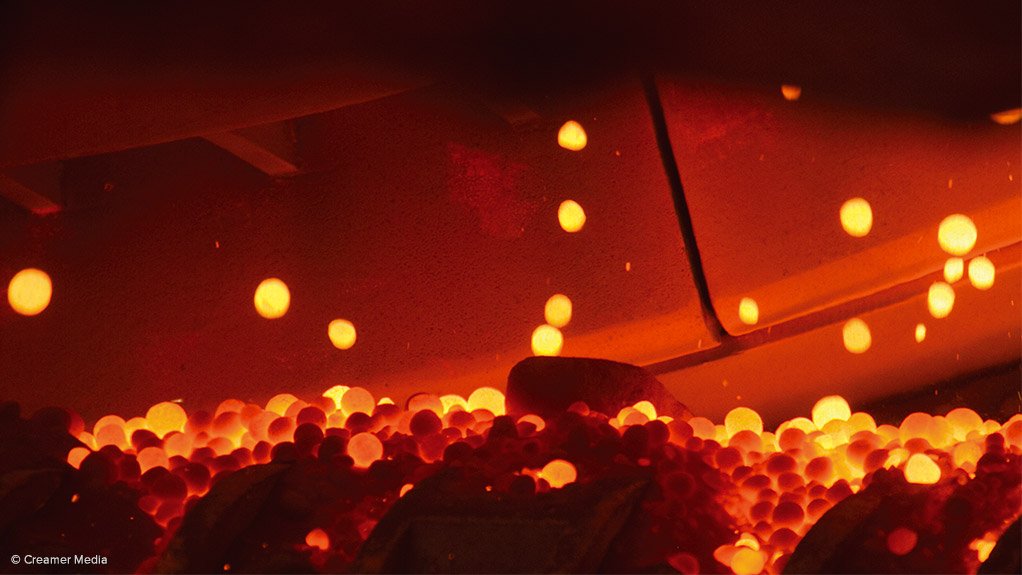



A new analysis of the crisis being faced by South Africa’s ferrochrome industry as a result of uncompetitive electricity tariffs, outlines a possible renewables-battery-led scenario for meeting the industry’s need for sustainably cheap and greener electricity without triggering an acceleration of what could otherwise be an Eskom death spiral.
Titled ‘To Save or Not to Save SA’s Ferrochrome Smelters and Eskom’, the thought-leadership paper has been written jointly by Johan van den Berg, an energy professional with experience in the ferrochrome industry, Frank Spencer, an energy engineer, and Johan Roos, an Advocate in private practice.
The analysis follows confirmation that Eskom has made a 62c/kWh offer to Glencore-Merafe and Samancor, but has been published ahead of likely National Energy Regulator of South Africa hearings, where the details of that offer will be made public. This will include details on how Eskom will use a R10-billion portion of a larger R230-billion debt relief package extended to it by the National Treasury to close the immediate revenue shortfall that implementing the offer will precipitate.
The authors make the case for sustaining the industry, which currently has only four of its 48 smelters still operational; smelters that are producing about 19% of global ferrochrome, despite South Africa holding 72% of global chrome ore reserves.
They assert that doing nothing is not cost-free and could, in fact, be the most expensive option of all, albeit with costs that are diffuse, delayed and borne by people with little direct influence.
“The short answer to what we lose when ore leaves un-beneficiated is this: almost everything except the hole in the ground.
“The mining jobs remain, and the port throughput, but the manufacturing value, the dense employment, the fiscal contribution, the Eskom revenue and the strategic position all migrate offshore,” the paper states, noting that between 30 000 and 68 000 direct and indirect South African jobs are at stake, along with more than R100-billion in yearly export value.
WEIGHING THE OPTIONS
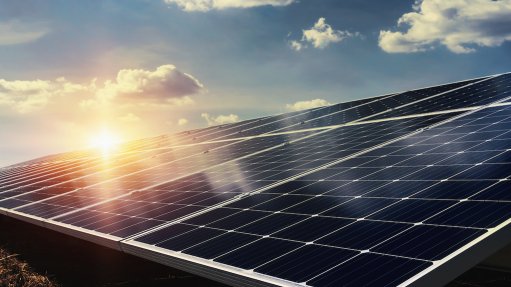
Various options for sustaining the smelters are weighed, including restricting exports through legislation or fiscal structuring; direct support from the fiscus; cross-subsidisation of electricity prices to match the uneven playing field of global competitors; exempting the ferrochrome industry from the carbon tax; and/or subsidisation of the immediate construction of dedicated solar PV and battery energy storage systems (BESS) to supply the smelters.
The PV+BESS option, involving 8 GW of PV and 2 GW/24 GWh BESS, is described as “surprisingly compelling”, while the authors rank the scrapping of the carbon tax as a “last resort” regressive step that would prolong high emissions and carbon dependency for longer than necessary.
While the analysis describes the PV+BESS solution as immediately feasible, it argues that it is nonviable, as it fails to protect the Eskom balance sheet over the medium term.
Instead, the authors propose a policy position that involves a combination of interventions over a four-to-six-year ‘bridging’ period, including the imposition of an export royalty on un-beneficiated chrome ore, together with a capital subsidy to support the building of a PV+BESS fleet that would be dedicated to supply the smelters.
The analysis shows that the PV+BESS option would require R157-billion in total capital expenditure, deployed over a three- to four-year construction period. However, R77-billion of that capital would need to be provided in the form of a one-off government capital subsidy to facilitate a 62c/kWh outcome.
That subsidy, the authors calculate, is lower than the R113-billion that would be required to 2030 for Eskom to subsidise the gap between providing electricity at 62c/kWh, escalating at 6% yearly, against its 196c/kWh average cost of supply, escalating at 8% yearly.
The authors show that the Eskom subsidy path would require R18.6-billion to close the gap in 2026, rising to R27-billion by year five, or 2030. Should the subsidy remain in place for a decade, they estimate that the cumulative subsidy would be R261-billion.
“The government’s R77-billion capital outlay for PV+BESS is thus recovered in avoided Eskom subsidies within approximately four years.”
In addition, the paper warns that a direct Eskom subsidy would increase dependency risks, whereby any loss of ferrochrome demand would precipitate an Eskom death spiral, thereby creating an incentive to run aged coal plans for longer, while entrenching the notion of Eskom being ‘too big to fail’, which would further delay unbundling.
POLICY PROPOSAL
To avoid such an outcome, the authors argue that Eskom Green could act as the institutional vehicle for owning and operating the solar PV and BESS assets dedicated to the ferrochrome fleet, contract directly with smelters at the target 62c/kWh, and raise capital against bankable power purchase agreements rather than Eskom’s impaired credit.
“Structurally, this achieves two objectives simultaneously: it provides the smelters with a credible long-term power supply independent of Eskom’s generation business, and it creates a clean-energy asset base that can eventually be separated as part of broader unbundling.
“Eskom Green should sit as a standalone state-owned company, or perhaps as a public-private partnership; what matters is that the green ferrochrome programme is not entangled with the coal fleet’s managed decline.”
Because the intervention involves public resources, the paper proposes several governance conditions, including that no intervention to support the smelters should be permitted if it is used to entrench Eskom’s vertically integrated structure or to serve as a justification for delaying unbundling.
There should also be full transparency of the true costs, a binding commitment to restructure Eskom so that it is no longer too big to fail, and ongoing public oversight through Parliament and the regulator.
“The path forward is clear, if politically difficult: support the ferrochrome industry through the transitional period with the least-cost combination of fiscal, tariff, and royalty instruments – but make that support strictly conditional on Eskom unbundling, tariff transparency, and a credible timeline for migrating smelter load to renewable energy.
“The goal is not to choose between saving the smelters and reforming Eskom. It is to do both, because for now, neither is sustainable without the other.”
Article Enquiry
Email Article
Save Article
Feedback
To advertise email advertising@creamermedia.co.za or click here

Projects
Latest Multimedia

Latest News
Showroom
ZF Aftermarket is the after-sales division of the world-renowned German ZF group, a global leader in mobility technology.
VISIT SHOWROOM
For over 30 years, Werner South Africa Pumps & Equipment (PTY) LTD has been designing, manufacturing, supplying and maintaining specialist...
VISIT SHOWROOM
Announcements
What's On
Subscribe to improve your user experience...
Option 1 (equivalent of R125 a month):
Receive a weekly copy of Creamer Media's Engineering News & Mining Weekly magazine
(print copy for those in South Africa and e-magazine for those outside of South Africa)
Receive daily email newsletters
Access to full search results
Access archive of magazine back copies
Access to Projects in Progress
Access to ONE Research Report of your choice in PDF format
Option 2 (equivalent of R375 a month):
All benefits from Option 1
PLUS
Access to Creamer Media's Research Channel Africa for ALL Research Reports, in PDF format, on various industrial and mining sectors
including Electricity; Water; Energy Transition; Hydrogen; Roads, Rail and Ports; Coal; Gold; Platinum; Battery Metals; etc.
Already a subscriber?
Forgotten your password?
Receive weekly copy of Creamer Media's Engineering News & Mining Weekly magazine (print copy for those in South Africa and e-magazine for those outside of South Africa)
➕
Recieve daily email newsletters
➕
Access to full search results
➕
Access archive of magazine back copies
➕
Access to Projects in Progress
➕
Access to ONE Research Report of your choice in PDF format
RESEARCH CHANNEL AFRICA
R4500 (equivalent of R375 a month)
SUBSCRIBEAll benefits from Option 1
➕
Access to Creamer Media's Research Channel Africa for ALL Research Reports on various industrial and mining sectors, in PDF format, including on:
Electricity
➕
Water
➕
Energy Transition
➕
Hydrogen
➕
Roads, Rail and Ports
➕
Coal
➕
Gold
➕
Platinum
➕
Battery Metals
➕
etc.
Receive all benefits from Option 1 or Option 2 delivered to numerous people at your company
➕
Multiple User names and Passwords for simultaneous log-ins
➕
Intranet integration access to all in your organisation