South32, Eskom jointly exploring post-2031 power options for Hillside Aluminium

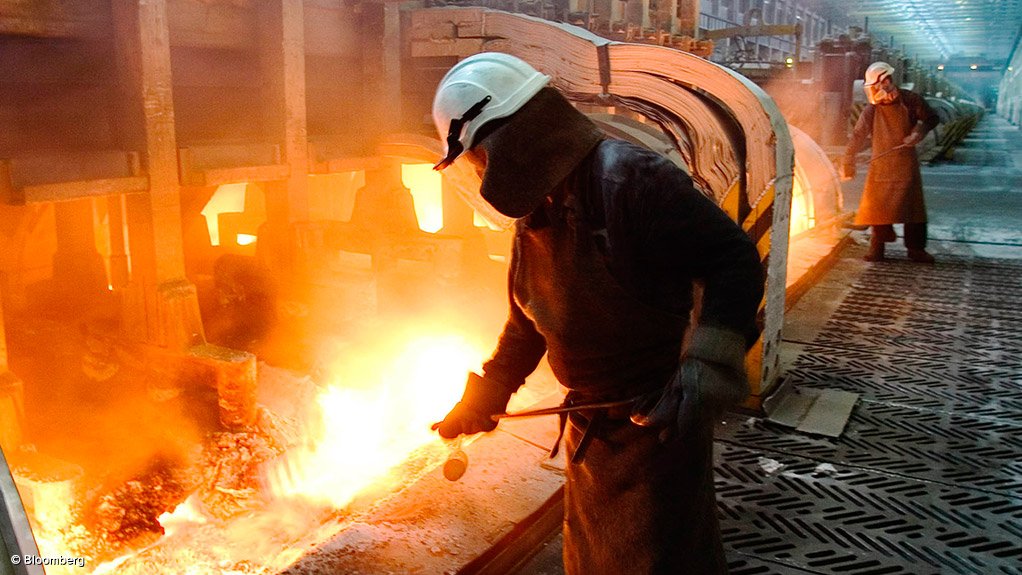


JOHANNESBURG (miningweekly.com) – Studies being undertaken on the future power source for South32’s Hillside Aluminium beyond 2031 are taking place amid awareness of the different energy levers that can potentially be pulled.
The current power agreement of South Africa’s aluminium smelter at Richards Bay in KwaZulu-Natal extends to 2031, which is providing useful time to scrutinise power options during a period when various studies are also being done regarding the changing nature of the South African electricity transmission grid as well as more renewables coming online.
Hillside Aluminium draws 1 140 MW virtually every minute of the day, every day of the week, every week of the year, South32 CEO Graham Kerr highlighted during this week's media update.
Kerr was responding to Mining Weekly while pointing out that a pathway forward for a power contract beyond 2031 is being comprehensively investigated for Hillside Aluminium, which is the southern hemisphere's largest aluminium smelter as well as being the producer of a significant percentage of primary aluminium for South Africa’s value-adding secondary aluminium product producers.
Located at Richards Bay in KwaZulu-Natal, Hillside itself provides jobs for more than 2 300 employees and contractors and the downstream value addition many times more. “We send about 30% of our Hillside products downstream,” Kerr pointed out, which is calculated to support another 27 000-plus indirect employment opportunities.
Regarding collaboration with South Africa’s State-owned power utility Eskom on the post-2031 energy arrangement, Kerr added: “We're doing a number of pieces of study on what we can do around the power source in the future, and we certainly think there’s a number of different levers that can be pulled in that part of the world”, a reference to the area’s wind, sun and sea energy potential.
As Hillside Aluminium is responsible for 94% of South32’s total Scope 2 emissions, ‘greening’ South Africa’s aluminium to the greatest extent would be of major potential price benefit.
The competitive smelter contributes nearly R10-billion to South Africa’s GDP and public–private effort could ensure that the aluminium produced can benefit from the green price premium that is being paid for aluminium that is not carbon heavy.
Engagement with Eskom regarding operational and value-chain decarbonisation is reportedly positive and emphasised by South32 COO Noel Pillay is that technical studies have concluded that Hillside could be made to work with solar, wind and backup power storage.
Mining Weekly: Do you think you could generate some of your own power?
Kerr: We've done a lot of work on renewables, such as solar panels and also wind, because that part of the world gives you that capability. I think the big challenge is we're not like a mine or some other businesses where you basically can turn the power on and off and run at peaks and lows. We would have to run the smelter virtually 24/7, 365 days a year. Part of the attraction of the smelter for Eskom is that it provides them with baseload and grid stability. But it does mean, when it comes to renewables, you have to have one helluva big battery to be able to handle and store 1 140 MW at times when there's no sunlight and no wind. In the end, the best solution is that you work with Eskom to create a network that has more robustness and a combination of nuclear, renewables via wind and solar, as well as traditional power. That, I think, will give the best outcome, not only for Hillside, but also Eskom.
Mining Weekly: You've got the sea right there. Could you not use power during peaks to produce green hydrogen from the sea, store that green hydrogen for the short and/or long periods that green hydrogen is able to offer, and then, when power is heading for low levels, convert that green hydrogen into green electricity to fill power gaps?
Pillay: We’ve studied that extensively and, to Graham’s point, the most viable option technically is wind and solar. That makes economic sense today. I think it's also worth recognising that we have the benefit of time until this power contract ends, and the technology is also evolving exponentially, so we’ll wait and see how that plays out and test whether the technology provides for an economically viable solution. But at this stage, it's not. We’ve studied gas, we've studied hydrogen, we've studied offshore wind. Right now, solar and wind is technically possible, but to Graham's point, more work needs to be done to make that economically viable, when you consider a blended tariff for backup power and factors like that. But to an earlier point as well, we’re working very closely with Eskom as a joint working group to explore all these options to find the solution for our time.
What about Hillside Aluminium seeking Special Economic Zone benefits?
Pillay: For starters, we're not in the Special Economic Zone, and secondly, the quantum of power that we're talking about is a significant block of power that you need on a continuous basis 24/7. There's no opportunity to stop start and you're forced to have storage facilities. Other industries that can operate differently, have different technical options that might be available to them. We're not in that space at the moment. We’re highly reliant on sun and wind when it's available, but then when it's not, in the hours of darkness, you need the backup. At this stage, the battery technology is not sufficiently developed for us to have that power stored economically, so you're reliant on the coal-fired fleet for that backup. You know, because we're a continuous load demand. For the other industries it’s slightly different both from a technology point of view, but also from a quantum of power point of view.
Kerr: To put in perspective, a typical platinum mine probably uses about 300 MW, but they have the ability to have peaks and troughs. How much power they draw It depends on what they're doing. Hillside, for example, will draw 1 140 MW virtually every minute of the day, every day of the week, every week of the year. So that load factor is incredibly different. It also does mean, while you might shut down, a platinum mine or a gold mine, once you shut down a aluminum smelter, it is incredibly difficult to restart it, because basically, you'll freeze out all the pots, and the cost of sorting those pots out or replacing them becomes massively capital intensive and usually prohibitive of a smelter restarting.
POWER COSTS
How costs are brought under control to maintain competitive power is an ongoing world-wide challenge for smelters.
As the Bank of America Global Research reports, the US has lost three-quarters of its aluminium smelters, China has capped its aluminium production, US consumers are now having to pay the full 50% tariff, South32’s the Mozal aluminium smelter in Mozambique is to be put on care and maintenance in March, and the biggest aluminium production increases are coming out of Indonesia, where, in many instances, it is Chinese operators who are doing the additional smelting outside of China.
Because of its competitive power, smelting capacity is continuing to be built in the Middle East, but heading for care and maintenance next year is South32’s Mozal aluminium smelter in Mozambique.
One-off costs to place Mozal into care and maintenance, including employee separation costs and termination of contracting arrangements, are expected to be $60-million. Ongoing annual care-and-maintenance costs are expected to be $5-million.
Meanwhile, in Australia a rescue effort is under way to keep Rio Tinto's Tomago aluminium smelter operational. The current power contract for Tomago, which is Australia's largest aluminium smelter, expires in 2028.
Article Enquiry
Email Article
Save Article
Feedback
To advertise email advertising@creamermedia.co.za or click here


Projects
Latest Multimedia
Latest News
Showroom
For over 60 years, VEGA has provided industry-leading products for the measurement of level, density, weight and pressure. As the inventor of the...
VISIT SHOWROOM
As one of South Africa's leading manufacturers, Bell Equipment distributes and exports its wide range of heavy equipment globally to mining,...
VISIT SHOWROOM

Press Office
Announcements
What's On
Subscribe to improve your user experience...
Option 1 (equivalent of R125 a month):
Receive a weekly copy of Creamer Media's Engineering News & Mining Weekly magazine
(print copy for those in South Africa and e-magazine for those outside of South Africa)
Receive daily email newsletters
Access to full search results
Access archive of magazine back copies
Access to Projects in Progress
Access to ONE Research Report of your choice in PDF format
Option 2 (equivalent of R375 a month):
All benefits from Option 1
PLUS
Access to Creamer Media's Research Channel Africa for ALL Research Reports, in PDF format, on various industrial and mining sectors
including Electricity; Water; Energy Transition; Hydrogen; Roads, Rail and Ports; Coal; Gold; Platinum; Battery Metals; etc.
Already a subscriber?
Forgotten your password?
Receive weekly copy of Creamer Media's Engineering News & Mining Weekly magazine (print copy for those in South Africa and e-magazine for those outside of South Africa)
➕
Recieve daily email newsletters
➕
Access to full search results
➕
Access archive of magazine back copies
➕
Access to Projects in Progress
➕
Access to ONE Research Report of your choice in PDF format
RESEARCH CHANNEL AFRICA
R4500 (equivalent of R375 a month)
SUBSCRIBEAll benefits from Option 1
➕
Access to Creamer Media's Research Channel Africa for ALL Research Reports on various industrial and mining sectors, in PDF format, including on:
Electricity
➕
Water
➕
Energy Transition
➕
Hydrogen
➕
Roads, Rail and Ports
➕
Coal
➕
Gold
➕
Platinum
➕
Battery Metals
➕
etc.
Receive all benefits from Option 1 or Option 2 delivered to numerous people at your company
➕
Multiple User names and Passwords for simultaneous log-ins
➕
Intranet integration access to all in your organisation