UN calls for reset as world enters era of global water bankruptcy

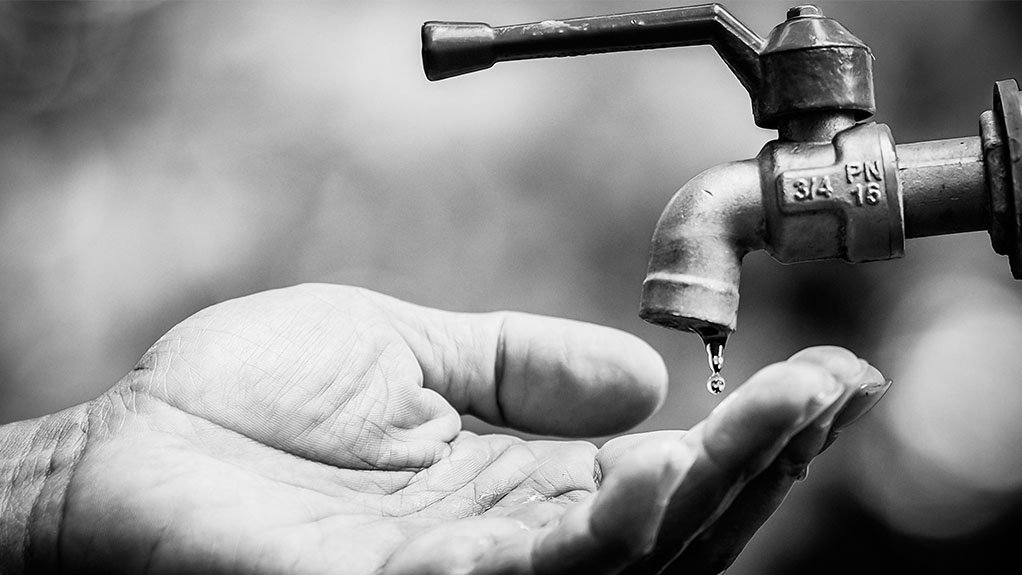


The world has entered an era of global water bankruptcy, as many societies have overspent their yearly renewable water ‘income’ from rivers, soils and snowpack, and have depleted long-term ‘savings’ in aquifers, glaciers, wetlands and other natural reservoirs.
A flagship report by United Nations University’s (UNU’s) Institute for Water, Environment and Health (INWEH), reveals that terms such as ‘water stressed’ and ‘water crisis’ fail to reflect the current reality in many places: a post-crisis condition marked by irreversible losses of natural water capital and an inability to bounce back to historic baselines.
Persistent over-withdrawal from surface and groundwater relative to renewable inflows and safe levels of depletion are resulting in the irreversible or prohibitively costly loss of water-related natural capital.
This is amid chronic groundwater depletion, water overallocation, land and soil degradation, deforestation and pollution, all compounded by global heating, according to the UNU-INWEH’s ‘Global Water Bankruptcy: Living Beyond Our Hydrological Means in the Post-Crisis Era’ report.
This has resulted in a growing list of compacted aquifers, subsided land in deltas and coastal cities, vanished lakes and wetlands and irreversibly lost biodiversity.
“This report tells an uncomfortable truth: many regions are living beyond their hydrological means, and many critical water systems are already bankrupt,” said UNU-INWEH director and lead author Kaveh Madani.
“While not every basin and country is water-bankrupt, enough critical systems around the world have crossed these thresholds. These systems are interconnected through trade, migration, climate feedbacks and geopolitical dependencies, so the global risk landscape is now fundamentally altered.
“Water bankruptcy is also global because its consequences travel.”
According to the report, about 2.2-billion people still lack safely managed drinking water, 3.5-billion people lack safely managed sanitation and nearly four-billion people face severe water scarcity for at least one month each year.
Almost three-quarters of the world’s population live in countries classified as water insecure or critically water insecure.
This is the impact of more than half of the world’s large lakes having lost water since the early 1990s, affecting about one-quarter of the global population that relies on them directly, as well as about 410-million hectares of natural wetlands having been lost over the last five decades, resulting in the loss of $5.1-trillion in ecosystem services.
Further, 70% of global freshwater withdrawals are used for agriculture, while groundwater provides about 50% of domestic water use and over 40% of irrigation water worldwide.
Both drinking water and food production now depend heavily on aquifers that are being depleted faster than they can realistically recharge. About 70% of the world’s major aquifers are showing long-term declines.
“Millions of farmers are trying to grow more food from shrinking, polluted or disappearing water sources. Without rapid transitions toward water-smart agriculture, water bankruptcy will spread rapidly,” said Madani, warning that about three-billion people and more than half of global food production are concentrated in areas where total water storage is already declining or unstable.
More than 170-million hectares of irrigated cropland are under high or very high water stress, and salinisation has degraded about 82-million hectares of rain-fed cropland and 24-million hectares of irrigated cropland.
“Agriculture accounts for the vast majority of freshwater use, and food systems are tightly interconnected through trade and prices. When water scarcity undermines farming in one region, the effects ripple through global markets, affecting political stability and food security elsewhere.
“This makes water bankruptcy not a series of isolated local crises, but a shared global risk that demands a new type of response: Bankruptcy management, not crisis management.”
There is a need to prevent further loss of the remaining natural capital, and redesign institutions to live within new hydrological limits.
The flagship report calls for fundamental reset of the global water agenda, warning that the current global water agenda – largely focused on drinking water, sanitation and incremental efficiency improvements – is no longer fit for purpose in many places.
A new global water agenda needs to formally recognise the state of water bankruptcy; recognise water as both a constraint and an opportunity for meeting climate, biodiversity and land commitments; elevate water issues in climate, biodiversity and desertification negotiations, and development finance and peacebuilding processes; embed water-bankruptcy monitoring in global frameworks, using Earth observation, AI and integrated modelling; and use water as a catalyst to accelerate cooperation among the UN member States.
“Water bankruptcy is becoming a driver of fragility, displacement and conflict. Managing it fairly – ensuring that vulnerable communities are protected and that unavoidable losses are shared equitably – is now central to maintaining peace, stability and social cohesion,” added UN under-secretary-general and UNU rector Tshilidzi Marwala.
Upcoming milestones, including the 2026 and 2028 UN Water Conferences, the end of the Water Action Decade in 2028 and the 2030 SDG deadline, for example, provide critical opportunities to implement this shift.
“Despite its warnings, the report is not a statement of hopelessness. It is a call for honesty, realism and transformation. Declaring bankruptcy is not about giving up, it is about starting fresh. By acknowledging the reality of water bankruptcy, we can finally make the hard choices that will protect people, economies and ecosystems. The longer we delay, the deeper the deficit grows,” Madani concluded.
Article Enquiry
Email Article
Save Article
Feedback
To advertise email advertising@creamermedia.co.za or click here
Research Reports
Projects
Latest Multimedia
Latest News

Showroom
Virtual Gas Network supplies compressed natural gas via a virtual gas distribution network.
VISIT SHOWROOM
The Aluminium Federation of South Africa (AFSA), is the voice of the South African aluminium industry.
VISIT SHOWROOM
Press Office
Announcements
What's On
Subscribe to improve your user experience...
Option 1 (equivalent of R125 a month):
Receive a weekly copy of Creamer Media's Engineering News & Mining Weekly magazine
(print copy for those in South Africa and e-magazine for those outside of South Africa)
Receive daily email newsletters
Access to full search results
Access archive of magazine back copies
Access to Projects in Progress
Access to ONE Research Report of your choice in PDF format
Option 2 (equivalent of R375 a month):
All benefits from Option 1
PLUS
Access to Creamer Media's Research Channel Africa for ALL Research Reports, in PDF format, on various industrial and mining sectors
including Electricity; Water; Energy Transition; Hydrogen; Roads, Rail and Ports; Coal; Gold; Platinum; Battery Metals; etc.
Already a subscriber?
Forgotten your password?
Receive weekly copy of Creamer Media's Engineering News & Mining Weekly magazine (print copy for those in South Africa and e-magazine for those outside of South Africa)
➕
Recieve daily email newsletters
➕
Access to full search results
➕
Access archive of magazine back copies
➕
Access to Projects in Progress
➕
Access to ONE Research Report of your choice in PDF format
RESEARCH CHANNEL AFRICA
R4500 (equivalent of R375 a month)
SUBSCRIBEAll benefits from Option 1
➕
Access to Creamer Media's Research Channel Africa for ALL Research Reports on various industrial and mining sectors, in PDF format, including on:
Electricity
➕
Water
➕
Energy Transition
➕
Hydrogen
➕
Roads, Rail and Ports
➕
Coal
➕
Gold
➕
Platinum
➕
Battery Metals
➕
etc.
Receive all benefits from Option 1 or Option 2 delivered to numerous people at your company
➕
Multiple User names and Passwords for simultaneous log-ins
➕
Intranet integration access to all in your organisation