Unilever South Africa lifts local content to 80% as it moves to embed supply-chain resilience




The producer of a diverse range of well-known household brands – from Sunlight soap and OMO washing powder, to Vaseline and Robertsons Spices – reports that it has increased the local content in the products it manufactures in South Africa to 80% from a level of only 40% in 2019.
The brands are all produced by Unilever South Africa, which manufactures 95% of the products it sells locally.
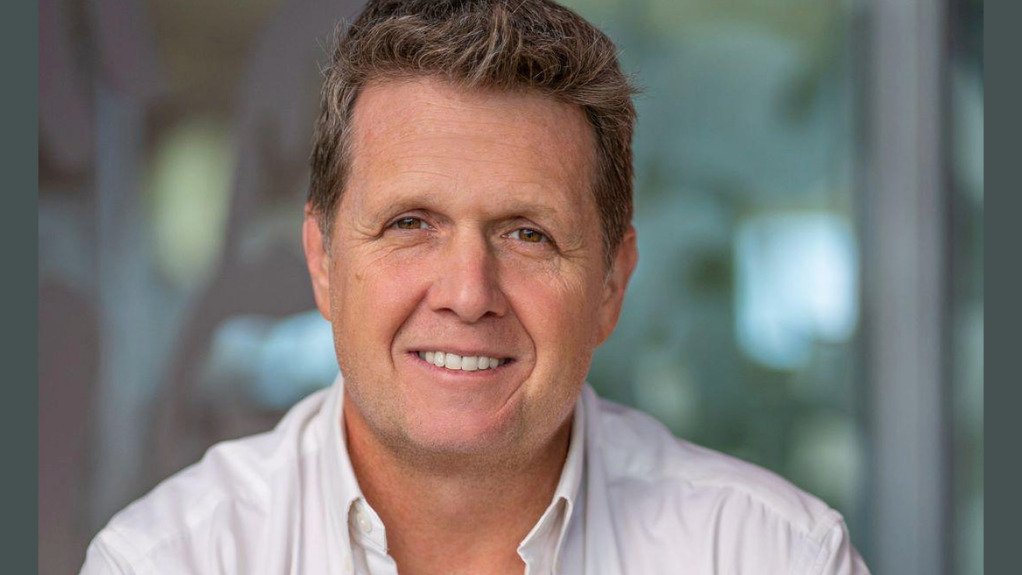
MD Justin Apsey tells Engineering News that, while the group has always aspired to increase the domestic content of the inputs used by its six South African factories, the step change over the past five years can be attributed to having embedded localisation as a business rather than a social imperative.
This commercial rationale is underpinned by a desire to improve the resilience of its supply chains, the vulnerability of which was exposed during the Covid-19 pandemic.
As a result, Unilever South Africa reassessed its localisation strategy, uncoupling it from its prior corporate social responsibility focus.
A partnership model has since been implemented, whereby the small and medium-sized enterprises selected to supply the group are expected to operate independently of the demand generated by its procurement. Previously, the strategy was based on supporting entrepreneurial enterprises in a way that made them fully reliant on the group.
R100M LOCALISATION FUND
The re-engineered strategy has been backed financially by a R100-million empowerment and localisation fund, capitalised fully by Unilever South Africa.
The fund extends interest-free loans to partner companies, which use the finance primarily to invest in the capital equipment they require to scale up to meet Unilever’s demand, albeit not exclusively.
In addition, it is supported on an ongoing basis by the group’s R12-billion to 14-billion in yearly total supply-chain costs, including procurement, with Apsey indicating that about R3.5-billion of that spend is now with small and medium-sized firms.
The results have been impressive across most of its manufacturing sites, which in Gauteng include a laundry powders factory in Boksburg, a household liquids facility in Anderbolt, and an ice cream plant in Johannesburg. In KwaZulu-Natal, meanwhile, Unilever has a personal and beauty care plant at Maydon Wharf, in Durban, a deodorants facility in Phoenix, and a foods factory in Riverhorse Valley.
Among the highlights has been a R30-million investment in partnership with AGT Foods that has enabled a company known as Temong to invest in local steam-sterilisation infrastructure, which has opened supply chains to smallholder farmers producing chilies and coriander.
Apsey says the investment has resulted in a chilli-growing partnership in Jozini, in KwaZulu-Natal, which has involved external training partners and close collaboration with the Department of Agriculture and the local municipality.
Unilever has also backed a R10-million investment to enable Afrozonke to produce chemicals locally that were previously imported, as well as R6-million to support Just Pink, a women-led merchandising business that now services 197 Clicks stores.
NEXT 10% WILL BE HARDER
The local-content gaps in its supply chain are mapped on an ongoing basis by Unilever’s procurement team and Apsey says that mapping shows that raising local content from 80% to 90% will prove far more challenging.
Not only is the pipeline of potential suppliers far less developed, but major capital investments would be required to produce the next set of chemicals, plastics, and fragrances required to raise local content further.
He says Unilever’s demand alone will be insufficient to make such projects viable and that an industry-wide effort will be required, and involve collaboration with historical competitors.
Government is aware of the issues and the competition authorities have offered the industry an exemption to cooperate where it can be shown that such cooperation is in support of industrialisation.
Raising local content further across the sector could have significant employment spinoffs, with Unilever estimating that there are some 10 000 indirect jobs associated with its existing supply chain, representing a significantly larger footprint than its 3 000 direct employees.
“This will require unprecedented collaboration between rival manufacturers – a concept that would have been unthinkable five years ago,” Apsey explains.
Localisation initiatives are also receiving the backing of South Africa’s big retailers, which Apsey says continue to prioritise local sourcing and continue to press manufacturers to invest in domestic capacity.
However, there are also headwinds as the South African operation competes globally for investment capital, with labour costs in South Africa still higher than those in Asia, and with utility and infrastructure reliability and costs emerging as a key pressure point.
The group is seeking to mitigate rising electricity costs by investing directly in embedded generation, while also pursuing opportunities arising from the wheeling and trading of electricity.
Apsey is sanguine, meanwhile, about a government proposal to establish a Transformation Fund to pool the sorts of capital that Unilever is currently deploying directly to support supplier development.
“I don’t think what we do and what the Transformation Fund does is an either/or decision, but rather it’s about how we work together,” he states, indicating that working with others and sharing the challenge has been a key lesson for Unilever South Africa in its localisation journey.
Article Enquiry
Email Article
Save Article
Feedback
To advertise email advertising@creamermedia.co.za or click here


Projects

Latest Multimedia
Latest News

Showroom

Established on 1 March, 2000, by Barries Barnard, Advanced Fire Suppression Technologies (AFST) and the Advanced Group stands as Sub-Saharan...
VISIT SHOWROOM
For over 15 years, Lilak Aluminium, a trusted leader in architectural extrusion supply, has delivered excellence to businesses like yours.
VISIT SHOWROOM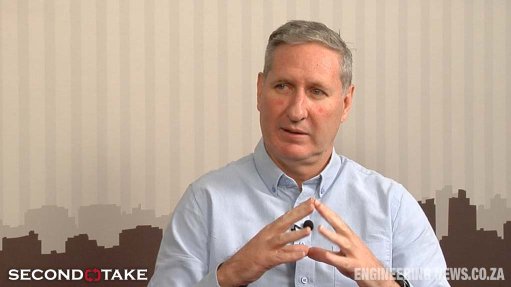


Press Office
Announcements
What's On
Subscribe to improve your user experience...
Option 1 (equivalent of R125 a month):
Receive a weekly copy of Creamer Media's Engineering News & Mining Weekly magazine
(print copy for those in South Africa and e-magazine for those outside of South Africa)
Receive daily email newsletters
Access to full search results
Access archive of magazine back copies
Access to Projects in Progress
Access to ONE Research Report of your choice in PDF format
Option 2 (equivalent of R375 a month):
All benefits from Option 1
PLUS
Access to Creamer Media's Research Channel Africa for ALL Research Reports, in PDF format, on various industrial and mining sectors
including Electricity; Water; Energy Transition; Hydrogen; Roads, Rail and Ports; Coal; Gold; Platinum; Battery Metals; etc.
Already a subscriber?
Forgotten your password?
Receive weekly copy of Creamer Media's Engineering News & Mining Weekly magazine (print copy for those in South Africa and e-magazine for those outside of South Africa)
➕
Recieve daily email newsletters
➕
Access to full search results
➕
Access archive of magazine back copies
➕
Access to Projects in Progress
➕
Access to ONE Research Report of your choice in PDF format
RESEARCH CHANNEL AFRICA
R4500 (equivalent of R375 a month)
SUBSCRIBEAll benefits from Option 1
➕
Access to Creamer Media's Research Channel Africa for ALL Research Reports on various industrial and mining sectors, in PDF format, including on:
Electricity
➕
Water
➕
Energy Transition
➕
Hydrogen
➕
Roads, Rail and Ports
➕
Coal
➕
Gold
➕
Platinum
➕
Battery Metals
➕
etc.
Receive all benefits from Option 1 or Option 2 delivered to numerous people at your company
➕
Multiple User names and Passwords for simultaneous log-ins
➕
Intranet integration access to all in your organisation