Agriculture sector should benefit from wider macroeconomic, fiscus improvements

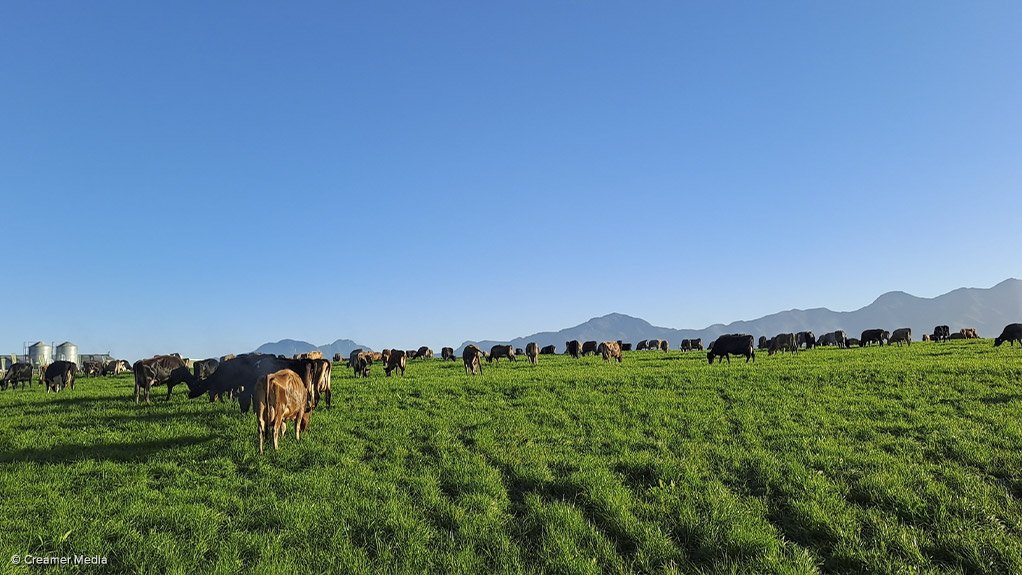


The agriculture and rural development sector has been allocated R39.5-billion of dedicated government spending in 2026/27, as part of National Treasury’s R283-billion economic development budget segment.
The 2026 Budget, which was presented by Finance Minister Enoch Godongwana on February 25, introduces a new national government focus on growth-enhancing capital investment as the fastest growing item of expenditure.
Sectors such as agriculture are poised to benefit from the overall macroeconomic stability that the 2026 Budget promotes, particularly its approach to narrow the main budget deficit.
According to National Treasury, the 2026 Budget introduces a fundamental shift in subnational fiscal architecture, moving from oversight to active structural intervention.
“This involves changes to legislation, governance, and technology at the municipal level, and strict headcount controls and compensation discipline at the provincial level.
“The 2026 Budget reflects the improvements in South Africa’s debt portfolio, including a credit rating upgrade and declining bond yields, which increases investor confidence and lowers borrowing costs,” Treasury states.
Agriculture remains one of the positive drivers in Treasury’s primary sector performance outlook, particularly as a result of strong horticultural production and seed output, which have benefitted from favourable weather conditions. This has, however, been offset by lower livestock output owing to widespread outbreaks of Foot-and-Mouth Disease (FMD).
From a primary sector point of view, agriculture often makes up for the long-term contraction having been recorded in South Africa’s mining output. Treasury’s primary sector outlook is supported by stable energy supply, reduced logistics constraints, digitalisation of the mining cadastre and expectations of La Niña rains in the 2026 agricultural season.
Over the medium term, R8.2-billion is allocated to settle about 985 land restitution claims. The agricultural land holding account will spend R3.4-billion to fund the acquisition and redistribution of 144 000 ha of land.
The Department of Agriculture, Land Reform and Rural Development (DALRRD) will support 180 000 land reform beneficiaries, in turn, through the Comprehensive Agricultural Support Programme and the LandCare programme with a combined R7.7-billion allocation.
While Godongwana acknowledged the impact that FMD had currently on economic activity, he said rapid inclusive growth remained the only durable path forward, which government was accelerating through maintained macroeconomic stability, structural reform implementation, investment in growth-enhancing infrastructure and building State capacity.
With government having allocated R2.67-trillion for spending in 2026/27, including a proposed R5-billion in the contingency reserve to cater to disasters declared since the Medium Term Budget Policy Statement, of which FMD is designated as a national disaster, it is unclear whether Treasury has made allocations to help DALRRD’s mass vaccination rollout in the fight against FMD.
LAND BANK
The Land Bank reported a net profit of R468-million in 2024/25, which marked a significant improvement from the prior year’s restated profit of R61.3-million. The bank has managed to lower non-performing loans from R9.2-billion to R8.4-billion and lower its debt from R40-billion (default status) in April 2020 to R9.9-billion in March 2025.
Treasury said the Land Bank had grown its development and transformation loans from 7% of total loans in 2016 to 49% in 2025. The Blended Finance Scheme – which combined grants from DALRRD with loans from the Land Bank to support emerging farmers – has significantly contributed to this growth, with the Land Bank having dispersed R1.2-billion under the scheme in 2024/25.
Article Enquiry
Email Article
Save Article
Feedback
To advertise email advertising@creamermedia.co.za or click here

Latest Multimedia

Latest News

Showroom

Established in 1933, EKATO is the world leader in agitation technology, supplying agitators for processes and applications such as chemicals and...
VISIT SHOWROOM
The Aluminium Federation of South Africa (AFSA), is the voice of the South African aluminium industry.
VISIT SHOWROOM


Announcements
What's On
Subscribe to improve your user experience...
Option 1 (equivalent of R125 a month):
Receive a weekly copy of Creamer Media's Engineering News & Mining Weekly magazine
(print copy for those in South Africa and e-magazine for those outside of South Africa)
Receive daily email newsletters
Access to full search results
Access archive of magazine back copies
Access to Projects in Progress
Access to ONE Research Report of your choice in PDF format
Option 2 (equivalent of R375 a month):
All benefits from Option 1
PLUS
Access to Creamer Media's Research Channel Africa for ALL Research Reports, in PDF format, on various industrial and mining sectors
including Electricity; Water; Energy Transition; Hydrogen; Roads, Rail and Ports; Coal; Gold; Platinum; Battery Metals; etc.
Already a subscriber?
Forgotten your password?
Receive weekly copy of Creamer Media's Engineering News & Mining Weekly magazine (print copy for those in South Africa and e-magazine for those outside of South Africa)
➕
Recieve daily email newsletters
➕
Access to full search results
➕
Access archive of magazine back copies
➕
Access to Projects in Progress
➕
Access to ONE Research Report of your choice in PDF format
RESEARCH CHANNEL AFRICA
R4500 (equivalent of R375 a month)
SUBSCRIBEAll benefits from Option 1
➕
Access to Creamer Media's Research Channel Africa for ALL Research Reports on various industrial and mining sectors, in PDF format, including on:
Electricity
➕
Water
➕
Energy Transition
➕
Hydrogen
➕
Roads, Rail and Ports
➕
Coal
➕
Gold
➕
Platinum
➕
Battery Metals
➕
etc.
Receive all benefits from Option 1 or Option 2 delivered to numerous people at your company
➕
Multiple User names and Passwords for simultaneous log-ins
➕
Intranet integration access to all in your organisation