Alternative digital payment methods eroding the use of cards for payments – PayFast


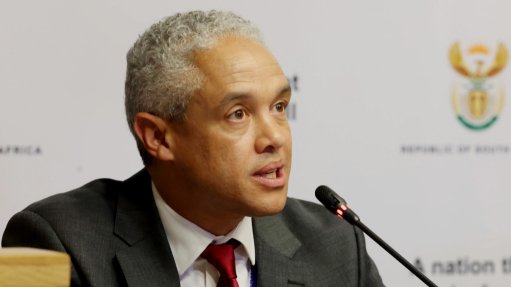
Network International Africa merchant services MD and PayFast South Africa MD Mpho Sadiki



Online payment solutions company PayFast’s 'State of Pay 2025' report shows that the number of payment methods are growing on the back of mobile payments systems, digital wallets, open banking payments and instant electronic funds transfer systems, while regulations are also opening up.
Additionally, there was a convergence of financial technology (fintech) offerings taking place, where payments and lenders and insurance providers offer a unified value proposition for customers, such as credit or insurance at the point of checkout, said payment service provider multinational Network International Africa merchant services MD and PayFast South Africa MD Mpho Sadiki.
“New payment rails have transformed how South African consumers and merchants engage in commerce. Digital payments are the departure point for businesses' digitisation and modernisation efforts, and serve as a means to access new markets and grow in a resilient, secure and sustainable way,” he said during a briefing in Bryanston, Johannesburg, on January 15.
Further, while cards remain the most-used payment method, at 54% of payments to merchants, the use of cards declined by 41% from the prior year's survey, although there is an element of the physical plastic becoming invisible through their use in other digital payment methods.
Open banking and instant electronic funds transfer payments were used by 33% of customers to pay merchants during 2025, which represented an 18% increase on the prior year, he said.
Cash accounted for only 6% of payments made during 2025 to the more than 80 000 merchants that PayFast provides services to.
However, this view from merchants using digital payments solutions must be contrasted against the fact that more than half of all payments made in South Africa were made using cash, with an average value of R208 per transaction, Sadiki pointed out.
“The opportunity here is to convert this behaviour to faster and safer digital payments. The growing popularity of account-to-account payments and buy now, pay later offerings highlights the willingness of consumers to use these solutions.”
Merchants view multiple payment methods as supporting growth, with payment digitalisation leading to increased revenue and faster transaction times. The report showed that digital payments drive business growth and development.
Specifically, 54% of merchants reported higher sales after adoption of digital payments systems, with 62% reporting faster transaction speeds and 41% reporting a lower reliance on cash. Also, 31% of merchants viewed digital payments systems as marketing opportunities, he said.
Digital payments were not just a utility, but helped to drive revenue, he added.
“The local e-commerce market is growing at an unprecedented rate, backed by omnichannel experiences and real-time transfers, which are allowing merchants, and the broader market, to expand their reach to previously under-served customers,” Sadiki noted.
Meanwhile, customers of PayFast's merchants also requested to be allowed to make payments using other methods, with 34% of customers requesting a buy now, pay later option.
Additionally, 22% of customers requested to use mobile wallets to make payments, and 20% requested to use quantity-recognition code payment systems, such as SnapScan, Zapper and Scan-to-Pay, to make payments to merchants, he said.
Buy now, pay later options are gaining traction, with use of these offerings doubling from 2024 to 2025. Credit facilities are also making their mark, with nearly one-third of respondents reporting use of such credit services.
These trends highlighted a growing demand for flexible, affordability-driven payment tools, said Sadiki.
Unified commerce, which saw multiple service providers providing different services as part of a transaction, was here to stay. Businesses saw unified commerce as an enabler, and 43% of small and medium-sized enterprises used unified commerce offerings, which was up sharply from 2024, he said.
In 2024, 35% of merchants were unaware of unified commerce. This dropped to only 10% of merchants not being aware of unified commerce solutions in 2025, showing rapid adoption, he added.
If merchants do not offer a mix of payments options, they miss out on a portion of sales opportunities, and the report showed that more merchants are embracing e-commerce.
The report also showed that awareness of unified commerce was spread across the country, and was not limited to the more densely-populated provinces, he pointed out.
“Convenience in the form of multiple payment methods allows customers to engage more with digital payments systems, which also benefits merchants with more reliable and higher sales,” he said.
While digital payments started to gain significant traction during the Covid-19 pandemic, the second half of the decade wouls cement digital payments as the norm. Digital payments would become a fact of economic life for consumers and businesses, and become highly simplified and expanded to encompass multiple use cases, Sadiki said.
The growth of e-commerce will be driven by an empowered small and medium-sized enterprise sector that operates within, and is supported by, an open banking environment and the reliable provision of embedded finance products.
During 2025, regulatory modernisation accelerated the shift to digital payments. With the South African Reserve Bank's Payments Ecosystem Modernisation Programme catalysing change, non-banks and payments service providers stepped forward as core builders and collaborated.
Such strategic partnerships became the multiplier, and open banking rails matured, embedded finance reached small and medium-sized enterprises, and funding projects unlocked day-to-day resilience, he said.
The past year proved that South Africa’s payments ecosystem was ready for scale. This year, the mandate was clear, namely to double down on real-time rails, unify data to reduce fraud and friction, and keep people, merchants and shoppers at the centre of every design decision, Sadiki said.
Digital payments in South Africa are expected to exhibit consistent growth this year, with account-to-account payments expected to continue increasing and to reach 186-billion transactions globally by 2029.
Further, in 2026, the overall payments landscape would be defined by three primary elements, namely intelligence, connectivity and people, he noted.
Advancements in AI, automation and data-driven unified commerce would underpin the next generation of payment processing solutions, he said.
AI provides significant opportunities in the fields of security and data encryption, while automating manual, repetitive tasks enables payment partners to focus on delivering merchant value and services.
“This year is when payment processing finally loses any semblance of being analogue, as AI and unified commerce make their marks. This is the year South African payments shift from innovation to impact. Intelligence, connectivity and trust are the foundations of a modern payments economy.”
AI will enable dynamic pricing and lending, insurance and other financial services at checkout, and is being used for smart fraud monitoring.
“The idea is that, if our systems are data-rich, then the technology is available to allow commerce to be data-driven, thereby enabling bespoke and real-time services,” he emphasised.
Additionally, strategic partnerships at technological and industry levels will foster greater collaboration throughout the payments ecosystem and, thereby, facilitate the development of integrated, embedded financial solutions.
Banks, fintechs and government agencies cooperating not only take good ideas from concept to market more quickly, but also reinforce South Africa’s digital economy and strengthen trust among consumers and merchants, Sadiki said.
Article Enquiry
Email Article
Save Article
Feedback
To advertise email advertising@creamermedia.co.za or click here
Research Reports


Projects

Latest Multimedia

Latest News

Showroom

The Aluminium Federation of South Africa (AFSA), is the voice of the South African aluminium industry.
VISIT SHOWROOM
Sika South Africa is a trusted partner for the nation’s infrastructure, commercial, residential, and industrial sectors.
VISIT SHOWROOM



Press Office
Announcements
What's On
Subscribe to improve your user experience...
Option 1 (equivalent of R125 a month):
Receive a weekly copy of Creamer Media's Engineering News & Mining Weekly magazine
(print copy for those in South Africa and e-magazine for those outside of South Africa)
Receive daily email newsletters
Access to full search results
Access archive of magazine back copies
Access to Projects in Progress
Access to ONE Research Report of your choice in PDF format
Option 2 (equivalent of R375 a month):
All benefits from Option 1
PLUS
Access to Creamer Media's Research Channel Africa for ALL Research Reports, in PDF format, on various industrial and mining sectors
including Electricity; Water; Energy Transition; Hydrogen; Roads, Rail and Ports; Coal; Gold; Platinum; Battery Metals; etc.
Already a subscriber?
Forgotten your password?
Receive weekly copy of Creamer Media's Engineering News & Mining Weekly magazine (print copy for those in South Africa and e-magazine for those outside of South Africa)
➕
Recieve daily email newsletters
➕
Access to full search results
➕
Access archive of magazine back copies
➕
Access to Projects in Progress
➕
Access to ONE Research Report of your choice in PDF format
RESEARCH CHANNEL AFRICA
R4500 (equivalent of R375 a month)
SUBSCRIBEAll benefits from Option 1
➕
Access to Creamer Media's Research Channel Africa for ALL Research Reports on various industrial and mining sectors, in PDF format, including on:
Electricity
➕
Water
➕
Energy Transition
➕
Hydrogen
➕
Roads, Rail and Ports
➕
Coal
➕
Gold
➕
Platinum
➕
Battery Metals
➕
etc.
Receive all benefits from Option 1 or Option 2 delivered to numerous people at your company
➕
Multiple User names and Passwords for simultaneous log-ins
➕
Intranet integration access to all in your organisation