Structural shift under way

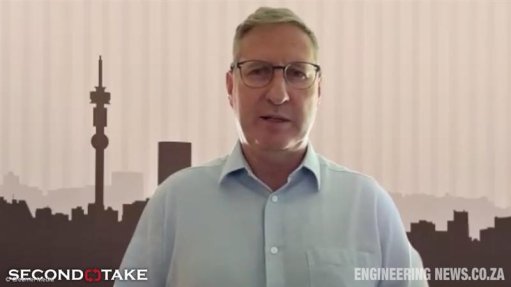
Steel industry organisation Southern African Institute of Steel Construction CEO Amanuel Gebremeskel discusses the state of the local steel industry.



Despite the closure of some older steel mills, new investment in steel production is reshaping South Africa’s industry, says steel industry organisation Southern African Institute of Steel Construction (SAISC) CEO Amanuel Gebremeskel.
He describes the sector as dynamic and polarised, with opposing views about the state of the sector.
“On the one hand, older integrated producers have scaled down or closed operations . . . with the shutdown of steel producer ArcelorMittal’s Newcastle plant an example. This is evidence that long-term structural pressures remain. But on the other hand, new mills have also been entering the market, including recycling-based mini-mills, and some of these are backed by foreign investors. That’s why the picture is very mixed.”
While some might only see the decline, there are still significant investments in South Africa and neighbouring countries, Gebremeskel notes.
He says this is because the steel supply base has become more diversified: “Imports continue, but local and regional manufacturing are expanding. While upstream production is changing, South Africa retains substantial downstream capacity.”
In terms of steel service centres and fabrication, South Africa remains the largest industry of its kind in Africa: “This ensures [that] the country is well positioned to supply construction and infrastructure projects across the region,” says Gebremeskel.
Further, continental demand is closely linked to mining activity, and “gold prices have risen to up $5 000/oz, increasing interest in Southern Africa’s mineral resources. The region has long-established mining processes and expertise . . . in a way, our time has come,” he enthuses.
Infrastructure is another driver, with public–private partnership initiatives introduced by the Government of National Unity, including private participation in electricity transmission, renewable generation, port operations and rail rehabilitation.
“Such projects rely heavily on steel. Anything that is implemented successfully will . . . use steel,” he notes, adding that urbanisation across Africa is also supporting demand, as urban development requires housing, sanitation systems, water infrastructure, warehouses and data centres.
“Steel is a core input in these developments.”
However, Gebremeskel cautions that long-term sustainability depends on competitiveness. While tariffs and safeguards may offer temporary relief to keep local markets competitive, they do not solve structural challenges, including high production costs, pricing pressures and producing good-quality steel at a competitive price.
“If tariffs and safeguards were effective in the long run, I don’t think we would have seen Newcastle shutting down,” he notes.
He also confirms that SAISC is about to launch a materials quality certification programme. This initiative is in response to the diversification of local supply. “In other words, now that we have many suppliers, there’s a need for an industry-wide quality standard enforcement mechanism,” he explains.
Competition
Gebremeskel says that import competition, especially from Asia, continues to shape the market.
“Many newer mills globally are recycling-based operations that melt scrap rather than produce steel from iron-ore. South Africa has bound tariffs and safeguards in place, but no anti-dumping measures have been applied against specific countries.”
However, protection must be applied carefully to avoid undermining exporters that compete in regional markets, he cautions.
Domestic cost pressures also affect competitiveness significantly, with Gebremeskel noting that energy and logistics remain critical constraints: “Steel production is energy intensive, especially in recycling-based mills that depend on electricity to melt scrap – the impact of energy costs is huge on an industry like ours.”
Ongoing rail inefficiencies also affect costs. He, therefore, welcomes efforts to allow for greater private participation in rail and energy transmission, which could improve reliability and capacity.
Simultaneously, these challenges have prompted changes in how steel is produced and powered. Environmental performance is also evolving, with recycling-based production reducing reliance on traditional blast furnace methods.
“Many downstream fabricators have installed rooftop solar systems to secure reliable power, which has also lowered their carbon footprint. I would say most of them actually have some sort of renewable-energy source in their factory.”
He adds that there is growing interest in green hydrogen as a future steelmaking input.
The industry is undergoing structural change and while deindustrialisation has taken place over the past two decades, new investment suggests a different phase may be emerging.
“These are the beginnings,” he adds, stressing that the shift is just getting under way.
“Momentum will depend on competitive production, reliable infrastructure and the successful rollout of new projects,” he concludes.
Article Enquiry
Email Article
Save Article
Feedback
To advertise email advertising@creamermedia.co.za or click here
Research Reports
Projects
Latest Multimedia


Latest News
Showroom
Roytec Global is an international company specializing in liquid / solid and mineral separation technologies for the Mining and Industrial sectors.
VISIT SHOWROOM
Developed to exceed the latest EN 15964 standards for police breathalysers proving that it will remain accurate and reliable for many years to come.
VISIT SHOWROOM
Press Office
Announcements
What's On
Subscribe to improve your user experience...
Option 1 (equivalent of R125 a month):
Receive a weekly copy of Creamer Media's Engineering News & Mining Weekly magazine
(print copy for those in South Africa and e-magazine for those outside of South Africa)
Receive daily email newsletters
Access to full search results
Access archive of magazine back copies
Access to Projects in Progress
Access to ONE Research Report of your choice in PDF format
Option 2 (equivalent of R375 a month):
All benefits from Option 1
PLUS
Access to Creamer Media's Research Channel Africa for ALL Research Reports, in PDF format, on various industrial and mining sectors
including Electricity; Water; Energy Transition; Hydrogen; Roads, Rail and Ports; Coal; Gold; Platinum; Battery Metals; etc.
Already a subscriber?
Forgotten your password?
Receive weekly copy of Creamer Media's Engineering News & Mining Weekly magazine (print copy for those in South Africa and e-magazine for those outside of South Africa)
➕
Recieve daily email newsletters
➕
Access to full search results
➕
Access archive of magazine back copies
➕
Access to Projects in Progress
➕
Access to ONE Research Report of your choice in PDF format
RESEARCH CHANNEL AFRICA
R4500 (equivalent of R375 a month)
SUBSCRIBEAll benefits from Option 1
➕
Access to Creamer Media's Research Channel Africa for ALL Research Reports on various industrial and mining sectors, in PDF format, including on:
Electricity
➕
Water
➕
Energy Transition
➕
Hydrogen
➕
Roads, Rail and Ports
➕
Coal
➕
Gold
➕
Platinum
➕
Battery Metals
➕
etc.
Receive all benefits from Option 1 or Option 2 delivered to numerous people at your company
➕
Multiple User names and Passwords for simultaneous log-ins
➕
Intranet integration access to all in your organisation