Energy Council, Yelland weigh in on Sibanye-Stillwater vs Eskom wayleave judgment

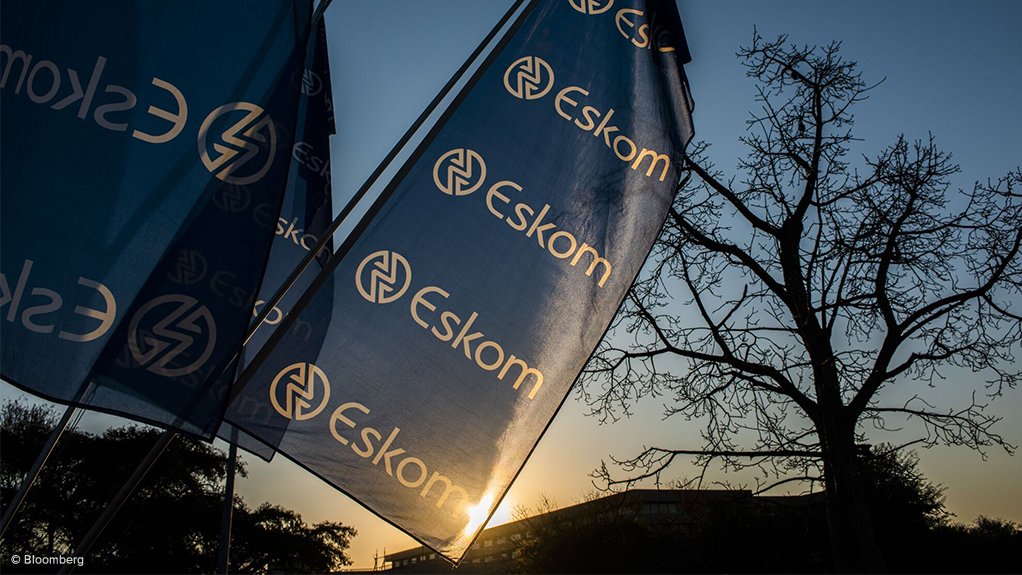



Following the February 18 judgment delivered in the High Court of South Africa, Gauteng South Division, in a case between Sibanye-Stillwater subsidiary Sibanye Gold and State-owned Eskom – which saw the overturning of Eskom’s refusal to grant a wayleave for a licence-exempt, behind-the-meter renewable-energy project – the Energy Council of South Africa stresses the importance of the ruling.
The matter concerned Eskom’s refusal of Sibanye-Stillwater’s wayleave application to develop a 50 MW behind-the-meter PV power plant to supply electricity to Sibanye-Stillwater’s Kloof gold mine, in Gauteng.
Sibanye-Stillwater sought to connect the PV plant to a section of the Kloof substation owned and operated by it through a 6 km power line that would cross Eskom’s 132 kV distribution lines.
This required Eskom’s consent as it holds a servitude over the property where Sibanye-Stillwater wanted to build a power line to connect to its Kloof substation.
Eskom notes in a separate media statement that it sought to ensure it met the applicable regulatory requirements that maintain the continued safety, stability and reliability of the national network and to provide a consistent application of the rules.
Eskom notes that it raised several concerns before the High Court, including safety considerations, in its discretion to refuse the wayleave application, as well as its statutory obligations.
The High Court, however, found in favour of Sibanye-Stillwater.
The Energy Council states that, while significant progress has been made in addressing South Africa’s electricity crisis, the sector remains vulnerable and confronted by a range of complex challenges.
“It is essential that energy security and affordability, key priorities for the Department of Electricity and Energy (DEE), are safeguarded; therefore, any undermining actions that are shown to be irrational, unreasonable or unlawful should not be accepted,” the council argues.
The Energy Council says it advocates for a balanced, phased energy transition that addresses national interests and local challenges and that fosters investor and consumer confidence.
The council says that, while Eskom plays a vital role in supporting the electricity sector and national reforms, the utility must comply with legal and policy requirements.
This judgment reaffirms the importance of the rule of law in maintaining the integrity of South Africa’s energy transition framework and sets a precedent for proper enforcement of the Electricity Regulation Act and regulations overseen by the National Energy Regulator of South Africa (Nersa), it adds.
“This is a critical judgment for South Africa’s energy sector. The court made it clear that legal projects should not be blocked by improper administrative actions. Upholding the rule of law, regulatory certainty and the role of Nersa are essential to unlocking investment, growth and jobs in the energy sector,” says Energy Council CEO James Mackay.
The council says it believes this ruling should guide future cooperation between industry and Eskom, adding that, under the leadership of the DEE, it will help restore confidence among investors and developers who want to strengthen South Africa’s energy supply.
“The council calls on all sector leaders, including Industry, Eskom and the DEE, to continue to engage robustly and openly, acknowledge and correct where mistakes have been made and continue to work together to support government’s priorities as outlined in the State of the Nation Address this year.”
This includes driving inclusive growth and job creation; reducing poverty and tackling the high cost of living; and building a capable, ethical and developmental State.
The council says collaboration and trust among government, Eskom, investors and industry are essential to South Africa’s energy transition.
“The Energy Council remains committed to working closely with all sector stakeholders to promote constructive dialogue and solutions that advance the national interest,” it says.
EE Business Intelligence MD Chris Yelland, meanwhile, says Eskom “deployed its internal wayleave policy and application procedures as a de facto barrier regime, demanding technical documentation, safety studies, institutional approvals and a suite of escalating requirements that bore only a tenuous connection to genuine grid risk”.
He states that the judge repeatedly probed Eskom’s evidence and found that the articulated grounds were unsubstantiated, inconsistent and disjointed from the actual network risks identified.
“The court recognised what many industry observers have long suspected: that Eskom was using bureaucratic preconditions and procedural rigour as a shield to protect its commercial interests, not as a legitimate means of safeguarding network reliability or safety,” says Yelland.
He points out that the key strands of the judgment included a misuse of policy as barrier; inconsistent and opaque requirements; a commercial motive; and a failure of procedural fairness.
Yelland argues that the implications of the Sibanye-Stillwater versus Eskom judgment are significant on multiple fronts, including customer autonomy and the energy transition; legal constraints on State-owned monopolies; and investor and market confidence.
“Eskom’s role in South Africa’s energy landscape is unique and immensely consequential. But privilege carries responsibility.
“If Eskom continues to approach reform with a defensive, protectionist mindset – one that deploys wayleaves, applications and safety pretexts as tools of obstruction – it will not only lose before the courts, it will lose in the court of public confidence and in the market itself.
“The Sibanye-Stillwater judgment is not merely a rebuke; it is an invitation – to align with law, embrace competition and support a transition that is urgent, long overdue and essential for the country’s economic future.
“South Africa cannot wait for clarity. The courts have provided some. Now it is time for practice to follow principle,” says Yelland.
Eskom is studying the court judgment and its implications and will determine the appropriate next steps following consultation with its legal advisers. The utility may appeal the judgment.
Article Enquiry
Email Article
Save Article
Feedback
To advertise email advertising@creamermedia.co.za or click here
Research Reports
Projects
Latest Multimedia

Latest News

Showroom

For over 60 years, VEGA has provided industry-leading products for the measurement of level, density, weight and pressure. As the inventor of the...
VISIT SHOWROOM
At Airshrink - CiP, we surpass customer expectations with innovative MV and LV cable accessories, including heat shrink joints, terminations,...
VISIT SHOWROOM


Announcements
What's On
Subscribe to improve your user experience...
Option 1 (equivalent of R125 a month):
Receive a weekly copy of Creamer Media's Engineering News & Mining Weekly magazine
(print copy for those in South Africa and e-magazine for those outside of South Africa)
Receive daily email newsletters
Access to full search results
Access archive of magazine back copies
Access to Projects in Progress
Access to ONE Research Report of your choice in PDF format
Option 2 (equivalent of R375 a month):
All benefits from Option 1
PLUS
Access to Creamer Media's Research Channel Africa for ALL Research Reports, in PDF format, on various industrial and mining sectors
including Electricity; Water; Energy Transition; Hydrogen; Roads, Rail and Ports; Coal; Gold; Platinum; Battery Metals; etc.
Already a subscriber?
Forgotten your password?
Receive weekly copy of Creamer Media's Engineering News & Mining Weekly magazine (print copy for those in South Africa and e-magazine for those outside of South Africa)
➕
Recieve daily email newsletters
➕
Access to full search results
➕
Access archive of magazine back copies
➕
Access to Projects in Progress
➕
Access to ONE Research Report of your choice in PDF format
RESEARCH CHANNEL AFRICA
R4500 (equivalent of R375 a month)
SUBSCRIBEAll benefits from Option 1
➕
Access to Creamer Media's Research Channel Africa for ALL Research Reports on various industrial and mining sectors, in PDF format, including on:
Electricity
➕
Water
➕
Energy Transition
➕
Hydrogen
➕
Roads, Rail and Ports
➕
Coal
➕
Gold
➕
Platinum
➕
Battery Metals
➕
etc.
Receive all benefits from Option 1 or Option 2 delivered to numerous people at your company
➕
Multiple User names and Passwords for simultaneous log-ins
➕
Intranet integration access to all in your organisation