Financing Africa from Within: Why Ghana’s Fund Domiciliation Moment Matters








This article has been supplied and will be available for a limited time only on this website.
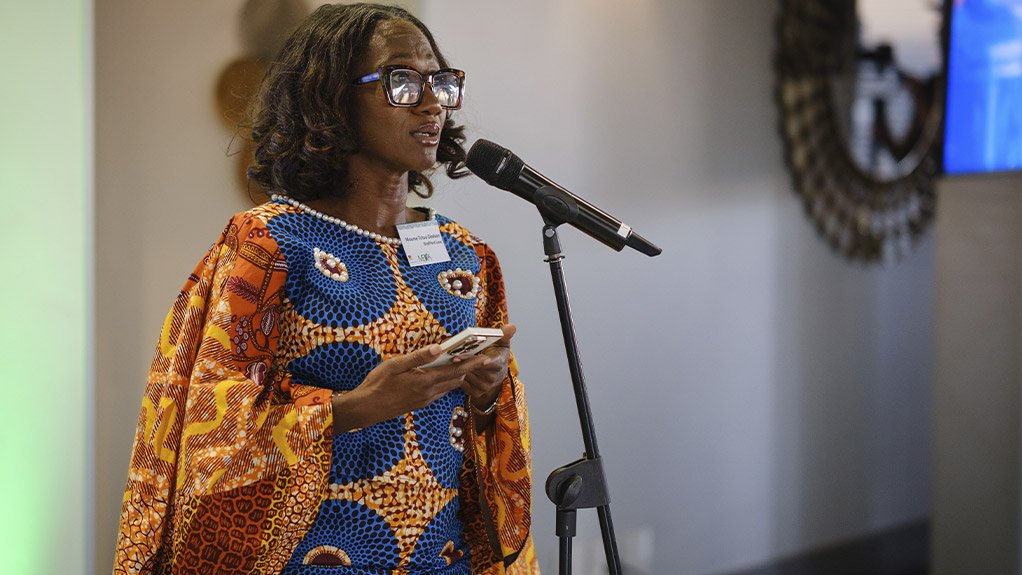
By: Maame Tutua Dadson - Managing Partner at Stafford Law; and Amma A. Gyampo, Chief Executive Officer at Ghana Venture Capital & Private Equity Association
With over US$700 billion in domestic pension, insurance, and long-term savings, Africa has no shortage of capital. The real question is why so much of it sits in low-yield government instruments or flows offshore instead of being deployed to grow African enterprises, create jobs, and drive innovation.
This question has become more urgent as global capital tightens. Development finance institutions are under pressure, aid budgets are shrinking, and foreign investors are becoming increasingly selective and risk-averse. African governments, regulators, and domestic institutional investors can no longer assume that external capital will reliably fill their financing gaps. Yet the problem is not a lack of capital. It is a lack of investable pathways that connect domestic savings to productive enterprise.
Fund domiciliation sits at the heart of this challenge. Domiciliation is too often treated as a technical or regulatory consideration, but it is fundamentally a question of financial sovereignty, determining who governs domestically focused capital, where value is created, and whose priorities shape investment outcomes. Ghana now stands at a pivotal moment to demonstrate that Africa can finance its own development, on its own terms.
Domiciliation as Financial Sovereignty
Where a fund is domiciled determines far more than its mailing address. It determines which jurisdiction sets the rules, oversees governance, collects taxes, resolves disputes, and captures the ecosystem of legal, advisory, and management services that surround private capital. When Africa-focused funds are domiciled offshore, these levers are effectively outsourced. Control migrates elsewhere, even when the underlying capital and businesses are African.
This is why domiciliation should be understood as financial sovereignty in action. Africa does not suffer from a shortage of capital; it suffers from a shortage of credible, trusted vehicles that can intermediate that capital into long-term investment. Offshore structures have historically filled this gap, but they are increasingly fragile in a tightening global environment. They prioritise foreign investors’ needs, keep value-added services abroad, and rarely crowd in domestic institutional capital at scale.
Aligning fund structures with African policy priorities, industrialisation, MSME growth, inclusion, and climate resilience requires hosting them under credible local regimes. Done well, domiciliation strengthens both markets and oversight, rather than weakening them.
Why Ghana, Why Now
Ghana is uniquely positioned to lead this shift in West Africa. It combines political stability, a maturing pension system, and a growing private capital ecosystem with a renewed seriousness about reform. Across the private capital, pension, and development finance communities, Ghana is finally asking hard questions: why must a Ghanaian fund manager register in Mauritius or elsewhere to invest in a viable business in Accra or Kumasi?
The answer is structural. Ghana’s fund ecosystem has largely relied on company-based vehicles, typically limited liability companies. For global institutional investors, particularly pension and insurance funds, this is a non-starter. In an LLC, tax treatment and liability allocation are opaque, fiduciary duties are less clearly defined, and capital commitments and distributions are harder to standardise. The result is higher transaction costs, greater legal ambiguity, and heightened risk perception.
By contrast, limited partnerships are the global standard for private equity, venture capital, and infrastructure investment. They clearly separate fund managers from investors, protect passive investors from operational liabilities, and offer the contractual flexibility institutions expect. Jurisdictions that cannot offer LP-type structures under credible regulatory oversight will struggle to attract meaningful commitments, regardless of opportunity.
Aligning with Global Standards, on African Terms
Adopting limited partnerships is not about blindly copying global models. It is about meeting investors where they are, while strengthening local oversight. African jurisdictions can - and must - align with global fund standards while embedding robust prudential regulation, licensing, supervision, and inter-agency coordination.
Well-designed domiciliation regimes enhance, rather than dilute, investor protection. They give regulators a clearer sight of fund activity, enable enforcement, and protect ultimate beneficiaries such as pension contributors. The choice is not between global credibility and local control; the challenge is to design systems that deliver both.
Inclusive Capital Pathways Matter
Domiciliation only matters if it changes who gets funded. Women- and youth-led MSMEs form the backbone of Ghana’s economy, yet they are routinely deemed too risky by traditional banks. They need patient, risk-tolerant capital - which is precisely what private funds can provide.
The fact is that locally domiciled funds are better positioned to design mandates, ticket sizes, and instruments that reflect the realities of these entrepreneurs. They are closer to markets, better able to assess risk, and more accountable to both investors and investees. When combined with blended finance first-loss capital, guarantees, or technical assistance from DFIs and philanthropy, these funds can safely crowd pension capital into segments that have long been underserved.
Crucially, local domiciliation ensures that the benefits of development finance extend beyond individual deals. It builds onshore fund-management capacity, data, track records, and market infrastructure that persist long after concessional capital exits.
Pension Funds as Engines of Development
Pension funds must play an empowering role in this transition. They are not merely custodians of savings; they are engines of the economy’s collective wealth. Their long-dated liabilities make them natural investors in private equity, venture, and infrastructure, if the right governance, regulation, and vehicles exist.
If Ghanaian pension funds were to allocate even 5–10 per cent of assets under management to well-structured local private capital, the impact would be transformative. Capital would flow into high-growth businesses, strengthening value chains that disproportionately employ women and youth. These firms would scale, create formal jobs, and generate tax revenue. New employees would become the next generation of pension contributors, reinforcing the system’s long-term sustainability in a youthful, largely informal economy.
The Cost of Getting It Wrong
Ghana is now being watched as a potential pilot for continent-wide change. Initiatives such as the pension industry compact and domiciliation studies signal seriousness. But the cost of failure is high. Weak design, poor enforcement, or headline fund failures could entrench scepticism about African domiciles for years, prolonging dependence on offshore centres.
If incentives, fiscal frameworks, and legal structures are not fixed now, Africa will remain a continent that exports its savings and imports its debt, while failing to create enough jobs for the youngest population on earth.
Ghana has the capital. It has the leadership. What it needs now are the models and structures to unlock what is already within reach. If it succeeds, it will not only mobilise domestic savings, but it will also help redefine how Africa finances its own future.
Article Enquiry
Email Article
Save Article
Feedback
To advertise email advertising@creamermedia.co.za or click here
Comments
Research Reports


Projects

Latest Multimedia

Latest News


Showroom

AxFlow AQS Liquid Transfer (Pty) Ltd is an Importer and Distributor of Pumps in Southern Africa
VISIT SHOWROOM
EIMS is an independent specialised environmental consulting firm offering the full spectrum of environmental management services across all sectors...
VISIT SHOWROOM
Press Office
Announcements
What's On
Subscribe to improve your user experience...
Option 1 (equivalent of R125 a month):
Receive a weekly copy of Creamer Media's Engineering News & Mining Weekly magazine
(print copy for those in South Africa and e-magazine for those outside of South Africa)
Receive daily email newsletters
Access to full search results
Access archive of magazine back copies
Access to Projects in Progress
Access to ONE Research Report of your choice in PDF format
Option 2 (equivalent of R375 a month):
All benefits from Option 1
PLUS
Access to Creamer Media's Research Channel Africa for ALL Research Reports, in PDF format, on various industrial and mining sectors
including Electricity; Water; Energy Transition; Hydrogen; Roads, Rail and Ports; Coal; Gold; Platinum; Battery Metals; etc.
Already a subscriber?
Forgotten your password?
Receive weekly copy of Creamer Media's Engineering News & Mining Weekly magazine (print copy for those in South Africa and e-magazine for those outside of South Africa)
➕
Recieve daily email newsletters
➕
Access to full search results
➕
Access archive of magazine back copies
➕
Access to Projects in Progress
➕
Access to ONE Research Report of your choice in PDF format
RESEARCH CHANNEL AFRICA
R4500 (equivalent of R375 a month)
SUBSCRIBEAll benefits from Option 1
➕
Access to Creamer Media's Research Channel Africa for ALL Research Reports on various industrial and mining sectors, in PDF format, including on:
Electricity
➕
Water
➕
Energy Transition
➕
Hydrogen
➕
Roads, Rail and Ports
➕
Coal
➕
Gold
➕
Platinum
➕
Battery Metals
➕
etc.
Receive all benefits from Option 1 or Option 2 delivered to numerous people at your company
➕
Multiple User names and Passwords for simultaneous log-ins
➕
Intranet integration access to all in your organisation