Fragility disguised as stability: the lights are on, but the prices are up


This article has been supplied and will be available for a limited time only on this website.
By: David McDonald - CEO at SolarAfrica
“Having put load shedding behind us…”
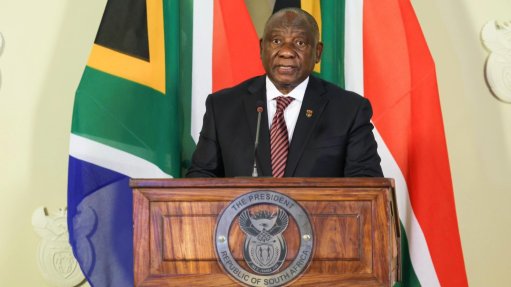
These were the confident words of President Cyril Ramaphosa at this year’s State of the Nation Address, where he not once – but twice – declared load shedding a thing of the past. Not even the official end of the Covid-19 pandemic was announced with as much assuredness; another nationwide crisis that almost left our economy on the brink of collapse.
So for a country that has spent more than a decade planning daily life and business-as-usual around blackout schedules, you can imagine that this was music to the ears of South Africans. And yes – operationally speaking – things have improved. Energy availability has increased. Maintenance is finally being done. Diesel usage is better managed than it was at the height of the crisis. But we need to remember that stability is not the finish line – if anything, the conversation has simply moved away from one question, “Will the lights stay on?” to another, “What will it cost?”
And while the National Budget showed definite progress on transmission reform with the necessary funding, it stopped short of outlining clear tariff reform or grid expansion timelines.
For many commercial and industrial (C&I) users, this question of cost has become the real crisis.
Electricity is no longer cheap
The President made another salient point in his address, saying that for decades our economy grew on the back of cheap electricity, but power was no longer affordable.
Over the past five years, tariff increases have compounded well above inflation. To add salt to the wound, the National Energy Regulator of South Africa (NERSA) just recently confirmed that tariff adjustments would be higher than initially anticipated, with a 5.36% increase effectively rising to 8.76% following calculation corrections.
For C&I users especially, cost certainty is critical, as businesses need predictability if they are to accurately forecast, invest and grow. Initially, the narrative was that abnormal hikes were driven by diesel spend during load shedding, which made sense at the time, given that emergency generation is expensive. But while load shedding has eased, the trajectory of price increases has not. For these users, electricity is one of the biggest input costs, and when that line item becomes unpredictable, it stalls business decisions that could unlock growth.
As an independent power producer (IPP), we’ve already seen this trend play out first-hand. Customers who five years ago were comfortable signing 15 or 20-year agreements are now hesitant to commit beyond 10 years. Not because they don’t believe in renewables (they do, more than ever before), but because they don’t trust the broader pricing environment.
Why tariffs keep rising
It’s tempting to treat tariff increases as a regulatory issue alone, but in reality, they’re not. Yes, NERSA has confirmed higher-than-anticipated adjustments. Yes, Eskom carries a significant debt burden. But there is a bit more to it: coal plants are rapidly aging, with a significant portion of the fleet running at availability levels that would not be acceptable in most developed markets. A large percentage of the coal fleet will need to be retired by 2030, and when those units go down, gas and diesel generation will inevitably step in. And while they may have high availability factors, they’re not cheap and these costs don’t just disappear into the system; somewhere down the line they’re passed on to paying customers.
So the question becomes: are costs genuinely falling, or are they simply being redistributed? From where I am sitting, escalations are not about to stop – at least not anytime soon.
Fragility disguised as stability
There’s another uncomfortable truth here. When we talk about improved energy availability, we often look at the blended number across the system, including renewables, gas and diesel that naturally perform at higher availability levels than aging coal plants. But if you isolate the coal fleet, the picture is less comforting because around 30% of units are under maintenance at any given time and a meaningful portion of capacity will need to be retired within the next five years.
Given that there are no new coal stations waiting in the wings and our current stability is heavily supported by expensive backup generation, it may be more precarious than we realise. And while this doesn’t mean load shedding is inevitable, it does mean that maintaining this stability is going to cost us.
The next phase of reform: creating a competitive electricity market
If the first phase of reform was about stopping load shedding, the next phase must be about creating a competitive electricity market. Independent power producers have spent years developing projects that are ready to build, with many of these initiatives sitting in grid-constrained areas, waiting for transmission expansion. And while in the National Budget, Treasury acknowledged the need for transmission investment – and allocated funding accordingly – the key is how quickly that expansion materialises.
When grid capacity keeps pace with generation appetite, you can introduce real price tension into the market. Put this way: when you have dozens of IPPs able to compete for the same customers, the market becomes a price maker, not a price taker.
However, there’s another risk slowly emerging. When tariffs continue to escalate aggressively, customers look at alternatives such as batteries or self-generation. But if even 10% of paying customers begin reducing grid reliance significantly, the revenue base narrows, and the pressure on remaining customers intensifies. This is the start of what many refer to as grid defection – it doesn’t happen overnight, but the longer prices rise without structural reform, the more businesses will pursue other options and the more significant the impact.
The lights are on – now make them affordable.
Yes, South Africa deserves credit for stabilising the grid – but stability alone will not restore our economic competitiveness. If electricity prices continue to escalate faster than productivity and growth, businesses will delay investment, move elsewhere or reduce grid reliance. Thus, the next phase of reform must focus on unlocking competition, speeding up transmission expansion and creating a transparent, functional market that allows private capital to flow freely.
We’ve moved from crisis management to stability. Now we must move from stability to competitiveness.
Article Enquiry
Email Article
Save Article
Feedback
To advertise email advertising@creamermedia.co.za or click here

Projects
Latest Multimedia
Latest News
Showroom


For over 15 years, Lilak Aluminium, a trusted leader in architectural extrusion supply, has delivered excellence to businesses like yours.
VISIT SHOWROOM



Announcements
What's On
Subscribe to improve your user experience...
Option 1 (equivalent of R125 a month):
Receive a weekly copy of Creamer Media's Engineering News & Mining Weekly magazine
(print copy for those in South Africa and e-magazine for those outside of South Africa)
Receive daily email newsletters
Access to full search results
Access archive of magazine back copies
Access to Projects in Progress
Access to ONE Research Report of your choice in PDF format
Option 2 (equivalent of R375 a month):
All benefits from Option 1
PLUS
Access to Creamer Media's Research Channel Africa for ALL Research Reports, in PDF format, on various industrial and mining sectors
including Electricity; Water; Energy Transition; Hydrogen; Roads, Rail and Ports; Coal; Gold; Platinum; Battery Metals; etc.
Already a subscriber?
Forgotten your password?
Receive weekly copy of Creamer Media's Engineering News & Mining Weekly magazine (print copy for those in South Africa and e-magazine for those outside of South Africa)
➕
Recieve daily email newsletters
➕
Access to full search results
➕
Access archive of magazine back copies
➕
Access to Projects in Progress
➕
Access to ONE Research Report of your choice in PDF format
RESEARCH CHANNEL AFRICA
R4500 (equivalent of R375 a month)
SUBSCRIBEAll benefits from Option 1
➕
Access to Creamer Media's Research Channel Africa for ALL Research Reports on various industrial and mining sectors, in PDF format, including on:
Electricity
➕
Water
➕
Energy Transition
➕
Hydrogen
➕
Roads, Rail and Ports
➕
Coal
➕
Gold
➕
Platinum
➕
Battery Metals
➕
etc.
Receive all benefits from Option 1 or Option 2 delivered to numerous people at your company
➕
Multiple User names and Passwords for simultaneous log-ins
➕
Intranet integration access to all in your organisation