Global economy shows resilience amid historic trade, policy uncertainty

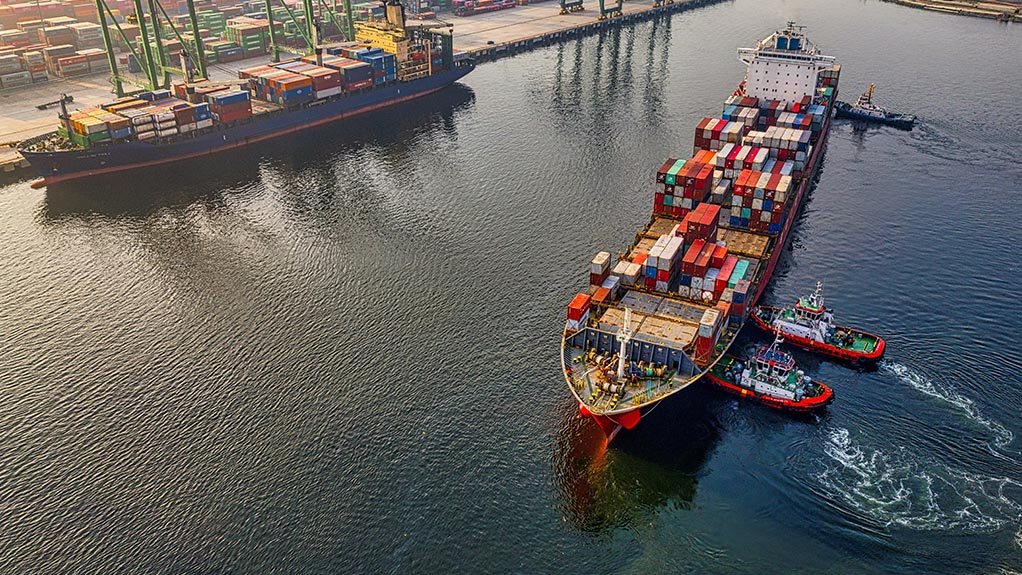



The global economy is proving more resilient than anticipated despite persistent trade tensions and policy uncertainty, the World Bank’s latest Global Economic Prospects report states.
Global growth is projected to remain broadly steady over the next two years, easing to 2.6% this year before rising to 2.7% in 2027. The World Bank says the resilience reflects better-than-expected growth, especially in the US.
Even so, if these forecasts hold, the 2020s are on track to be the weakest decade for global growth since the 1960s, it warns.
The sluggish pace is widening the gap in living standards across the world, the report finds, noting that, at the end of 2025, nearly all advanced economies enjoyed per capita incomes exceeding their 2019 levels, but about one in four developing economies had lower per capita incomes.
In 2025, growth was supported by a surge in trade ahead of policy changes and swift readjustments in global supply chains.
The report indicates that these boosts are expected to fade this year as trade and domestic demand soften.
However, the easing global financial conditions and fiscal expansion in several large economies should help cushion the slowdown, according to the report.
Global inflation is projected to edge down to 2.6% this year, reflecting softer labour markets and lower energy prices. Growth is expected to pick up in 2027 as trade flows adjust and policy uncertainty diminishes.
“With each passing year, the global economy has become less capable of generating growth and seemingly more resilient to policy uncertainty,” says World Bank Group chief economist and senior VP for development economics Indermit Gill.
“But economic dynamism and resilience cannot diverge for long without fracturing public finance and credit markets. Over the coming years, the world economy is set to grow slower than it did in the troubled 1990s, while carrying record levels of public and private debt.
“To avert stagnation and joblessness, governments in emerging and advanced economies must aggressively liberalise private investment and trade, rein in public consumption and invest in new technologies and education.”
This year, the report notes, growth in developing economies is expected to slow to 4% from 4.2% in 2025 before edging up to 4.1% in 2027 as trade tensions ease, commodity prices stabilise, financial conditions improve and investment flows strengthen.
Growth is projected to be higher in low-income countries, reaching an average of 5.6% over 2026 to 2027, buoyed by firming domestic demand, recovering exports, and moderating inflation.
However, the World Bank notes that this will not be sufficient to narrow the income gap between developing and advanced economies.
It notes that per capita income growth in developing economies is projected to be 3% in 2026 – about a percentage point below its 2000 to 2019 average.
At this pace, the World Bank says per capita income in developing economies is expected to be only 12% of the level in advanced economies.
It notes that these trends could intensify the job-creation challenge confronting developing economies, where 1.2-billion young people will reach working age over the next decade.
It argues that overcoming the jobs challenge will require a comprehensive policy effort centred on three pillars.
The first is strengthening physical, digital and human capital to raise productivity and employability.
The second is improving the business environment by enhancing policy credibility and regulatory certainty so firms can expand.
The third is mobilising private capital at scale to support investment.
Together, the World Bank says these measures can help shift job creation toward more productive and formal employment, supporting income growth and poverty alleviation.
In addition, it argues that developing economies need to bolster their fiscal sustainability, which has been eroded in recent years by overlapping shocks, growing development needs, and rising debt-servicing costs.
A special-focus chapter of the report provides a comprehensive analysis of the use of fiscal rules by developing economies, which set clear limits on government borrowing and spending to help manage public finances.
These rules are generally linked to stronger growth, higher private investment, more stable financial sectors, and a greater capacity to cope with external shocks.
“With public debt in emerging and developing economies at its highest level in more than half a century, restoring fiscal credibility has become an urgent priority,” says World Bank Group deputy chief economist and director of the prospects group Ayhan Kose.
“Well-designed fiscal rules can help governments stabilize debt, rebuild policy buffers, and respond more effectively to shocks. But rules alone are not enough: credibility, enforcement, and political commitment ultimately determine whether fiscal rules deliver stability and growth.”
The World Bank explains that more than half of developing economies now have at least one fiscal rule in place. These can include limits on fiscal deficits, public debt, government expenditures, or revenue collection.
It notes that developing economies that adopt fiscal rules typically see their budget balance improve by 1.4 percentage points of GDP after five years, once interest payments and the ups and downs of the business cycle are accounted for.
Use of fiscal rules also increases by nine percentage points the likelihood of a multi-year improvement in budget balances.
However, the medium- and long-term benefits of fiscal rules depend heavily on the strength of institutions, the economic context in which the rules are introduced, and how the rules are designed, the report finds.
SUB-SAHARAN AFRICA
Meanwhile, the World Bank reports that growth in sub-Saharan Africa picked up to an estimated 4% in 2025, up from 3.7% in 2024. The improvement was supported by moderating inflation, while higher-than-expected commodity prices – particularly for gold, other precious metals and coffee – boosted fiscal revenues in several countries.
Even so, performance across regional economies was mixed, with growth slowing among industrial commodity exporters but strengthening elsewhere. Growth diverged among the region’s three largest economies – firming in Nigeria and South Africa but moderating in Ethiopia.
South Africa’s growth rose to 1.3%, supported by more reliable electricity supply, a bumper agricultural harvest and a pickup in business confidence.
The World Bank forecasts growth in the region of 4.3% this year and 4.7% in 2027, supported by stronger investment and exports.
"The pickup, however, is predicated on the external environment not deteriorating further and on substantial improvements in security in several countries in fragile and conflict affected situations. Yet, this projected growth remains below the region's long-term average and is insufficient to make substantial progress in reducing extreme poverty.
"The sharp scaling back of official development assistance since 2024 has further constrained fiscal space and will undermine the resilience of sub-Saharan African economies to adverse shocks," the World Bank says.
It adds that, while the direct exposure of most of the region's economies to global trade fragmentation remains limited, there are notable exception, such as Côte D’Ivoire, Kenya, Lesotho, Madagascar, Mauritius and South Africa, which are heavily reliant on US markets for their goods and commodity exports.
The baseline projections assume that current levels of bilateral tariffs remain in place throughout the forecast horizon. However, the expiration of the US's African Growth and Opportunity Act in late 2025, which ended preferential access to the US market for eligible African countries, is expected to have a significant impact on some economies unless extended.
Article Enquiry
Email Article
Save Article
Feedback
To advertise email advertising@creamermedia.co.za or click here
Research Reports
Projects
Latest Multimedia

Latest News

Showroom

M and J Mining are leading suppliers of physical support systems as used by the underground mining industry. Our selection of products are not...
VISIT SHOWROOM
ECG provides specialised electrical engineering services to the Mining, Utilities, Materials Handling and Industrial industries, with extensive and...
VISIT SHOWROOM


Announcements
What's On
Subscribe to improve your user experience...
Option 1 (equivalent of R125 a month):
Receive a weekly copy of Creamer Media's Engineering News & Mining Weekly magazine
(print copy for those in South Africa and e-magazine for those outside of South Africa)
Receive daily email newsletters
Access to full search results
Access archive of magazine back copies
Access to Projects in Progress
Access to ONE Research Report of your choice in PDF format
Option 2 (equivalent of R375 a month):
All benefits from Option 1
PLUS
Access to Creamer Media's Research Channel Africa for ALL Research Reports, in PDF format, on various industrial and mining sectors
including Electricity; Water; Energy Transition; Hydrogen; Roads, Rail and Ports; Coal; Gold; Platinum; Battery Metals; etc.
Already a subscriber?
Forgotten your password?
Receive weekly copy of Creamer Media's Engineering News & Mining Weekly magazine (print copy for those in South Africa and e-magazine for those outside of South Africa)
➕
Recieve daily email newsletters
➕
Access to full search results
➕
Access archive of magazine back copies
➕
Access to Projects in Progress
➕
Access to ONE Research Report of your choice in PDF format
RESEARCH CHANNEL AFRICA
R4500 (equivalent of R375 a month)
SUBSCRIBEAll benefits from Option 1
➕
Access to Creamer Media's Research Channel Africa for ALL Research Reports on various industrial and mining sectors, in PDF format, including on:
Electricity
➕
Water
➕
Energy Transition
➕
Hydrogen
➕
Roads, Rail and Ports
➕
Coal
➕
Gold
➕
Platinum
➕
Battery Metals
➕
etc.
Receive all benefits from Option 1 or Option 2 delivered to numerous people at your company
➕
Multiple User names and Passwords for simultaneous log-ins
➕
Intranet integration access to all in your organisation