Global green hydrogen production is set to surge, forecasts global analytics group

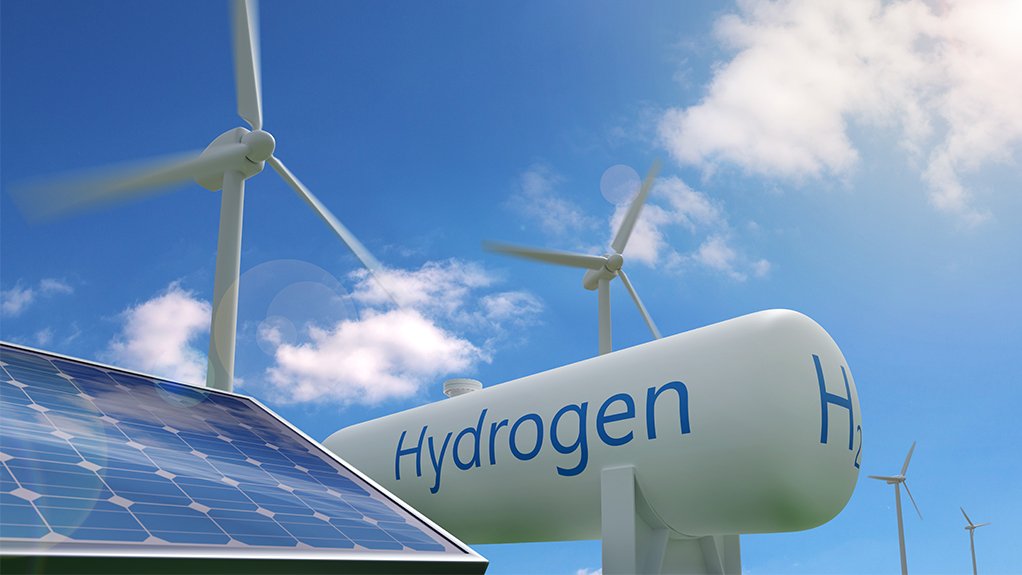


Global production of green hydrogen has started to surge, driven mainly by major policy initiatives in North America, UK-based international data analytics and consultancy group GlobalData has reported. Production of low-carbon hydrogen in general has been largely flat, or grown only slowly, for years, it pointed out. But acceleration started a couple of years ago.
Global production of all forms of low-carbon hydrogen had reached 0.84-million tons a year in 2024. Total global low-carbon production capacity in that year had amounted to 1.7-million tons a year. The consultancy forecast, in its 'Low-Carbon Hydrogen Market Report, Update 2025 – Global Market Outlook, Trends, and Key Country Analysis', that, by 2030, global low-carbon hydrogen production would hit 42-million tons a year in the low case scenario, or 65.3-million tons a year in the high case scenario.
Low-carbon hydrogen is subdivided into green hydrogen, blue hydrogen, purple hydrogen and turquoise hydrogen. Green hydrogen is produced by the electrolysis of water, using renewable energy (note that hydrogen produced using specifically solar power can also be called yellow hydrogen). Blue hydrogen comes from natural gas by means of steam methane reforming or autothermal reforming, coupled with carbon capture and storage. Purple hydrogen (also called pink hydrogen or red hydrogen) is produced by the electrolysis of water, using nuclear energy. Turquoise hydrogen has not yet been proven at scale but uses methane pyrolysis to produce hydrogen and solid carbon.
Green hydrogen had accounted for 14.9% of global low-carbon hydrogen production in 2024. Blue hydrogen had been responsible for 76.3%, purple hydrogen for 0.3%, and turquoise hydrogen for 0.1%. Other types of production had accounted for the remaining 8.4%. But in 2030, GlobalData predicted, green hydrogen will account for 88.6% of global low-carbon hydrogen production. Blue hydrogen’s contribution will fall to 11.3%, while purple and turquoise hydrogen will contribute a steady 0.1% each. North America is key to this transformation.
“The hydrogen market in the Americas has grown significantly over the last few decades, owing to federal and state-level initiatives in the US, significant efforts in Canada, and emerging policies in Mexico,” explained Global Data power analyst Attaurrahman Ojindaram Saibasan. “Each country in the region has approached hydrogen development with varying levels of ambition and strategy, resulting in a dynamic and rapidly evolving market.”
In the US, the federal government launched low-carbon hydrogen initiatives in the early 2000s, and followed up with further moves to stimulate its production, in 2005, 2009, 2021 and 2022. A number of US States, especially California, Massachusetts and New York, have also launched their own initiatives.
“Canada’s approach is characterized by strong federal leadership complemented by active provincial initiatives,” he reported. “Provinces such as British Columbia, Quebec, and Ontario are at the forefront of Canada’s hydrogen efforts. Each province is using its distinct regional advantages—such as British Columbia’s access to renewable energy or Quebec’s hydroelectric capacity—to drive hydrogen development. These provincial strategies are aligned with the national vision while also catering to local economic and environmental priorities, enabling a decentralized yet cohesive approach to hydrogen adoption.”
As for Mexico, that country’s low-carbon hydrogen production policy is still in an early development stage. But the country is investigating the potential of the industry, especially regarding its ability to exploit the country’s resources and location to both produce and export hydrogen.
“Though low-carbon hydrogen production is likely to witness rapid growth in the coming years, it will require scaling up to reduce costs, replacing high-carbon hydrogen with low-carbon hydrogen in current applications, and expanding the use of hydrogen to new applications,” cautioned Saibasan.
Article Enquiry
Email Article
Save Article
Feedback
To advertise email advertising@creamermedia.co.za or click here
Research Reports


Projects


Latest Multimedia

Latest News


Showroom
Leading condition monitoring specialists, WearCheck, help boost machinery lifespan and reduce catastrophic component failure through the scientific...
VISIT SHOWROOM
ESAB South Arica, the leading supplier of high-end welding and cutting products to the Southern African industrial market is based in...
VISIT SHOWROOM


Announcements
What's On
Subscribe to improve your user experience...
Option 1 (equivalent of R125 a month):
Receive a weekly copy of Creamer Media's Engineering News & Mining Weekly magazine
(print copy for those in South Africa and e-magazine for those outside of South Africa)
Receive daily email newsletters
Access to full search results
Access archive of magazine back copies
Access to Projects in Progress
Access to ONE Research Report of your choice in PDF format
Option 2 (equivalent of R375 a month):
All benefits from Option 1
PLUS
Access to Creamer Media's Research Channel Africa for ALL Research Reports, in PDF format, on various industrial and mining sectors
including Electricity; Water; Energy Transition; Hydrogen; Roads, Rail and Ports; Coal; Gold; Platinum; Battery Metals; etc.
Already a subscriber?
Forgotten your password?
Receive weekly copy of Creamer Media's Engineering News & Mining Weekly magazine (print copy for those in South Africa and e-magazine for those outside of South Africa)
➕
Recieve daily email newsletters
➕
Access to full search results
➕
Access archive of magazine back copies
➕
Access to Projects in Progress
➕
Access to ONE Research Report of your choice in PDF format
RESEARCH CHANNEL AFRICA
R4500 (equivalent of R375 a month)
SUBSCRIBEAll benefits from Option 1
➕
Access to Creamer Media's Research Channel Africa for ALL Research Reports on various industrial and mining sectors, in PDF format, including on:
Electricity
➕
Water
➕
Energy Transition
➕
Hydrogen
➕
Roads, Rail and Ports
➕
Coal
➕
Gold
➕
Platinum
➕
Battery Metals
➕
etc.
Receive all benefits from Option 1 or Option 2 delivered to numerous people at your company
➕
Multiple User names and Passwords for simultaneous log-ins
➕
Intranet integration access to all in your organisation