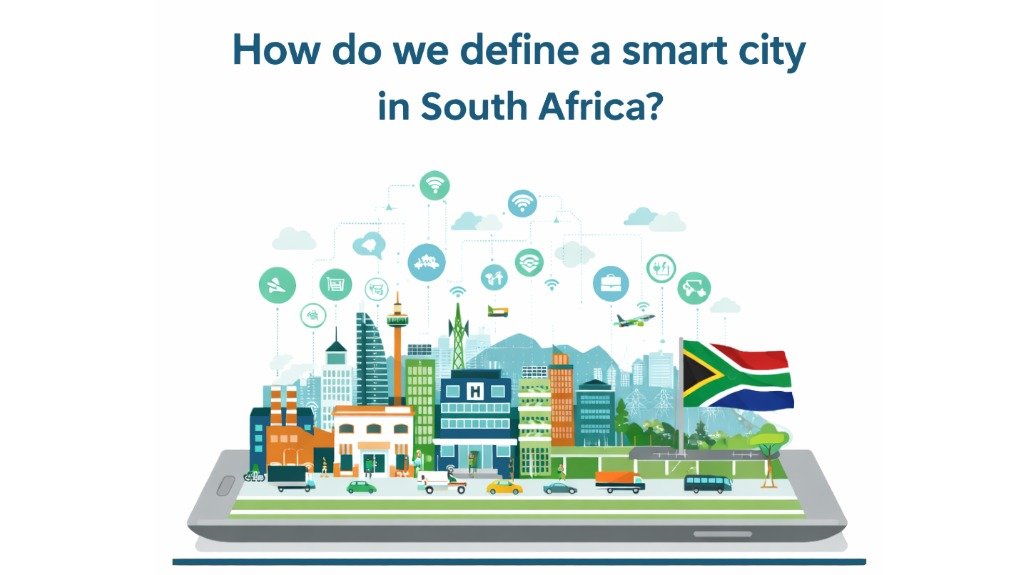
How do we define a smart city in South Africa?



This article has been supplied and will be available for a limited time only on this website.
By: Morag Evans - CEO of Databuild
In recent years, the term “smart city” has become a buzzword attached to various developments across the country. But what does it really mean? Contrary to popular belief, a smart city is not defined by how much technology has been installed. It is defined by how well that city uses information, infrastructure, and institutions to improve the lives of people who live and work there.
That is the thread running through the Department of Cooperative Governance’s South African Smart Cities Framework. It sets out a decision-making framework rather than a shopping list of gadgets. But from a construction perspective, how can this conversation be anchored in reality?
What global definitions agree on
Globally, there is no single definition of a smart city, but the reputable frameworks share common elements. UN-Habitat’s guidelines on people-centred smart cities describe a smart city as one that leverages technology to improve quality of life, advance human rights, reduce inequality, and support sustainable development, with people rather than devices at the centre.
The World Bank has taken a similar view in its work on smart cities. It highlights the role of technology and data as tools for more sustainable, resilient and well-managed cities, not as ends in themselves. An article published by the World Bank years ago still holds up. It describes a smart city as a welcoming, inclusive, and open city that listens to its citizens, uses evidence to make decisions, and continues to learn from others.
A smart city is therefore a city that uses information intelligently, governs transparently, and invests in systems that improve everyday life.
The South African interpretation
The South African Smart Cities Framework was developed to provide municipalities and other role-players a structured way to think about smart initiatives. Importantly, it does not prescribe a rigid checklist. Instead, it offers an interpretation built around the idea of an inclusive smart city.
The framework highlights several guiding principles, including that:
- A smart city must be “smart for all” and not only for a connected minority.
- Technology should be an enabler, not the driver.
- Smart initiatives must be shaped by local context and informed by real community needs.
- Partnerships, innovation, sustainability, resilience, and safety are essential.
Another COGTA document puts it in more traditional planning language, describing a smart city as a settlement where investments in human and social capital, together with traditional and modern communication and infrastructure, support sustainable economic development, and a high quality of life through participatory governance.
The important implication is that a small municipality can become “smarter” without ever branding itself as a flagship smart city. The focus is on smarter decisions, services, and the use of limited resources, not only on building something new from scratch.
What defines or classifies a smart city?
Because the framework is careful not to impose minimum standards, classification becomes a question of alignment with core characteristics.
In practice, we can apply these four pillars:
1. People and governance. Does the city use digital tools, data, and planning processes to involve residents, improve transparency, and strengthen accountability? UN-Habitat’s guidelines and our own integrated urban policy environment, including the Integrated Urban Development Framework, both stress citizen participation and collaborative governance as foundations for any smart approach.
2. Data and digital infrastructure. Is there a deliberate effort to collect, manage, and use data to run the city better, whether through basic management systems or more advanced platforms?
3. Integrated urban systems. How well do core systems such as transport, energy, water, waste, and land use planning talk to one another? In many South African cities, the real “smart” gains come from basic integration: using project and asset data to coordinate infrastructure upgrades, intelligently sequencing work, and reducing duplication and waste.
4. Sustainability and resilience. Does the city consciously use innovation to reduce environmental impact, manage climate risk, and improve long-term service reliability? The COGTA framework and related policy documents link smart cities directly to resilience and sustainable infrastructure, rather than treating these as separate agendas.
A city that scores highly across these lenses, even with modest technology, is far closer to a smart city than one that installs impressive hardware without improving governance, integration, or inclusion.
What this means for the built environment
From a Databuild perspective, smart cities are a project pipeline and an information conversation.
Developers, contractors, and professional teams all make daily decisions about where to invest time, how to phase work, and which projects to pursue. When cities use data and planning frameworks effectively, the result is more predictable pipelines, clearer capital programmes, and better-targeted private investment.
Our role is to provide verified project intelligence that helps both public and private players see what is coming and plan accordingly. When a municipality starts aligning its projects with a smart city pathway, you can see it in the data: more coordinated infrastructure work, clearer sequencing, and a stronger link between long-term strategy and actual projects on the ground.
A more grounded way to talk about smart cities
So, how do we define or classify a smart city in South Africa? We begin by asking whether technology, data, and design are being used in an integrated, inclusive way to solve real problems for real people, in line with our local context and constraints.
If our sector keeps that definition in mind, the smart city agenda becomes less of a buzzword and more of a practical framework. It gives municipalities, professionals, and private investors a common language for making better choices about where and how to build.
That, in the end, is what will determine whether South Africa’s smart city story is about headlines or about lasting change.
Article Enquiry
Email Article
Save Article
Feedback
To advertise email advertising@creamermedia.co.za or click here
Comments
Research Reports


Projects

Latest Multimedia

Latest News
Showroom

Design, Construction and Maintenance of Site Erected, Welded Bulk Storage Tanks for the Petrochemical, LNG, Ammonia and Sustainable fuel Sectors.
VISIT SHOWROOM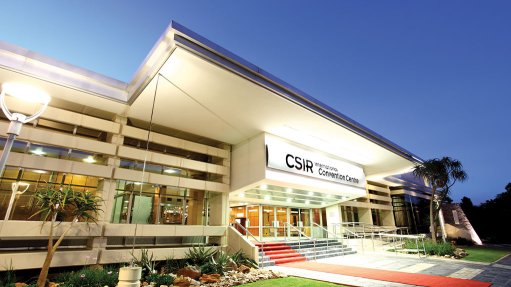
CSIR International Convention Centre (CSIR ICC) - the leading conference and events venue in Pretoria/Tshwane.
VISIT SHOWROOM


Announcements
What's On
Subscribe to improve your user experience...
Option 1 (equivalent of R125 a month):
Receive a weekly copy of Creamer Media's Engineering News & Mining Weekly magazine
(print copy for those in South Africa and e-magazine for those outside of South Africa)
Receive daily email newsletters
Access to full search results
Access archive of magazine back copies
Access to Projects in Progress
Access to ONE Research Report of your choice in PDF format
Option 2 (equivalent of R375 a month):
All benefits from Option 1
PLUS
Access to Creamer Media's Research Channel Africa for ALL Research Reports, in PDF format, on various industrial and mining sectors
including Electricity; Water; Energy Transition; Hydrogen; Roads, Rail and Ports; Coal; Gold; Platinum; Battery Metals; etc.
Already a subscriber?
Forgotten your password?
Receive weekly copy of Creamer Media's Engineering News & Mining Weekly magazine (print copy for those in South Africa and e-magazine for those outside of South Africa)
➕
Recieve daily email newsletters
➕
Access to full search results
➕
Access archive of magazine back copies
➕
Access to Projects in Progress
➕
Access to ONE Research Report of your choice in PDF format
RESEARCH CHANNEL AFRICA
R4500 (equivalent of R375 a month)
SUBSCRIBEAll benefits from Option 1
➕
Access to Creamer Media's Research Channel Africa for ALL Research Reports on various industrial and mining sectors, in PDF format, including on:
Electricity
➕
Water
➕
Energy Transition
➕
Hydrogen
➕
Roads, Rail and Ports
➕
Coal
➕
Gold
➕
Platinum
➕
Battery Metals
➕
etc.
Receive all benefits from Option 1 or Option 2 delivered to numerous people at your company
➕
Multiple User names and Passwords for simultaneous log-ins
➕
Intranet integration access to all in your organisation