IMF finds South African economy resilient, but warns of downside risks

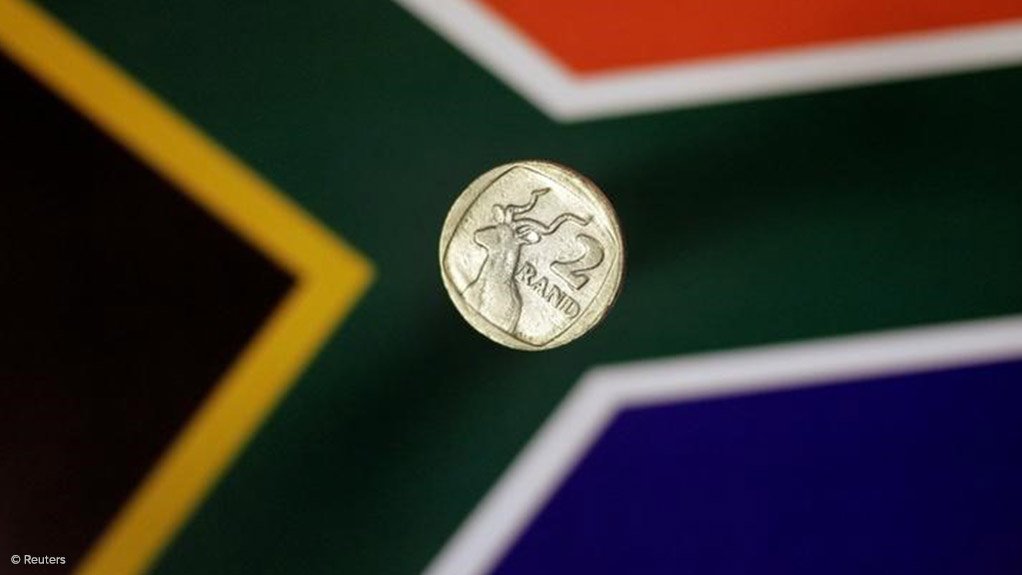


International financial institution the International Monetary Fund (IMF), as part of its yearly consultation with South Africa, has found that its economy has proven resilient thus far, owing to natural endowments, independent institutions and a strong monetary policy framework.
It warns, however, that the country also faces downside risks and entrenched structural impediments that constrain potential growth and employment.
The IMF's executive board completed its 2025 Article IV Consultation, which found that South Africa's economic activity is expected to improve gradually over the medium term, although risks remain tilted to the downside, related to continued trade and global policy uncertainty and domestic reform fatigue.
Economic activity picked up in 2025, with growth estimated at 1.3%, supported by robust private consumption. Inflation moderated to an average of 3.2%, which enabled a shift to a lower 3% inflation target.
The current account remained stable despite higher US tariffs and global policy uncertainty, and the banking sector remains sound.
Public debt, however, has risen further, reaching 77% of GDP at end‑March 2025, the IMF says.
Growth is projected to accelerate to 1.4% this year and to 1.8% in the medium term, supported by resilient consumption and investment driven by structural reforms.
Inflation is projected to reach the 3% target by end‑2027.
However, while fiscal deficits are moderating, they remain elevated, and public debt is therefore projected to continue rising over the medium term.
Risks are tilted to the downside, mainly stemming from global fragmentation, trade tensions and domestic reform fatigue, although upside risks include faster reform implementation and stronger global growth.
The IMF executive directors emphasised the need for well-coordinated policies and reforms to safeguard fiscal sustainability, secure low and stable inflation, ensure financial stability and achieve higher and inclusive growth.
South Africa's commitment to strengthening fiscal sustainability was welcomed and the executive directors emphasised the need for credible, growth-friendly and socially acceptable fiscal consolidation to stabilise and reduce public debt, while protecting priority spending.
Consolidation efforts should focus on reprioritising and improving the efficiency and equity of public spending, while protecting vulnerable groups, along with continued efforts to mobilise domestic revenues, the directors recommend.
“A fiscal rule anchored in a prudent debt ceiling could help underpin the adjustment and bolster credibility,” they add.
The South African Reserve Bank was also praised for reducing inflation and the IMF welcomed the move to a lower, 3% inflation target with a narrower band, which should support macroeconomic stability and reduce borrowing costs.
The IMF recommends maintaining a flexible and data-driven approach focused on guiding inflation expectations to the new target. Careful communication and gradual implementation of the new target are key to maintaining credibility, while preserving flexibility in case of shocks.
Further, the assessment welcomed the authorities’ efforts to safeguard financial stability, including bank‑resolution and safety‑net reforms and steps to bolster the anti-money laundering and countering of financing of terrorism framework that has enabled South Africa’s exit from the Financial Action Task Force grey list.
The IMF encourages the authorities to continue to monitor risks related to nonperforming loan and the sovereign–financial sector nexus, while strengthening supervision of banks and non‑bank financial institutions.
Additionally, it is important to improve access to finance, including smal and medium-sized enterprises, while bolstering payment-system efficiency, the IMF directors emphasise.
The ongoing electricity and logistics reforms aimed at removing critical impediments to growth through higher private‑sector participation were applauded and the IMF encouraged their resolute implementation.
It also supports additional reforms to improve the business environment, strengthen governance, combat corruption, improve the flexibility of the labour market, address spatial disparities, and deepen trade diversification.
ECONOMIC INDICATORS
In terms of South Africa's economic indicators for 2024 to 2028 that the assessment relied on, the country's nominal GDP in 2024 was $401-billion and GDP per capita in 2024 was $6 253.
In terms of poverty in the population, the IMF assessment shows that 34% of the total population of 63-million live below the poverty line of $3.65 a day, and 10% of the population is undernourished.
South Africa's urban population in 2023 was 68% of its total population.
The country's GDP in dollars was estimated at $431-billion in 2025, and is projected to grow to $474-billion in 2026, $492-billion in 2027 and $512-billion in 2028.
Additionally, the country's real GDP growth rates were estimated at 1.3% in 2025, up from 0.5% in 2024, and projected to be 1.4% in 2026, 1.5% in 2027 and 1.7% in 2028.
Consumer price inflation is estimated at 3.2% in 2025, and is projected to increase to 3.6% in 2026, and then drop to 3.3% in 2027 and 3% in 2028.
The unemployment rate is projected to remain high, and was estimated to be 32.6% in 2025, and projected to be 32.5% in 2026, 32.4% in 2027 and 32.3% in 2028.
Further, gross national savings as a percentage of GDP dropped to 12.5% in 2025 from 13.4% in 2024, and is projected to stabilise to 12.4% of GDP in 2026, 12.3% of GDP in 2027 and 12.4% of GDP in 2028.
Similarly, investments as a percentage of GDP will recover from an estimated 13.4% in 2025, down from 14.1% in 2024, to a projected 13.6% in 2026, 13.8% in 2027 and 14.1% in 2028.
The country's primary balance as a percentage of GDP is set to recover from an estimated decline of 0.5% in 2025 and is projected to increase to 0.5% in 2026, 0.9% in 2027 and 1.1% in 2028.
However, government debt as a percentage of GDP over this period was projected to increase, from an estimated 77.8% of GDP in 2025 to a projected 78.5% of GDP in 2026, 79.8% of GDP in 2027 and 81.1% of GDP in 2028.
South Africa's gross reserves as a percentage of GDP are also projected to decline during this period, from an estimated 17.6% in 2025 to a projected 16% of GDP in 2026, 15.4% of GDP in 2027, and 14.8% of GDP in 2028.
Additionally, the country's total external debt as a percentage of GDP is also projected to rise during the period, from 42% of GDP in 2024 to an estimated 46% in 2025 and projected to be 46% of GDP in 2026, and then to rise to 47% of GDP in 2027 and 48% of GDP in 2028.
Article Enquiry
Email Article
Save Article
Feedback
To advertise email advertising@creamermedia.co.za or click here
Research Reports

Projects
Latest Multimedia

Latest News

Showroom
Leading condition monitoring specialists, WearCheck, help boost machinery lifespan and reduce catastrophic component failure through the scientific...
VISIT SHOWROOM
ALBIS FLANGES — founded in 1965 — is a petro-chemical approved manufacturer of flanges and fittings in most grades of steel, listed with Sasol,...
VISIT SHOWROOM
Announcements
What's On
Subscribe to improve your user experience...
Option 1 (equivalent of R125 a month):
Receive a weekly copy of Creamer Media's Engineering News & Mining Weekly magazine
(print copy for those in South Africa and e-magazine for those outside of South Africa)
Receive daily email newsletters
Access to full search results
Access archive of magazine back copies
Access to Projects in Progress
Access to ONE Research Report of your choice in PDF format
Option 2 (equivalent of R375 a month):
All benefits from Option 1
PLUS
Access to Creamer Media's Research Channel Africa for ALL Research Reports, in PDF format, on various industrial and mining sectors
including Electricity; Water; Energy Transition; Hydrogen; Roads, Rail and Ports; Coal; Gold; Platinum; Battery Metals; etc.
Already a subscriber?
Forgotten your password?
Receive weekly copy of Creamer Media's Engineering News & Mining Weekly magazine (print copy for those in South Africa and e-magazine for those outside of South Africa)
➕
Recieve daily email newsletters
➕
Access to full search results
➕
Access archive of magazine back copies
➕
Access to Projects in Progress
➕
Access to ONE Research Report of your choice in PDF format
RESEARCH CHANNEL AFRICA
R4500 (equivalent of R375 a month)
SUBSCRIBEAll benefits from Option 1
➕
Access to Creamer Media's Research Channel Africa for ALL Research Reports on various industrial and mining sectors, in PDF format, including on:
Electricity
➕
Water
➕
Energy Transition
➕
Hydrogen
➕
Roads, Rail and Ports
➕
Coal
➕
Gold
➕
Platinum
➕
Battery Metals
➕
etc.
Receive all benefits from Option 1 or Option 2 delivered to numerous people at your company
➕
Multiple User names and Passwords for simultaneous log-ins
➕
Intranet integration access to all in your organisation