Infrastructure focus could spark long-awaited construction revival but obstacles persist



INVESTMENT RESET By reprioritising fixed investment and crowding in private capital, the MTBPS marks a structural reset that could revive construction activity, provided policy clarity, delivery capability and fiscal discipline hold
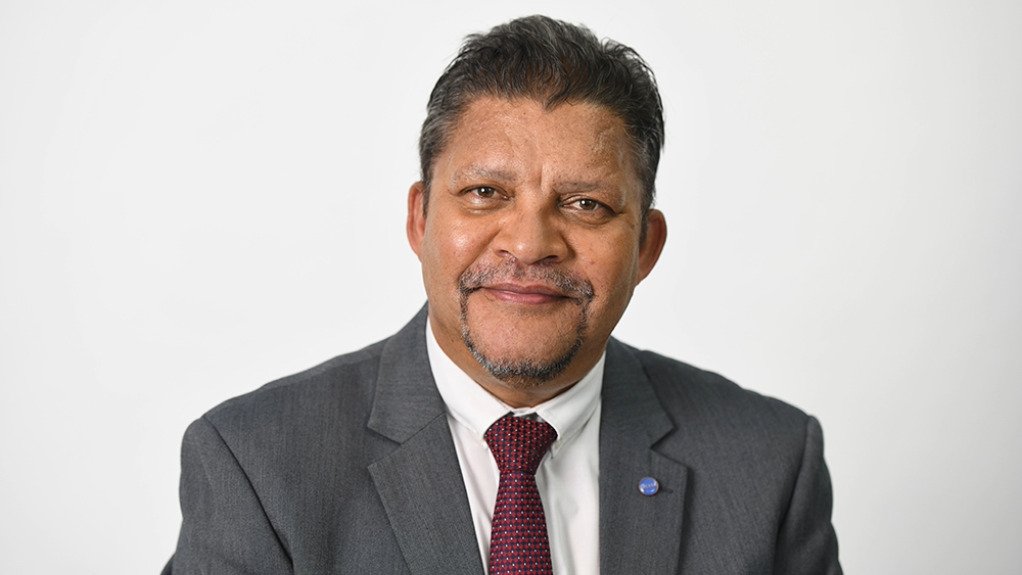
CHRIS CAMPBELL No investor will commit funds into an environment where policy uncertainty, corruption and criminality distort the risk calculation
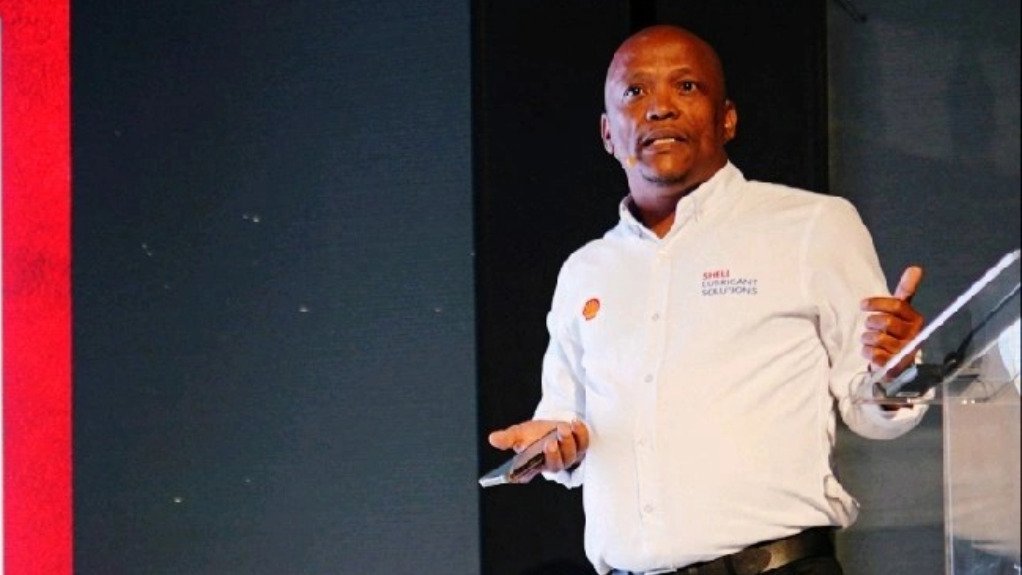
MPHO MOKWENA Our focus is to ensure machinery uptime by working closely with key stakeholders so their machines remain reliable and profitable






South Africa’s embattled construction sector may at last be seeing the long-awaited infrastructure window of opportunity being opened.
The Medium-Term Budget Policy Statement (MTBPS), delivered by Finance Minister Enoch Godongwana in October, sets out a decisive, albeit still nascent, pivot towards shifting the composition of public spending away from consumption and towards capital investment. The National Treasury’s insistence on restoring fiscal discipline is paired with an equally strong emphasis on infrastructure renewal as a key anchor of future economic growth.
Under the new framework, government plans to gradually increase infrastructure spending while tightening recurrent expenditure, signalling a long-overdue realignment in favour of fixed investment. Critically, the MTBPS acknowledges that the State cannot deliver this expansion on its own and that private-sector participation must be “crowded in” to accelerate project delivery, unlock balance sheet capacity, and restore confidence in South Africa’s long-stalled infrastructure pipeline.
For the construction sector – battling weak demand, high financing costs, shrinking order books and deteriorating municipal infrastructure – the MTBPS is a source of both cautious optimism and scepticism.
The commitment to improve public investment management, strengthen project preparation, and reform procurement systems raises the prospect that future capital budgets may translate into actual project execution rather than the chronic underspending seen in recent years. Yet tight fiscal conditions and elevated borrowing costs mean that only well-structured, partnership-driven projects are likely to gain traction.
As the sector assesses the coming year, the central question is whether these policy shifts can meaningfully revive construction activity, catalyse private investment, and rebuild the productive capacity needed for a sustainable infrastructure-led recovery.
Challenges
A combination of stagnant demand, weak public-sector capacity, high interest rates, procurement uncertainty, criminality and technical skills decline has pushed the construction sector into prolonged distress.
These challenges and potential pathways to renewal were unpacked during a recent Creamer Media Construction webinar, where sector leaders outlined the risks weighing on the sector and the foundational reforms needed to restore delivery capability.
Webinar facilitator and economist Dr Roelof Botha offered the starkest diagnostic, arguing that the construction sector “has been in trouble for quite a while”, and is now weighed down by multiple adverse indicators such as depressed building-materials production, declining tender volumes, disinvestments by major contractors, and dangerously low gross fixed capital formation – currently sitting at about 8% of GDP, far below levels needed to stimulate long-term growth.
“Municipal infrastructure failures are worsening, while unemployment remains above 45%, reflecting the sector’s diminished capacity to absorb labour,” he said.
Botha warned that monetary policy compounded the strain. “The move to a de facto 3% target point for inflation, instead of the 3% to 6% range, has had a detrimental impact on construction,” he said.
High interest rates, he added, suppress capital formation, increase financing costs, and stifle demand for residential, commercial and industrial developments. “We will have to live with a prime overdraft rate above 11% for some time, unless interest-rate policy begins to prioritise capital formation.”
Botha added that South Africa cannot credibly pursue “smart cities” while basic infrastructure deteriorates. He argued that the priority must be to remove the obstacles impeding growth – in water, sewerage, access roads and electricity distribution.
This assessment aligns closely with Godongwana’s MTBPS, which called for a return to fundamentals: strengthening municipal financial systems, enhancing asset- management capacity, stabilising water boards and improving grant-funded delivery. The challenge, however, is translating these priorities into tangible outcomes.
Industry organisation Consulting Engineers South Africa (Cesa) CEO Chris Campbell reinforced this view, stating that the construction sector is “experiencing the cumulative impact of many years of neglect”. Without policy clarity, predictable procurement and effective consequence management, he argued, South Africa cannot attract the long-term capital needed to realise its infrastructure ambitions. “No investor will commit funds into an environment where policy uncertainty, corruption and criminality distort the risk calculation,” Campbell said.
He cautioned that the Government of National Unity may be sending mixed signals – inadvertently deepening investor hesitation and delaying decisions that could stimulate economic activity.
Campbell also underscored the growing dysfunction in municipal engineering departments, marked by collapsing water networks, unstable electricity distribution systems, deteriorating provincial and local roads, and widening maintenance backlogs.
He noted that many municipalities receive infrastructure grants they cannot spend, while others lack the technical oversight to manage complex projects. Aging infrastructure, he warned, is undermining service reliability across the country’s major economic nodes. The country also risks losing engineering skills permanently owing to prolonged periods without substantive project pipelines.
Campbell argued that South Africa must first stabilise essential infrastructure before pursuing higher-order ambitions, adding that public-private partnerships (PPPs), particularly in water and energy, could bridge capacity gaps and accelerate project implementation.
However, he stressed that procurement frameworks must be strengthened. The Public Procurement Bill, he said, needs a clearer distinction between commodity procurement and complex professional-services procurement. Poor operations and maintenance choices today, he emphasised, generate long-term liabilities that far outweigh the cost of proper lifecycle planning.
Key Turnaround Enablers
While public-sector construction project capacity remains a central weakness, financing itself is not the core constraint, with Standard Bank Corporate and Investment Banking infrastructure sector executive VP Phakama Mbikwana emphasising that South Africa still has a well-developed financial system, deep capital markets and strong ties to both domestic and international development finance institutions.
She noted that blended-finance mechanisms, concessional instruments and PPP frameworks are available. What slows projects, she said, are insufficient preparation, inconsistent tender processes and poorly defined roles.
She urged government and business to align more closely on PPP definitions and structures, adding that public perceptions often conflate PPPs with privatisation. Clear mechanisms for private-sector participation, she argued, are essential for long-term capital deployment.
Mbkiwana welcomed South Africa’s removal from the Financial Action Task Force grey list and the EU’s recent €7-billion investment package aimed at accelerating the country’s renewable-energy rollout, but warned that smaller construction contractors remain financially vulnerable.
Many struggle with access to bonding facilities, bridge finance and working capital owing to delayed payments and high transactional costs. Even so, Mbikwana noted, commercial banks have the instruments – such as guarantee facilities, short-term loans, drafts and insurance products – to support these contractors.
From an operational perspective, global lubricant supplier Shell Lubricants South Africa technical and services manager Mpho Mokwena highlighted that technology and maintenance practices are central determinants of project success.
Outlining the critical role of equipment reliability for construction projects in South Africa, Mokwena added that lubricants represent only 3% to 5% of maintenance budgets, yet significantly influence machinery uptime and project timelines.
“Our focus is to ensure machinery uptime by working closely with key stakeholders so their machines remain reliable and profitable,” he said.
Mokwena explained that Shell has invested in digital diagnostics, analytics and preventative-maintenance technologies that allow operators to monitor equipment health in real time, thereby reducing downtime and extending asset life.
He added that rapidly evolving lubrication formulations, including plant-based oils and lower-emission products, are becoming essential tools in supporting South Africa’s decarbonisation pathway.
These solutions, Mokwena argued, help construction companies meet environmental commitments while improving lifecycle efficiency and reducing contamination risks. Green lubricants are increasingly central to construction sustainability frameworks and to Shell’s support for low-carbon industrialisation, he added.
Legal certainty and effective dispute resolution, meanwhile, remain structural enablers of infrastructure delivery, and law firm MDA Attorneys director Michelle Kerr explained that construction disputes are becoming more frequent, driven by design omissions, unforeseen physical conditions, stoppages, and unclear allocation of risks.
South Africa’s courts, already overwhelmed, cannot provide timely resolutions for complex construction disputes, and Kerr stressed the importance of adjudication as a focused alternative mechanism to maintain project momentum.
Quick and binding decisions – delivered through adjudication – she said, enable contractors to recover entitlements without prolonged litigation.
Kerr warned that recent amendments to Construction Industry Development Board-endorsed standard contracts have shifted risk in ways that may discourage credible contractors, especially in environments affected by construction mafia activity or community-liaison pressures.
She argued that contracting frameworks must better reflect local realities, emphasising the need for complete designs before project launch, stronger guarantees for PPP projects, and clearer alignment between employer intent and contractor capacity.
Rebuilding Delivery Capability
Several areas of strong consensus emerged from the webinar. First, policy certainty and transparent procurement must be restored to attract capital and stabilise project pipelines. Second, municipal engineering capacity requires urgent rebuilding, supported by public-private collaboration and strengthened oversight. Third, South Africa must prioritise maintenance, using modern analytics and technology to reduce lifecycle costs. Fourth, contract frameworks must be reformed to ensure balanced risk allocation and protection against site-level threats. Finally, engineering skills development and mentorship must be revitalised to prevent long-term capacity loss.
Although Godongwana’s MTBPS signals a renewed commitment to these priorities, webinar participants emphasised that effective implementation is critical. Infrastructure remains the foundation of national competitiveness and economic expansion, and without decisive action to stabilise public institutions, enforce consequence management, restore investor confidence and modernise delivery systems, South Africa risks continued decline in construction capability.
The webinar participants concluded that the pathway to recovery lies not in ambitious megaprojects or futuristic concepts, but in disciplined execution, predictable governance and sustained investment in basic networks. If these fundamentals are restored, infrastructure can once again become a catalyst for growth, job creation and industrial revitalisation.
Article Enquiry
Email Article
Save Article
Feedback
To advertise email advertising@creamermedia.co.za or click here
Research Reports


Projects



Latest News


Showroom

EIMS is an independent specialised environmental consulting firm offering the full spectrum of environmental management services across all sectors...
VISIT SHOWROOM
Sika South Africa is a trusted partner for the nation’s infrastructure, commercial, residential, and industrial sectors.
VISIT SHOWROOM


Announcements
What's On
Subscribe to improve your user experience...
Option 1 (equivalent of R125 a month):
Receive a weekly copy of Creamer Media's Engineering News & Mining Weekly magazine
(print copy for those in South Africa and e-magazine for those outside of South Africa)
Receive daily email newsletters
Access to full search results
Access archive of magazine back copies
Access to Projects in Progress
Access to ONE Research Report of your choice in PDF format
Option 2 (equivalent of R375 a month):
All benefits from Option 1
PLUS
Access to Creamer Media's Research Channel Africa for ALL Research Reports, in PDF format, on various industrial and mining sectors
including Electricity; Water; Energy Transition; Hydrogen; Roads, Rail and Ports; Coal; Gold; Platinum; Battery Metals; etc.
Already a subscriber?
Forgotten your password?
Receive weekly copy of Creamer Media's Engineering News & Mining Weekly magazine (print copy for those in South Africa and e-magazine for those outside of South Africa)
➕
Recieve daily email newsletters
➕
Access to full search results
➕
Access archive of magazine back copies
➕
Access to Projects in Progress
➕
Access to ONE Research Report of your choice in PDF format
RESEARCH CHANNEL AFRICA
R4500 (equivalent of R375 a month)
SUBSCRIBEAll benefits from Option 1
➕
Access to Creamer Media's Research Channel Africa for ALL Research Reports on various industrial and mining sectors, in PDF format, including on:
Electricity
➕
Water
➕
Energy Transition
➕
Hydrogen
➕
Roads, Rail and Ports
➕
Coal
➕
Gold
➕
Platinum
➕
Battery Metals
➕
etc.
Receive all benefits from Option 1 or Option 2 delivered to numerous people at your company
➕
Multiple User names and Passwords for simultaneous log-ins
➕
Intranet integration access to all in your organisation