Infrastructure in focus as South Africa reaches fiscal ‘turning point’

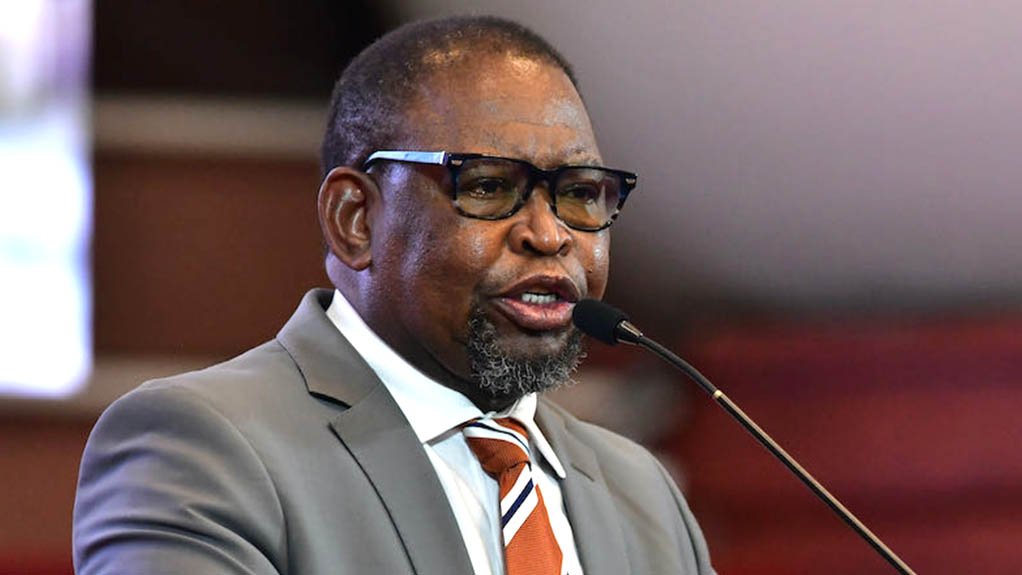


Accelerating infrastructure investment emerged as a central theme of the 2026 Budget, which Finance Minister Enoch Godongwana characterised as representing a “turning point” for both debt stabilisation and for government’s reform-led growth agenda.
Having signalled in November that there would be a concerted effort to shift the composition of spending to infrastructure, Godongwana confirmed that capital payments would be the fastest-growing item of government expenditure over the coming three years.
He also announced that infrastructure spending by the public sector would total R1.07-trillion over the period and that accelerated efforts would be made, through government’s reform agenda, to attract private investment into infrastructure. This in a bid to lay the foundations for higher growth than was currently being achieved.
While the Treasury made a modest upward revision to the growth outlook relative to the one outlined in the Medium-Term Budget Policy Statement (MTBPS) of November, the forecast remained muted.
Government revised its estimate for 2025 to 1.4% from 1.2%, and is projecting growth of 1.6% in 2026, up from the 1.5% outlined in November. It is still expecting growth of 1.8% in 2027 and 2% in 2028.
SPENDING SHIFT
In an important shift, the Budget indicates that payments for capital assets will grow by nearly 10% over the coming three years, compared with growth of 4.4% for employee compensation, albeit with employee compensation remaining the largest share of expenditure by economic classification.
Consolidated government expenditure is projected to increase at an average annual rate of 3.9% over the period, from R2.58-trillion in 2025/26 to R2.89-trillion in 2028/29.
However, the Budget deficit is projected to narrow from 4.5% of GDP in 2025/26 to 2.9% of GDP in 2028/29, while Godongwana promised that public debt would peak in 2025/26 at 78.9% of GDP.
The peak in gross debt was higher than the 77.9% signalled in November, a rise that was attributed to pre-funding to take advantage of favourable market conditions that is resulting in cheaper borrowing costs. There is also a steeper fall in the debt-to-GDP profile thereafter than outlined previously.
The Minister said that, for the first time this decade, a fiscal framework was being tabled in which debt-service costs would grow more slowly than overall expenditure. Debt-service costs would reduce from 21.3% of revenue in 2025/26 to 20.2% in 2028/29.
The Budget Review also provides details of several infrastructure reforms aimed at improving delivery and attracting private investment to tackle deep backlogs that have arisen as a result of serious underinvestment in infrastructure projects, which have also been prone to corruption and mismanagement.
The result is large deficits in electricity, rail, roads, water, sanitation and municipal infrastructure, which the National Treasury acknowledges is limiting productivity and raising the cost of doing business.
It is also a cause of deep frustration among residents, which have had to endure extreme electricity loadshedding, poor transport services and what is now regarded as a water crisis.
R1.07-TRILLION PUBLIC PIPELINE
As a share of GDP, fixed investment declined to 14.2% in 2024 from 14.8% in 2023, well below the National Development Plan’s 30%-of-GDP target.
“Accelerating investment, while improving project execution and maintenance, is critical to crowd in private capital and expand productive capacity,” the Budget Review states.
The R1.07-trillion in infrastructure investments by the public sector will be distributed across the three spheres of government, as well as public entities and State-owned companies.
More than 54%, or R577.4-billion, will be executed by State-owned companies and public entities, with funding pooled from the national Budget, own revenue and private investors.
Provinces are expected to spend R217.8-billion on infrastructure over the same three-year period, with municipalities projected to spend R205.7-billion.
Transport and logistics account for the largest share of spending over the next three years, followed by energy, water and sanitation, and social sectors such as health and education.
Besides the fiscus, various funding sources will be used, with government having issued its first sovereign infrastructure and development finance bond last year, raising R11.8-billion.
“These funds will be ring-fenced for strategic capital projects, based on a rigorous assessment process by the Budget Facility for Infrastructure (BFI),” the National Treasury says.
BFI & IFISA
The BFI was reconfigured in 2025 to run quarterly windows rather than the previous yearly cycles, and in the first three submission windows of 2025/26, 42 projects with a combined capital cost of R438.8-billion were received.
Of these, ten projects were accepted into the pipeline, and five projects with a total value of R49.5-billion, of which the BFI will fund R21.9-billion, were approved for funding in 2025/26, including three Transnet projects, a Square Kilometre Array project, and the Polokwane Regional Wastewater Treatment Works Project.
Following a review of the government’s infrastructure delivery ecosystem, the National Treasury and the Development Bank of Southern Africa are also establishing the Infrastructure Finance and Implementation Support Agency (IFISA).
The IFISA combines the Public-Private Partnerships (PPP) and the Capital Projects Appraisal units of the Government Technical Advisory Centre, the Neighbourhood Development Partnership Programme of the National Treasury and the Infrastructure Fund.
It has the mandate to mobilise private finance and expertise to reduce reliance on the fiscus and improve risk allocation in infrastructure delivery.
In addition, the PPP regulations for national and provincial governments have been revised, and amendments to the municipal regulations will be concluded in June 2026.
An annexure to the Budget Review stated that there are 63 PPP projects at different stages of development, including “advanced projects” such as the redevelopment of ports of entry project, the Gautrain expansion, and the City of Johannesburg’s alternative waste treatment technology project.
The Budget Review also confirms that a performance-based conditional grant was introduced in 2025 to reform metropolitan trading entities responsible for services such as electricity, water, sanitation and waste management and to ensure they re-invest revenues from services into infrastructure.
This has been allocated R27.7-billion over the medium term.
“To protect infrastructure investment from municipal dysfunction, a general clause will be introduced in the 2026 Division of Revenue Bill.
“It will enable the National Treasury to redirect infrastructure grants from local municipalities that have proven incapable of implementation to the Development Bank of Southern Africa, the Municipal Infrastructure Support Agent or capable district municipalities,” the Budget Review states.
Article Enquiry
Email Article
Save Article
Feedback
To advertise email advertising@creamermedia.co.za or click here

Latest Multimedia
Latest News
Showroom

Established in 1933, EKATO is the world leader in agitation technology, supplying agitators for processes and applications such as chemicals and...
VISIT SHOWROOM
The Aluminium Federation of South Africa (AFSA), is the voice of the South African aluminium industry.
VISIT SHOWROOM
Announcements
What's On
Subscribe to improve your user experience...
Option 1 (equivalent of R125 a month):
Receive a weekly copy of Creamer Media's Engineering News & Mining Weekly magazine
(print copy for those in South Africa and e-magazine for those outside of South Africa)
Receive daily email newsletters
Access to full search results
Access archive of magazine back copies
Access to Projects in Progress
Access to ONE Research Report of your choice in PDF format
Option 2 (equivalent of R375 a month):
All benefits from Option 1
PLUS
Access to Creamer Media's Research Channel Africa for ALL Research Reports, in PDF format, on various industrial and mining sectors
including Electricity; Water; Energy Transition; Hydrogen; Roads, Rail and Ports; Coal; Gold; Platinum; Battery Metals; etc.
Already a subscriber?
Forgotten your password?
Receive weekly copy of Creamer Media's Engineering News & Mining Weekly magazine (print copy for those in South Africa and e-magazine for those outside of South Africa)
➕
Recieve daily email newsletters
➕
Access to full search results
➕
Access archive of magazine back copies
➕
Access to Projects in Progress
➕
Access to ONE Research Report of your choice in PDF format
RESEARCH CHANNEL AFRICA
R4500 (equivalent of R375 a month)
SUBSCRIBEAll benefits from Option 1
➕
Access to Creamer Media's Research Channel Africa for ALL Research Reports on various industrial and mining sectors, in PDF format, including on:
Electricity
➕
Water
➕
Energy Transition
➕
Hydrogen
➕
Roads, Rail and Ports
➕
Coal
➕
Gold
➕
Platinum
➕
Battery Metals
➕
etc.
Receive all benefits from Option 1 or Option 2 delivered to numerous people at your company
➕
Multiple User names and Passwords for simultaneous log-ins
➕
Intranet integration access to all in your organisation