Local government expenditure expected to exceed revenue for next three years - Treasury


National Treasury has published the 2025/26 Medium Term Revenue and Expenditure Framework (MTREF) operating and capital budgets of municipalities, which shows that the aggregated budgeted revenue for 2025/26 is R675.8-billion, which is expected to increase to R712.6-billion in 2026/27 and R753.5-billion in 2027/28.
However, total municipal expenditure in 2025/26 is estimated to be R698-billion, which exceeds the budgeted revenue for that period, increasing to R728.3-billion in 2026/27 and R764-billion in 2027/28, which also exceed the budgeted revenue for those periods.
Total expenditure for 2025/26 is also 7.4% higher than the adopted budget for 2024/25 financial year. The main cost drivers are employee-related costs, representing 27% of the operating expenditure (opex) and bulk purchases, which represent 35% of the opex.
Municipalities are experiencing multiple impacts from the high electricity and water tariff increases, lower sales levels owing to changes in consumption patterns and increased bad debt as a result of affordability pressures, Treasury states.
The MTREF operating and capital budgets of municipalities give an overview of expected revenue and expenditure trends in local government over the next three years.
Further, aggregate municipalities will realise operating deficits on the operating budgets in the 2025/26 financial year, as the total opex increases at a higher rate than the revenue projections.
This is an indication that municipalities are spending beyond their means and a first sign of financial challenges, Treasury says.
However, the situation is projected to improve in the outer years of the 2025/26 MTREF, as the operating deficit is projected to reduce, it adds.
Capital expenditure (capex) increased by 1.9% to R78.9-billion in 2025/26 compared with the original budget for the 2024/25 financial year.
The percentage of capex to total expenditure is declining over the MTREF period, it adds.
Capex represented 11.3% of the total expenditure in 2025/26, and is projected to decrease to 10.5% in 2024/25 and further decrease to 9.8% in 2027/28.
The 2025/26 capex budget reflects a R45.7-billion investment in new infrastructure, which is 57.9% of the total aggregated capital budget.
Investment in the renewal of existing assets is much lower at R14.9-billion, or 18.8%, and investment in upgrading existing assets is R18.4-billion, or 23.3%, of the total capital budget.
“Reporting on operational repairs and maintenance figures has been institutionalised as part of the Municipal Finance Management Act Section 71 in-year reporting.
“Municipalities allocated R38.3-billion to repairs and maintenance of assets in 2025/26. This will increase to R40.6-billion in 2026/27 and to R42.7-billion in 2027/28,” it notes.
Meanwhile, trading services represent 52.1% of the total capex of R78.9-billion in 2025/26, and increases to 54.7% in 2026/27 and again to 56.7% in 2027/28.
Further, a net surplus of R8.5-billion is projected in the 2025/26 financial year, after considering revenue from external loans and internally generated funds.
This is an improvement compared with a deficit of R1.9-billion in the 2024/25 adjusted budget and will result in net surpluses of R12.3-billion in 2026/27 and R16.7-billion in 2027/28.
Treasury publishes local government MTREF information each year. Regularly published budget information enables communities to hold their municipal councils to account, it says.
Treasury also uses the information as the basis for the In-Year Management, Monitoring and Reporting System for local government.
The Section 71 reports published by Treasury provide a quarterly account of actual revenue collection and spending by municipalities against their budgeted figures, it notes.
Municipalities had submitted their 2025/26 MTREF budgets as per the Municipal Budget and Reporting Regulations of 2009.
Additionally, with the implementation of the Municipal Standard Chart of Accounts (mSCOA) in 2017, municipalities are required to prepare their budgets at the posting level across all segments.
All financial systems must have the facility to produce the A1 Schedule format of the Municipal Budget and Reporting Regulations directly from their financial systems from the mSCOA classification framework, Treasury says.
Therefore, municipalities must put controls in place to ensure alignment of the adopted A1 Schedule to the financial system and the mSCOA data strings submitted to National Treasury.
Article Enquiry
Email Article
Save Article
Feedback
To advertise email advertising@creamermedia.co.za or click here
Research Reports


Latest Multimedia


Latest News


Showroom

ESAB South Arica, the leading supplier of high-end welding and cutting products to the Southern African industrial market is based in...
VISIT SHOWROOM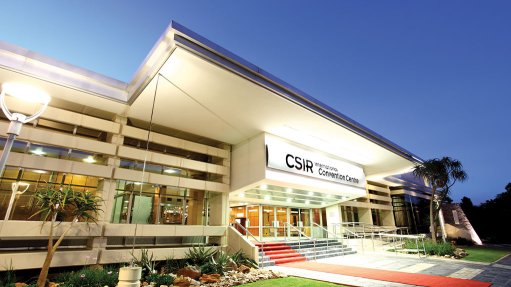
CSIR International Convention Centre (CSIR ICC) - the leading conference and events venue in Pretoria/Tshwane.
VISIT SHOWROOM


Press Office
Announcements
What's On
Subscribe to improve your user experience...
Option 1 (equivalent of R125 a month):
Receive a weekly copy of Creamer Media's Engineering News & Mining Weekly magazine
(print copy for those in South Africa and e-magazine for those outside of South Africa)
Receive daily email newsletters
Access to full search results
Access archive of magazine back copies
Access to Projects in Progress
Access to ONE Research Report of your choice in PDF format
Option 2 (equivalent of R375 a month):
All benefits from Option 1
PLUS
Access to Creamer Media's Research Channel Africa for ALL Research Reports, in PDF format, on various industrial and mining sectors
including Electricity; Water; Energy Transition; Hydrogen; Roads, Rail and Ports; Coal; Gold; Platinum; Battery Metals; etc.
Already a subscriber?
Forgotten your password?
Receive weekly copy of Creamer Media's Engineering News & Mining Weekly magazine (print copy for those in South Africa and e-magazine for those outside of South Africa)
➕
Recieve daily email newsletters
➕
Access to full search results
➕
Access archive of magazine back copies
➕
Access to Projects in Progress
➕
Access to ONE Research Report of your choice in PDF format
RESEARCH CHANNEL AFRICA
R4500 (equivalent of R375 a month)
SUBSCRIBEAll benefits from Option 1
➕
Access to Creamer Media's Research Channel Africa for ALL Research Reports on various industrial and mining sectors, in PDF format, including on:
Electricity
➕
Water
➕
Energy Transition
➕
Hydrogen
➕
Roads, Rail and Ports
➕
Coal
➕
Gold
➕
Platinum
➕
Battery Metals
➕
etc.
Receive all benefits from Option 1 or Option 2 delivered to numerous people at your company
➕
Multiple User names and Passwords for simultaneous log-ins
➕
Intranet integration access to all in your organisation