Municipal support key to igniting already dynamic informal food trade system

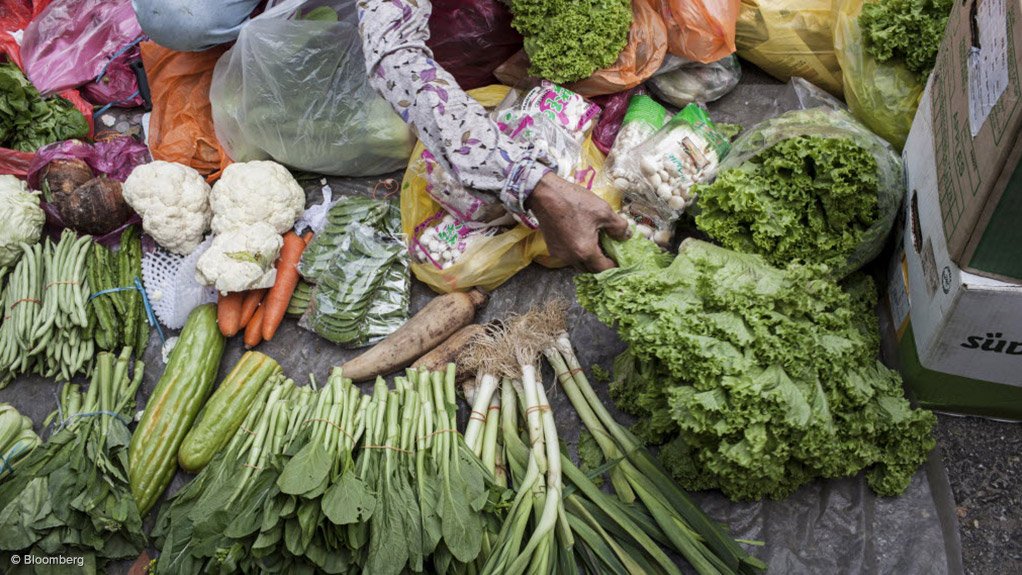


Two experts hosted by the Human Sciences Research Council (HSRC) during a webinar on February 11 agreed that small-scale food system actors have a crucial role to play in alleviating poverty in South Africa and urged municipalities to be enabling entities of this underrated powerhouse sector.
Strengthening small-scale agri-food systems in urban, peri-urban and rural settings in South Africa was crucial if the country was to meet its 2030 National Development Policy goals, HSRC researcher Vandudzai Mbanda stated.
She added that the council was seeing, more often, that small-scale agriculture could solve for continent’s most pressing issues of poverty, high unemployment and food security.
As one of the experts on the webinar, University of Pretoria development studies programme coordinator and associate Professor Dr Marc Wegerif said food systems ought to be equitably and socially and ecologically regenerative. However, the current food system in South Africa was highly unequal, with low returns to farmers and labour, while half of the population was unable to afford healthy diets.
About 63% of local households were food insecure, 28.8% of children had stunted growth and 67.9% of women and 38% of men were obese, which showed the food system was not working well for the majority of people.
Wegerif explained that the corporate food system had enormous power and always prioritised returns to investors. The majority of the country’s food system, therefore, favoured particular interests and actors at the moment.
He believes government can build on what people are already doing – street traders buying from municipal markets and directly from farmers and selling produce in informal settlements or establishing small milling operations.
“Despite corporate concentration in South Africa, there is space in the food system that can be taken advantage of. The municipal market had a R23.5-billion turnover in 2023, of which more than 50% of sales were to informal traders.
“This is making food more accessible, more affordable and often cleaner on the environment,” Wegerif stated.
He finds that street trader prices for tomatoes, for example, are on average 60% cheaper per kilo than supermarkets. With onions, street trader margins are about 72% while formal sector trading margins are 147%, with onions being about 22% cheaper from street traders.
Potatoes, cabbage, peppers and spinach are significantly cheaper at 85%, 120%, 77% and 70%, respectively.
In one instance, street vendors in Mahikeng sold cabbage at R3.34/kg while a prominent supermarket sold cabbage at R9.43/kg – a 182% difference.
Wegerif said street traders and municipal markets created many livelihoods and were able to compete with the corporate system.
“They are carving out a space in the economy, reshaping towns and cities. The street trader system comprises a multitude of small-scale actors that often work together to share information, infrastructure and transport and thereby serve millions of South Africans,” he added.
For Wegerif, a reimagined food system was necessary, linking more small-scale black farmers in the economy. “We need greater autonomy from corporate systems, wide and equitable ownership, regenerative production, healthy food for all, good returns for working people and, ultimately, a democratised food system.”
MUNICIPAL ROLE
University of KwaZulu-Natal agricultural extension and rural resources management researcher and associate Professor Mjabuliseni Ngidi agreed that small-scale actors fed millions of urban and non-urban households, while being a critical source of income for women and youth.
Small-scale food growers and sellers were central to informal and township economies, yet they were systemically excluded by municipal regulation.
Ngidi explained the small-scale food actors were informal food traders, including street vendors, urban farmers and peri-urban smallholders, micro-aggregators and distributors, as well as home processors and cooperatives.
The core problem for them was municipal bylaws designed for large formal enterprises. There were restrictive zoning and land-use schemes, too many one-size-fits-all health and safety rules and limited access to infrastructure and services for small-scale food actors.
Ngidi emphasised that municipalities ought to support and develop this food system, not control and restrict it, with due consideration of individuals and companies operating at different scales.
The consequences of exclusion in respect of municipal bylaws included food actors operating illegally, conflicting with law enforcement (with the likelihood of being arrested or chased away), missed opportunities for food security and jobs, and weak and fragmented local food systems.
The cost of all this included lost livelihoods, undermined food security, missed economic growth and fractured communities.
For Ngidi, municipalities were the closest of the government spheres to food realities on a daily basis. They had a constitutional mandate to advance social and economic developments and control key levels of infrastructure, bylaws and planning.
“Municipalities can act now to shift bylaws to be more developmental and inclusive instead of punitive, without waiting for national reform,” he highlighted.
He suggested that municipalities could enable inclusion through amended bylaws on trading, health and markets; spatial planning for inclusion of small-scale actors; local economic development strategies; infrastructure and service provision, particularly access to water; and participatory governance platforms.
In particular, Ngidi said municipalities could have small-scale food actors participate in forums to determine what infrastructure they needed. Often it helped to build cubicles that kept traders out of the sun and produce fresh for longer, and cold storage lockers.
“Let us institutionalise participation of small-scale food actors, make municipal governance more inclusive, unlock food security, jobs and resilience and have small-scale food actors be partners in development,” Ngidi said.
Article Enquiry
Email Article
Save Article
Feedback
To advertise email advertising@creamermedia.co.za or click here
Research Reports


Projects

Latest Multimedia
Latest News


Showroom

Supplier & Distributor of the Widest Range of Accurate & Easy-to-Use Alcohol Breathalysers
VISIT SHOWROOM
For over 60 years, VEGA has provided industry-leading products for the measurement of level, density, weight and pressure. As the inventor of the...
VISIT SHOWROOM


Press Office
Announcements
What's On
Subscribe to improve your user experience...
Option 1 (equivalent of R125 a month):
Receive a weekly copy of Creamer Media's Engineering News & Mining Weekly magazine
(print copy for those in South Africa and e-magazine for those outside of South Africa)
Receive daily email newsletters
Access to full search results
Access archive of magazine back copies
Access to Projects in Progress
Access to ONE Research Report of your choice in PDF format
Option 2 (equivalent of R375 a month):
All benefits from Option 1
PLUS
Access to Creamer Media's Research Channel Africa for ALL Research Reports, in PDF format, on various industrial and mining sectors
including Electricity; Water; Energy Transition; Hydrogen; Roads, Rail and Ports; Coal; Gold; Platinum; Battery Metals; etc.
Already a subscriber?
Forgotten your password?
Receive weekly copy of Creamer Media's Engineering News & Mining Weekly magazine (print copy for those in South Africa and e-magazine for those outside of South Africa)
➕
Recieve daily email newsletters
➕
Access to full search results
➕
Access archive of magazine back copies
➕
Access to Projects in Progress
➕
Access to ONE Research Report of your choice in PDF format
RESEARCH CHANNEL AFRICA
R4500 (equivalent of R375 a month)
SUBSCRIBEAll benefits from Option 1
➕
Access to Creamer Media's Research Channel Africa for ALL Research Reports on various industrial and mining sectors, in PDF format, including on:
Electricity
➕
Water
➕
Energy Transition
➕
Hydrogen
➕
Roads, Rail and Ports
➕
Coal
➕
Gold
➕
Platinum
➕
Battery Metals
➕
etc.
Receive all benefits from Option 1 or Option 2 delivered to numerous people at your company
➕
Multiple User names and Passwords for simultaneous log-ins
➕
Intranet integration access to all in your organisation