Nelson Mandela Bay water crisis deepening as maintenance efforts fall short – business chamber

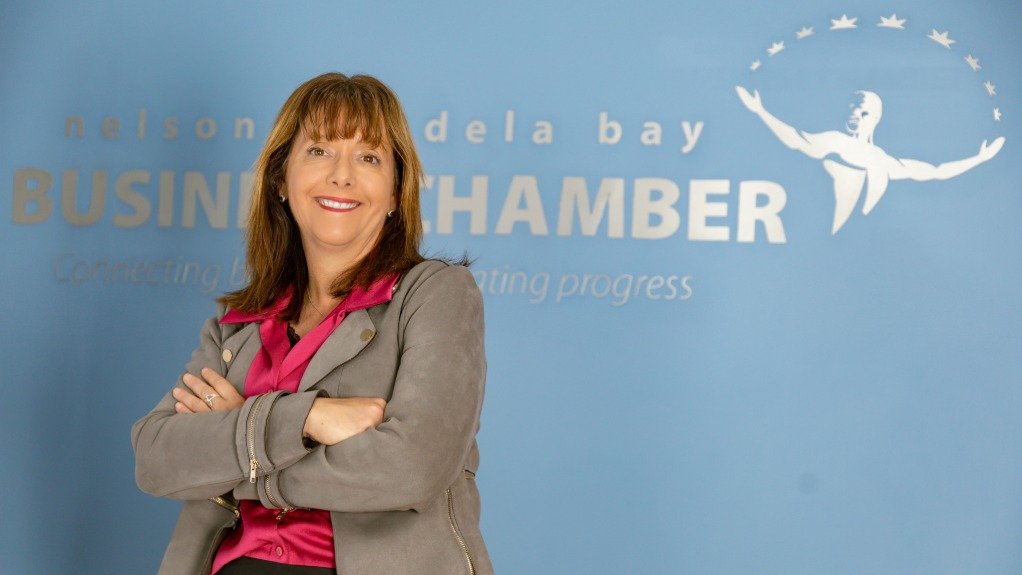



The Nelson Mandela Bay Business Chamber has relaunched its Adopt A School initiative in reaction to “the rapid and ongoing loss of water in the metro”, which it says “is once again edging towards a potential water management crisis”.
The overall levels of the dams feeding the metro have dropped below the critical 50% mark, with only 39.75% of usable water currently available.
The decline in available water is, however, not driven by declining dam levels alone, warns the chamber, but also by unaccounted water losses of more than 50%, “caused by the lack of maintenance of water infrastructure and leaks, which is costing the metro millions of litres of treated water every day”.
The chamber adds meter tampering, inadequate security at pumpstations, inadequate billing, as well as other technical issues to the list of factors compounding the problem.
Another key contributing factor is increased water use, which is trending in the wrong direction, at 384-million litres a day (Ml/d), versus the target of 280 Ml/d.
“That’s over 100 Ml/d over target and is clearly unsustainable,” warns NMB Business Chamber CEO Denise van Huyssteen.
“Nelson Mandela Bay is a water scare area, and consumers should, on an ongoing basis, be ensuring that they are actively reusing, recycling and conserving water.”
The situation is being compounded by extreme heat conditions, with Nelson Mandela Bay the site of a series of runaway fires that have placed further pressure on its water system.
Van Huyssteen emphasises that the metro cannot afford to repeat the mistakes of the past.
“Just three years ago, Nelson Mandela Bay came dangerously close to running dry.
“It is deeply concerning that there has not been a sustained and escalated focus on protecting water security since then – by both the municipality and consumers.
“Safeguarding water requires constant vigilance, preventative maintenance and aggressive leak repairs – yet nearly half of the metro’s water remains unaccounted for,” she notes.
Van Huyssteen describes the ongoing loss of millions of litres of water each day as financially reckless, environmentally damaging and fundamentally unsustainable.
“Preventative maintenance should be the norm, not the exception. Every litre lost today brings us closer to another crisis tomorrow.
“And, while the municipality has a responsibility to address leaks on its infrastructure, businesses and consumers also have a responsibility to fix their own leaks and reduce their water consumption levels.
“Waiting for water availability to reach crisis levels before changing behaviour is a risk our metro cannot afford.”
Adopt A School
The Nelson Mandela Bay Business Chamber launched its Adopt A School initiative a couple of years ago, which saw 18 businesses adopt 76 schools across the metro.
The programme focused on repairing faulty plumbing systems, fixing water leaks and installing rainwater harvesting measures.
It formed part of broader, metro-wide water preservation efforts to rein in water losses at schools and clinics owing to leaks, which at the time contributed around 10% to the Bay’s total water losses.
“We have decided to re-launch this initiative, with the focus on schools which previously may have formed part of this, as well as other high water-use schools,” explains Van Huyssteen.
“The focus will once again be on leak repairs and water conservation.”
The chamber is also keen to re-ignite its Adopt A Leak programme, which played a vital role during the 2021 water management crisis.
During this period, local businesses voluntarily funded repairs in seven impoverished areas, which represented the highest concentration of leaks.
This resulted in leaks being repaired at more than 4 200 households, saving roughly 1.6 Ml/d and achieving a 23% reduction in water consumption across these areas of the metro.
“That programme showed what is possible when urgency, accountability and collaboration come together,” says Van Huyssteen.
“It delivered real impact in a short space of time because it was targeted, measured and action-driven.”
Article Enquiry
Email Article
Save Article
Feedback
To advertise email advertising@creamermedia.co.za or click here

Projects
Latest Multimedia
Latest News
Showroom
Occupational health services, mobile clinics, wellness campaigns, aviation.
VISIT SHOWROOM
Sika South Africa is a trusted partner for the nation’s infrastructure, commercial, residential, and industrial sectors.
VISIT SHOWROOM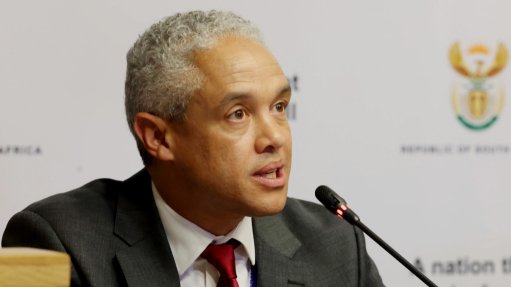

Press Office
Announcements
What's On
Subscribe to improve your user experience...
Option 1 (equivalent of R125 a month):
Receive a weekly copy of Creamer Media's Engineering News & Mining Weekly magazine
(print copy for those in South Africa and e-magazine for those outside of South Africa)
Receive daily email newsletters
Access to full search results
Access archive of magazine back copies
Access to Projects in Progress
Access to ONE Research Report of your choice in PDF format
Option 2 (equivalent of R375 a month):
All benefits from Option 1
PLUS
Access to Creamer Media's Research Channel Africa for ALL Research Reports, in PDF format, on various industrial and mining sectors
including Electricity; Water; Energy Transition; Hydrogen; Roads, Rail and Ports; Coal; Gold; Platinum; Battery Metals; etc.
Already a subscriber?
Forgotten your password?
Receive weekly copy of Creamer Media's Engineering News & Mining Weekly magazine (print copy for those in South Africa and e-magazine for those outside of South Africa)
➕
Recieve daily email newsletters
➕
Access to full search results
➕
Access archive of magazine back copies
➕
Access to Projects in Progress
➕
Access to ONE Research Report of your choice in PDF format
RESEARCH CHANNEL AFRICA
R4500 (equivalent of R375 a month)
SUBSCRIBEAll benefits from Option 1
➕
Access to Creamer Media's Research Channel Africa for ALL Research Reports on various industrial and mining sectors, in PDF format, including on:
Electricity
➕
Water
➕
Energy Transition
➕
Hydrogen
➕
Roads, Rail and Ports
➕
Coal
➕
Gold
➕
Platinum
➕
Battery Metals
➕
etc.
Receive all benefits from Option 1 or Option 2 delivered to numerous people at your company
➕
Multiple User names and Passwords for simultaneous log-ins
➕
Intranet integration access to all in your organisation