Opinion: Risks, rewards and realities of South Africa’s wholesale electricity market reform

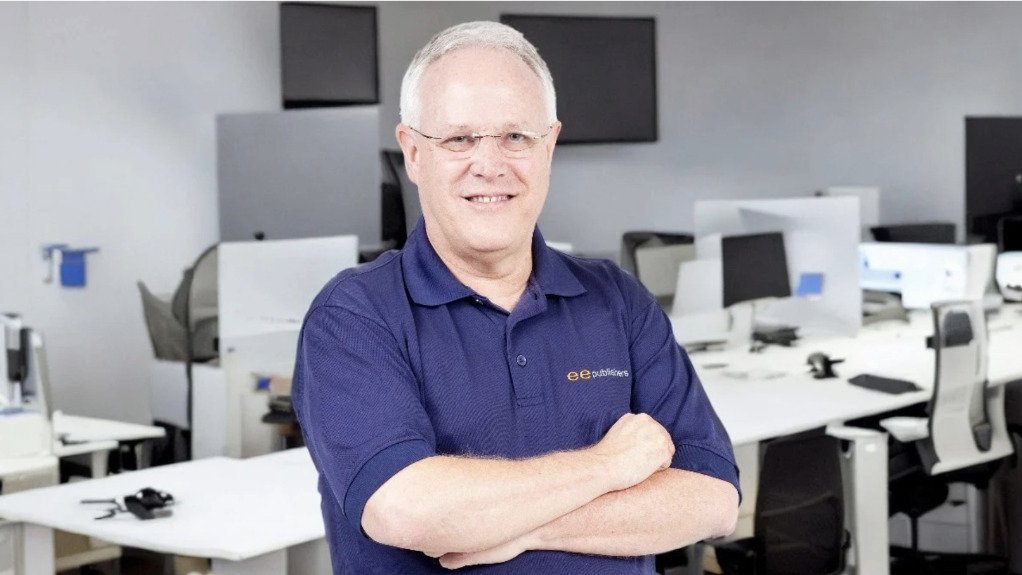



In this article, EE Business Intelligence MD Chris Yelland writes that South Africa's electricity market is moving towards a competitive, rules-based, multi-market structure with transparent price discovery and shared responsibility, but warns that the South African Wholesale Electricity Market (SAWEM) alone will not solve South Africa’s transmission bottlenecks, municipal governance failures or legacy debt burdens.
The National Business Initiative’s February 2026 report 'Analysis of the South African Wholesale Electricity Market (SAWEM) and its Implications for Businesses and Municipalities', prepared by Professor Anton Eberhard, provides the clearest articulation yet of what this reform will mean in practice.
At its core, SAWEM marks a decisive break from Eskom’s historic vertically integrated monopoly model. Instead of a single buyer and central planner, South Africa is moving towards a competitive, rules-based, multi-market structure with transparent price discovery and shared balance responsibility.
But while the architecture is technically sophisticated and aligned with international best practice, the real test will lie not in design – but in implementation, institutional discipline and market readiness.
FROM MONOPOLY TO MARKET
The Electricity Regulation Amendment Act (2024), effective from January 2025, provides the legal foundation for this transition. It enables the establishment of an independent Transmission System Operator (TSO), initially housed in the National Transmission Company South Africa (NTCSA), and the creation of a Market Operator responsible for running day-ahead, intraday and balancing markets.
SAWEM is structured as a hybrid “net pool” market. Participants may contract bilaterally, but all energy flows are centrally scheduled and financially settled through a transparent market mechanism. The design includes:
A Day-Ahead Market (DAM), where bids and offers are cleared to produce a national System Marginal Price (SMP);
An Intraday Market (IDM), allowing six-hourly schedule adjustments;
A Balancing Mechanism (BM), enabling real-time corrections by the System Operator; and
Full balance responsibility, requiring qualifying participants to forecast, nominate and settle deviations at market-based prices.
This structure is not revolutionary by global standards. Variants operate successfully in Europe, the UK and parts of the US. What is significant is that South Africa – long dependent on administered tariffs and state procurement – is finally institutionalising competitive price formation.
PRICE SIGNALS, FLEXIBILITY AND DISCIPLINE
One of SAWEM’s most important design features is the co-optimisation of energy and reserves in the day-ahead auction. Energy and ancillary services are priced simultaneously, allowing generators and storage operators to monetise flexibility.
For renewable energy developers, this is transformative. Instead of selling exclusively under 20-year fixed-price power purchase agreements (PPAs), projects can blend fixed and merchant exposure. Hybrid contracts – part fixed, part market-linked – are expected to become increasingly common.
Battery storage, in particular, becomes far more valuable in a market with hourly price signals and reserve payments. Time-shifting energy into high SMP periods and providing balancing services creates additional revenue streams beyond simple energy sales.
Equally significant is the introduction of mandatory balance responsibility. All market participants above defined thresholds must either register as Balance Responsible Parties (BRPs) or appoint one. Deviations between scheduled and actual delivery are financially settled.
This shifts commercial risk to those best placed to manage it. Forecasting accuracy, operational agility and portfolio optimisation become competitive advantages. Over time, this should reduce system balancing costs and incentivise investment in flexibility.
FINANCIALISATION OF ELECTRICITY
For businesses, SAWEM changes electricity from a tariffed utility input into a tradable financial commodity.
Generators with merchant exposure will face SMP volatility. Corporate buyers will experience hourly price variation rather than uniform bulk tariffs. Daily settlement cycles and prudential credit requirements introduce liquidity considerations unfamiliar to many traditional market actors.
This inevitably drives financial innovation. Contracts-for-difference (CfDs), forward contracts and structured hedging instruments are likely to emerge as liquidity deepens. Traders and aggregators will play a growing intermediary role, pooling smaller portfolios and managing imbalance exposure.
In effect, electricity risk management will begin to resemble currency or commodity risk management. Early adopters with strong treasury and analytics capabilities will gain advantage.
But the report correctly cautions that early-stage liquidity may be thin. Market depth and confidence will need time to develop. Regulatory stability and transparent governance will be critical.
ESKOM AND THE LEGACY QUESTION
A central feature of the transition is the use of vesting contracts and the Central Purchasing Agency (CPA).
Eskom’s generation fleet will operate under transitional vesting arrangements. Legacy IPP contracts – including REIPPPP projects – will be transferred to the CPA as counterparty. The CPA will trade these volumes into the market and recover any shortfalls between contract prices and SMP through a regulated Legacy Charge.
This mechanism smooths the transition and protects financial stability. However, it also carries risk. If vesting arrangements lock in inefficient cost structures or delay competitive discipline, market price signals could be distorted.
The structure and transparency of vesting contracts will therefore be critical. If done well, they provide stability. If poorly designed, they could embed stranded costs into the system for years.
MUNICIPALITIES: THE WEAKEST LINK?
If SAWEM presents opportunity for corporates and IPPs, it presents both challenge and existential risk for many municipalities.
Municipal distributors account for roughly 40% of electricity sales, yet many are financially distressed. Arrears to Eskom exceed R100-billion. Creditworthiness, liquidity and governance capacity vary widely.
The report is blunt: few municipalities are likely to qualify as direct market participants at launch. Prudential requirements, balance responsibility obligations and daily settlement cycles require financial discipline that many local distributors currently lack.
Most municipalities will continue to procure bulk electricity from Eskom Distribution under hedged vesting contracts, at least initially.
Over time, however, wholesale tariff structures will evolve. The energy component will increasingly reflect DAM-cleared SMPs. Network charges, legacy charges and capacity charges will be separately itemised.
This unbundling exposes a structural reality: municipalities can no longer rely on energy mark-ups as their primary revenue base. As distributed generation grows and customers self-supply, energy volumes decline. Fixed network costs must increasingly be recovered through fixed and demand charges.
Those municipalities that modernise metering, billing and governance systems can capture new revenue streams through wheeling fees and local energy aggregation. Those that fail to adapt risk deepening insolvency.
A further complication is the Municipal Finance Management Act (MFMA). The report highlights significant legal barriers to municipalities transacting in day-ahead or intraday markets under current public finance rules. Without targeted reform or exemptions, direct participation may be administratively impossible.
This intersection of electricity reform and municipal finance reform is one of the most under-appreciated risks in the transition.
RISKS AND REALITIES
The SAWEM design is robust and technically credible. But implementation risk remains substantial.
Key risks include:
Price volatility, particularly during early liquidity-constrained phases;
Imbalance exposure, once transitional ±5% caps fall away;
Credit and liquidity strain for smaller players;
Operational failures in forecasting, telemetry and compliance; and
Regulatory uncertainty if rule changes occur prematurely.
There is also a broader political economy risk. Competitive markets require non-discriminatory governance, independent regulation and transparent rule enforcement. Institutional capture or inconsistent regulatory intervention could undermine confidence.
The planned “shadow market” phase in late 2025 and early 2026 is therefore critical. It will allow participants to test systems without financial exposure and build capability before full launch.
A STRUCTURAL SHIFT, NOT A SILVER BULLET
SAWEM is not a panacea. It will not, by itself, solve South Africa’s transmission bottlenecks, municipal governance failures or legacy debt burdens.
What it does provide is a coherent framework for price discovery, competition and risk allocation.
If implemented with discipline, it can:
Attract private capital;
Accelerate renewable and storage investment;
Improve operational efficiency; and
Align commercial incentives with system reliability.
But markets are unforgiving. Participants that fail to build capability will face financial consequences. Municipalities that fail to reform governance and revenue models may find themselves further marginalised.
In this sense, SAWEM is both opportunity and stress test.
THE BOTTOM LINE
Eberhard’s report makes one point unmistakably clear: SAWEM is not a single event but a phased process of licensing, testing, launch and iterative refinement.
The design reflects international best practice. The implications are far-reaching. Electricity in South Africa is shifting from administered certainty to competitive exposure.
For businesses, this demands forecasting precision, financial sophistication and flexibility. For municipalities, it demands governance reform and revenue restructuring.
The market will reward those who prepare early and punish those who cling to legacy assumptions.
After decades of centralised control and crisis management, South Africa is entering the real world of competitive electricity markets. The rules are written. The institutions are forming. The question now is whether the country’s market participants – public and private – are ready.
Article Enquiry
Email Article
Save Article
Feedback
To advertise email advertising@creamermedia.co.za or click here


Latest Multimedia
Latest News

Showroom
At Airshrink - CiP, we surpass customer expectations with innovative MV and LV cable accessories, including heat shrink joints, terminations,...
VISIT SHOWROOM
Columbus Stainless, based in Middelburg, Mpumalanga, is Africa’s only producer of stainless steel flat products. In addition, Columbus is the only...
VISIT SHOWROOM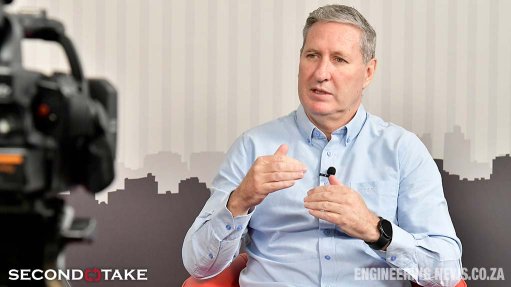



Announcements
What's On
Subscribe to improve your user experience...
Option 1 (equivalent of R125 a month):
Receive a weekly copy of Creamer Media's Engineering News & Mining Weekly magazine
(print copy for those in South Africa and e-magazine for those outside of South Africa)
Receive daily email newsletters
Access to full search results
Access archive of magazine back copies
Access to Projects in Progress
Access to ONE Research Report of your choice in PDF format
Option 2 (equivalent of R375 a month):
All benefits from Option 1
PLUS
Access to Creamer Media's Research Channel Africa for ALL Research Reports, in PDF format, on various industrial and mining sectors
including Electricity; Water; Energy Transition; Hydrogen; Roads, Rail and Ports; Coal; Gold; Platinum; Battery Metals; etc.
Already a subscriber?
Forgotten your password?
Receive weekly copy of Creamer Media's Engineering News & Mining Weekly magazine (print copy for those in South Africa and e-magazine for those outside of South Africa)
➕
Recieve daily email newsletters
➕
Access to full search results
➕
Access archive of magazine back copies
➕
Access to Projects in Progress
➕
Access to ONE Research Report of your choice in PDF format
RESEARCH CHANNEL AFRICA
R4500 (equivalent of R375 a month)
SUBSCRIBEAll benefits from Option 1
➕
Access to Creamer Media's Research Channel Africa for ALL Research Reports on various industrial and mining sectors, in PDF format, including on:
Electricity
➕
Water
➕
Energy Transition
➕
Hydrogen
➕
Roads, Rail and Ports
➕
Coal
➕
Gold
➕
Platinum
➕
Battery Metals
➕
etc.
Receive all benefits from Option 1 or Option 2 delivered to numerous people at your company
➕
Multiple User names and Passwords for simultaneous log-ins
➕
Intranet integration access to all in your organisation